Key Takeaway: Phishing scams have taken a high-tech turn with the rise of deepfakes and AI voices. Instead of suspicious emails, scammers now use realistic voice calls and video impersonations to trick victims into sharing sensitive information like one-time passcodes. These sophisticated attacks often mimic banks and trusted sources, making them harder to detect and more effective than traditional phishing attempts.
Deepfakes are no longer just a novelty—they’re a growing tool in the hands of scammers. With advances in synthetic media and AI-generated voices, phishing tactics have become harder to spot and more dangerous than ever. What once came as a clumsy, typo-ridden email now arrives as a lifelike voice message from your “bank,” urging immediate action.
These modern phishing scams use realistic audio and even video impersonations to build trust fast—and break it just as quickly. From spoofed customer service calls to AI-cloned voice messages requesting one-time passcodes (OTPs), impersonation technology is rewriting the rules of online deception. And if you’re thinking, “I’d never fall for that,” you might want to keep reading.
When the Voice on the Line Isn’t Real
Today’s phishing attacks often come with a familiar tone—literally.
Instead of sending emails riddled with poor grammar, scammers now use AI-generated voices that mimic actual customer service agents. Sometimes, they even replicate the voice of a specific person, like your colleague or manager. The result? A call that sounds authentic, feels urgent, and prompts you to act fast.
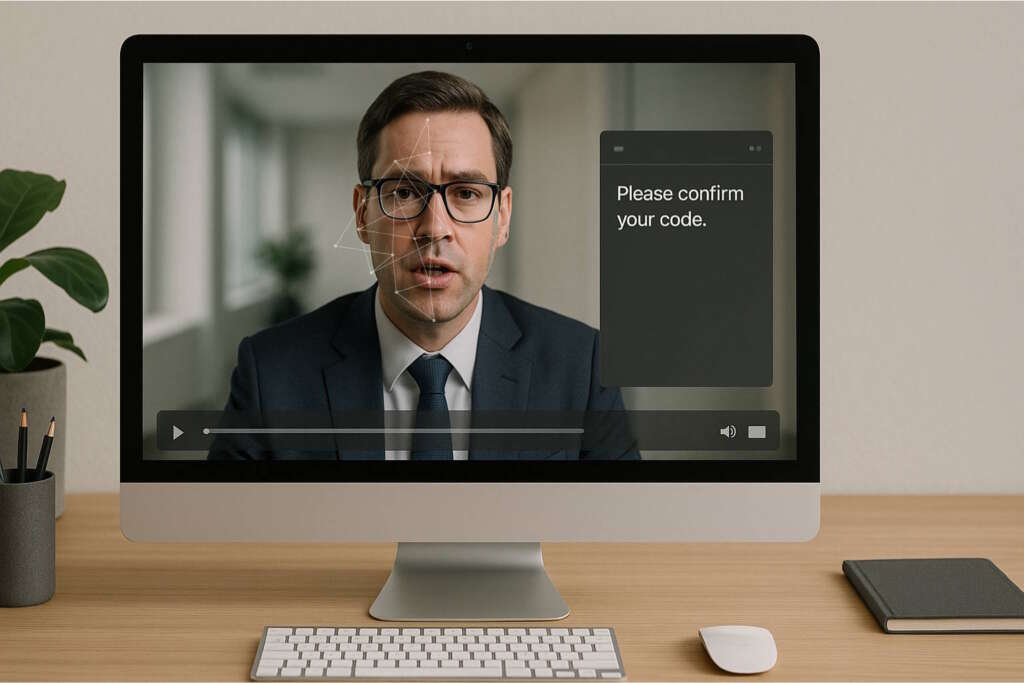
Many of these voice phishing (or “vishing”) attacks involve someone pretending to be from your bank’s fraud department. They’ll warn you about a “suspicious transaction” and ask you to verify your identity with a code they just sent. That code, of course, is your real 2FA or OTP—hand-delivered to the scammer in real time.
This isn’t a scene from a sci-fi movie. It’s happening today, and it’s catching even the tech-savvy off guard.
What Do Deepfake Banking Scams Look Like?
Scammers using deepfakes often stick to a few convincing scenarios. One of the most common is a spoofed call from your bank. You might hear:
- A calm, confident voice claiming to be from your bank’s fraud protection team.
- An explanation of “unusual activity” or “suspicious login attempts.”
- A request for your OTP “just to confirm your identity.”
Others go further—using deepfake video to impersonate executives, financial advisors, or celebrities in social media scams. These videos might promote fake investment schemes or giveaways, with links to phishing pages designed to steal your info.
Even if the audio or video is slightly “off,” most people don’t notice. Especially when emotions are high.
Why Are Deepfakes So Effective?
Scammers know that trust often starts with tone. If the voice sounds professional, kind, or urgent, people are more likely to respond quickly—without stopping to question it.
AI-powered voice cloning has made it cheap and easy to mimic real voices. Scammers often gather voice samples from public videos or social media posts. Within minutes, they can generate a convincing fake and start placing calls.
This kind of audio impersonation plays on our instincts. We’ve been trained to listen to authority, respond to urgency, and assume that a familiar voice equals safety.
How to Protect Yourself from AI Voice and Deepfake Scams
You don’t need to become a deepfake expert to stay safe. Here are a few simple rules that go a long way:
- Never share OTPs or verification codes with anyone who calls or messages you, even if they claim to be from your bank.
- Hang up and call back using the official phone number from your bank’s website or your card.
- Stay skeptical of urgency. Scammers use pressure to force quick decisions.
- Watch for inconsistencies. A strange pause, mispronounced word, or overly scripted tone can be red flags.
- Limit your voice footprint online. The more audio samples you share publicly, the easier it is for scammers to clone your voice.
Even with these precautions, it’s easy to get caught off guard. That’s why awareness—not just defense—is your first line of protection.
Conclusion
Phishing has evolved. Deepfakes and AI voices are now the tools of choice for cybercriminals impersonating banks and tricking people into handing over sensitive information. They’re realistic, emotionally manipulative, and spreading fast.
The best defense starts with knowing what you’re up against.
If you’re interested in how AI trends are shaping the digital world, join the conversation at Tech Scope Connect. Our expert panels and live newscasts keep you informed—and one step ahead.