
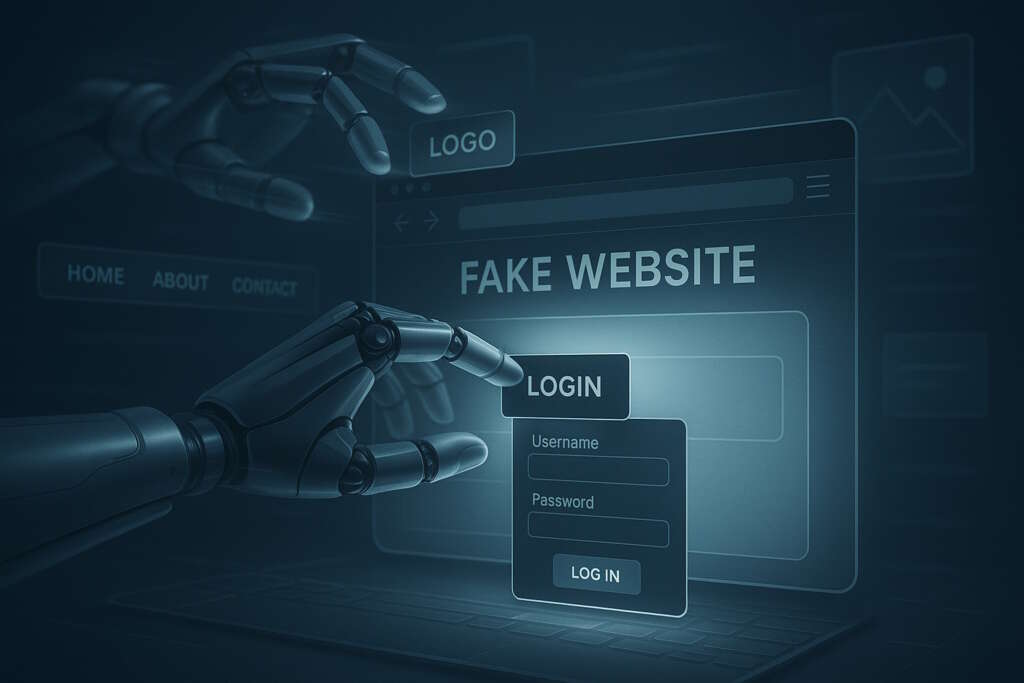
Key Takeaway: AI is making it faster and easier for cybercriminals to create phishing websites that mimic trusted brands. These automated fake sites are convincing, scalable, and often indistinguishable from the real thing. As a result, credential theft is becoming more common—even among users who think they know what to watch for. Staying alert and recognizing red flags is essential for protecting your personal and business data.
Phishing websites are evolving fast, and the threat they pose is growing by the day. These fake sites—also called spoofed or malicious pages—are now being created by AI with frightening speed and accuracy. You’ve probably heard about phishing in emails, but what happens when the scam looks exactly like your bank’s website or your favorite online store?
That’s where the new danger lies. Cybercriminals no longer need coding skills to build convincing traps. With AI tools and website generators, even low-level scammers can launch attacks that once took professionals days to create. If you’ve ever wondered, “How do phishing websites work so well now?”—this is your entry point.
Let’s unpack how this new wave of scams works and why it matters for you.
The Rise of Fake Websites in the AI Era
Remember when it was easy to tell if a site looked “off”? Not anymore.
AI is now helping bad actors build realistic phishing websites that closely mimic trusted brands. Tools once reserved for web developers are being used to copy login pages, recreate payment forms, and even fake live chat windows. These pages look so real, it’s almost impossible to tell them apart from the real thing—unless you’re looking closely.
Many of these sites are built using drag-and-drop tools powered by AI. A scammer can choose a brand to impersonate, click a few buttons, and deploy a credential-stealing website in minutes. AI can even generate the text content, design layout, and images to make it feel legit.
Why Are Phishing Websites Harder to Spot Now?
Here’s the tricky part: phishing websites don’t just look real—they feel real too.
AI tools can personalize the user experience. If a scammer knows your email or phone number, the fake site might greet you by name. Some even spoof the exact look and behavior of real apps and services.
They also avoid many of the old red flags—no more obvious typos, poor formatting, or pixelated logos. And because scammers can launch hundreds of these pages at once, they only need one person to fall for the trick to make it worth their while.
What Makes These Sites So Dangerous?
Let’s be real—most people don’t double-check URLs or hover over buttons to verify links. That’s what makes phishing websites so effective.
Once a user enters their info—email, password, banking credentials—that data is instantly captured. In many cases, the site redirects them to the real one afterward, making them think nothing went wrong. Meanwhile, the damage is already done.
Some scammers go a step further. They use your data to access other accounts or sell it on dark web marketplaces. And if they have access to your email, it can quickly spiral into full identity theft.
Who’s Being Targeted—And Why It’s Not Just Big Companies
Think phishing websites only go after large banks or tech firms? Think again.
Scammers cast a wide net. They spoof small e-commerce stores, local service providers, charities, and even school websites. If your business has a login page or collects payments, it’s a target.
And it’s not just businesses. Everyday users are being tricked by fake order confirmations, delivery updates, and even support forms from companies they trust. If you’ve ever clicked on a link without thinking twice, you could be next.
Spotting the Signs: What You Can Look Out For
Here are a few things to keep in mind when visiting a website:
- Check the URL. Fake sites often have odd spellings or added characters.
- Look for HTTPS. Most legit sites use encryption (though some scams do too).
- Watch for urgency. Messages that push you to act fast (“Your account will be locked!”) are a red flag.
- Don’t click suspicious links. Go directly to the site through your browser if you’re unsure.
- Verify emails and messages. Call or contact the company if something seems off.
What Happens to Stolen Data?
This part might surprise you.
Once scammers collect your credentials, they rarely use it themselves. Instead, they package and sell your data in bulk on underground forums. Others might use it to break into your accounts, apply for credit, or access private company systems.
AI tools can even automate the next steps: testing your password across multiple platforms, sending follow-up phishing emails, or launching more targeted attacks based on your data.
It’s a chain reaction—and phishing websites are often the first domino.
Conclusion
Phishing websites are no longer the clunky, obvious scams of the past. Thanks to AI, they’re now fast, polished, and scalable. That means more people—and more businesses—are at risk every day.
The good news? Awareness is your best defense. Recognizing the signs and knowing what to look for can keep you one step ahead of scammers.
If you’re interested in how AI is transforming the digital world, join the conversation at Tech Scope Connect. Our live newscasts and expert panels explore the trends that matter—so you can stay informed and stay ahead.