Key Takeaway: Digital twins give organizations a practical way to explore climate adaptation and sustainability strategy without relying on guesswork. By creating digital representations of real assets, systems, or environments, teams can visualize climate risks, test responses, and connect sustainability goals to everyday decisions. This approach helps leaders move from abstract targets to clearer, evidence-based planning that supports resilience, efficiency, and long-term environmental responsibility.
A Virtual Mirror for a Warming World
Digital twins are changing how organizations think about climate risk and long-term sustainability. If you have heard phrases like virtual replicas, digital replicas, or virtual models, you have already circled the idea. You take something real—a building, a factory, a neighborhood, a water system—and you create a living digital version of it. Then you watch what happens as conditions shift.
That matters now because climate impacts no longer feel distant. Heat waves disrupt operations. Flooding strains infrastructure. Water scarcity raises costs and tensions. At the same time, investors, customers, and regulators expect clearer proof of environmental progress. So you may find yourself asking, “How do we adapt without guessing?” and “How do we set targets we can actually meet?”
This is where the concept starts to earn attention. A good digital representation helps you see stress points early. It also gives you a calmer way to plan, because you can test ideas before reality tests you.
Digital Twins and the Climate Plan You Can Stress-Test
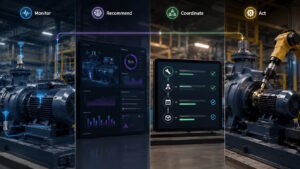
You do not need a research lab to grasp the value here. Picture the simplest version. You have a digital copy of a real system, and it updates as conditions change. Data might come from existing sensors, maintenance records, weather history, or utility bills. The model does not replace human judgment, but it sharpens it.
In climate adaptation, leaders often face a frustrating problem. They must make big decisions with partial information. A coastal facility might face storm surge, but the timing and severity vary. A city might worry about extreme heat, but neighborhood impacts differ. A manufacturer might plan for supply shocks, yet disruptions ripple in surprising ways.
A digital twin supports a different planning style. Instead of debating hypotheticals in the abstract, you explore scenarios in a shared picture of the system. You can ask, “What happens if we add shade structures here?” or “What if this pump fails during peak demand?” The goal is not perfect prediction. The goal is better choices, made earlier, with clearer tradeoffs.
Sustainability strategy benefits in a similar way. Many organizations track energy, emissions, and waste. Still, the numbers often arrive after the fact. That lag makes action harder. A well-designed model can shorten the loop between insight and response.
Where digital twins fit into everyday sustainability decisions
When people hear “advanced modeling,” they often imagine something remote and technical. In practice, the most useful cases look ordinary. They connect to decisions you already make.
Consider a few common questions that show up in planning meetings:
- You might wonder, “Which buildings waste the most energy on hot days?”
- Or, “If we retrofit one site this year, where do we start?”
- Or, “How do we prove our resilience investments reduce real risk?”
A digital twin can help frame those questions with evidence. Teams can compare “before and after” outcomes in a consistent way. They can also connect operational choices to climate exposure. That connection matters because adaptation and sustainability often sit in separate lanes. One team talks about risk. Another talks about emissions. The best strategies let those teams meet in the middle.
In cities, this approach can support planning for heat islands, stormwater capacity, or transit changes. In campuses and large buildings, it can support energy performance, indoor comfort, and maintenance timing. In industrial sites, it can support process efficiency, water use, and downtime planning. None of these require you to start with a perfect model of everything. They reward a focused start.
Climate adaptation in plain terms: seeing risk before it hits
Climate adaptation can sound like a policy phrase, but you feel it in practical disruptions. A flooded access road delays deliveries. A hotter summer drives higher cooling demand. A wildfire season raises air-quality risks and insurance costs. Adaptation means preparing systems to keep working under new conditions.
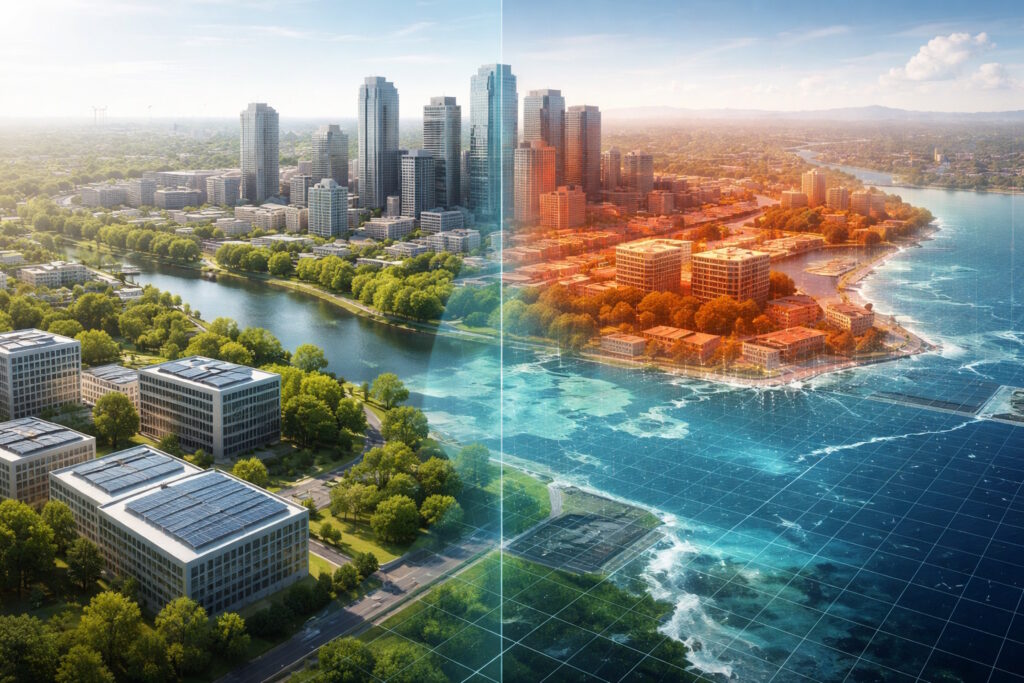
Digital modeling helps because it gives risk a shape. It turns “we could have flooding” into “this asset fails first, and here is the impact.” It turns “heat will increase” into “these zones become unsafe at these times.” That shift changes how people talk. It also changes what they fund.
You might ask, “Can this help with emergency planning?” Often, yes. Scenario testing can inform response plans, staffing, and backups. You might also ask, “Does it help with long-range capital planning?” It can, especially when you compare the costs of prevention with the costs of repeated disruption.
The key is clarity. Adaptation work succeeds when leaders can see where risk concentrates. Then they can phase projects logically instead of reacting in panic.
Sustainability strategy that feels less abstract
Sustainability strategy often starts with a promise. Reduce emissions. Cut waste. Improve efficiency. Support healthier communities. Those goals matter, yet they can feel distant from daily operations.
A digital model can bring them closer. It can link a target to specific levers, like equipment schedules, building controls, logistics routes, or material choices. It can also support measurement that people trust. When teams trust measurement, they argue less about the numbers and more about solutions.
You may also hear a question like, “Will this make reporting easier?” It can, because a consistent data foundation reduces manual effort and confusion. Still, reporting should not become the whole story. The real value comes when measurement influences action, week to week and season to season.
One caution helps here. Sustainability does not live only in the model. It lives in decisions, incentives, and culture. The technology can guide you, but leadership still sets direction.
What success looks like, and what to watch for
The most effective projects stay grounded. They start with a system that matters, a decision that repeats, and a pain point that costs money or increases risk. From there, they expand carefully.
Success often looks like fewer surprises. It also looks like smoother maintenance cycles, clearer priorities, and better coordination across teams. Over time, it can support stronger resilience, because the organization builds a habit of learning from scenarios.
At the same time, a few challenges deserve attention. Data quality matters, even in a basic model. Ownership matters, because models drift when nobody maintains them. Governance matters, because sensitive operational data requires clear rules. Finally, communication matters, because a model only helps when people understand it.
You do not need to solve everything upfront. You do need a clear purpose. Without that, the effort can become a showcase rather than a tool.
Conclusion: Turning Insight into Resilience
Climate adaptation and sustainability strategy often feel complex because the risks keep shifting and the stakes remain high. Still, progress usually comes down to clearer choices about where to focus, how to prepare, and how to measure what matters. Digital twins help bring those choices into sharper focus by connecting climate risk and sustainability goals to real systems and real decisions.
If you are interested in how organizations are using emerging technologies to navigate climate challenges and plan more resilient futures, Tech Scope Connect offers a place to continue that exploration through informed discussions, expert perspectives, and ongoing conversation. Join today!
Join Green Things Summit 2026 as we take a deeper dive into how AI, IoT, automation, and edge computing help drive efficiency, reduce waste, and advance sustainability goals through thought-leadership panels, industry keynotes, and interactive Q&A sessions. Register here.