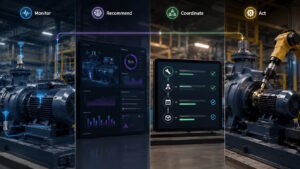

Key Takeaway: AI management skills are becoming essential as artificial intelligence moves deeper into everyday business operations. While AI can generate content, analyze information, and support workflows, employees still play a critical role in reviewing outputs, validating recommendations, providing context, and making final decisions. As organizations adopt more AI-powered tools, the ability to manage AI effectively may become one of the most valuable workplace skills across marketing, sales, operations, customer service, and many other business functions.
AI Is Joining the Workday
AI management skills are becoming more important as businesses move from testing AI tools to relying on them in everyday work. The shift is not only about prompts, automation, or technical know-how. It is also about AI oversight, human-AI coordination, and the ability to guide AI-supported workflows with good judgment.
For many teams, AI started as a helpful side tool. Someone used it to draft an email, summarize a meeting, brainstorm campaign ideas, or clean up a rough paragraph. That phase still matters. But the workplace conversation is already moving forward.
Now, AI is showing up inside business software, customer support systems, marketing platforms, sales tools, analytics dashboards, and daily decision-making processes. It no longer sits outside the work. It increasingly participates in the work.
That creates a new question for businesses and employees. Who manages the AI? Not in the science-fiction sense. Not as if AI has become a coworker with a desk and a coffee mug. The practical question is simpler: who checks the output, validates the recommendation, adds context, catches mistakes, and decides what should happen next? That is where the growing importance of AI management comes into focus.
From “Can AI Help?” to “Who Checks the Work?”
The first wave of workplace AI adoption focused on productivity. People asked, “Can AI help me finish this faster?” In many cases, the answer was yes.
AI can speed up research. It can draft first versions. It can summarize long documents. It can organize messy notes. It can suggest options when a team feels stuck. But speed does not automatically create quality.
A fast answer can still miss the point. A polished paragraph can still include a weak claim. A confident recommendation can still ignore the business context. A helpful summary can still leave out the detail that changes the decision. That is why the next workplace skill is not only using AI. It is knowing how to manage the work AI produces.
For a simple example, imagine a marketing manager using AI to draft a campaign email. The AI may produce a clean version in seconds. But the manager still needs to ask practical questions. Does this fit the audience? Does it match the brand? Does it make a promise the company can support? Does it sound like something a real buyer would respond to? The tool can generate the draft. The human still owns the judgment.
Why AI Management Skills Are Becoming a Workplace Priority
AI is becoming more useful because it can handle more steps in a process. That same growth creates more need for oversight.
In the past, a worker might use AI for one small task. Today, a team may use AI across several connected tasks. It may help research a market, draft content, summarize customer feedback, suggest next steps, and prepare a report. At that point, the work is no longer only about a single output. It becomes a workflow.
Someone has to connect the pieces. Someone has to notice when the AI starts with the wrong assumption. Someone has to decide when the answer is good enough, when it needs revision, and when it should not move forward.
This is especially important in business settings. Companies do not operate on generic answers. They rely on customer context, product details, industry knowledge, legal limits, brand voice, and timing. AI may help with the work, but it does not automatically understand what your business values most.
That is why AI oversight is becoming part of everyday professional judgment. It gives employees a new role in the process. They are not just task doers. They become reviewers, coordinators, and decision-makers around AI-supported work.
The Human Role: Judgment, Context, and Taste
People often talk about AI as if the main issue is whether it can complete a task. That misses part of the story. In many workplace situations, the harder question is whether the output is right for the moment.
A customer service response may be accurate but too cold. A sales summary may include the correct details but miss the relationship history. A financial recommendation may look organized but rely on outdated assumptions. A blog draft may read smoothly but fail to say anything original. These are not always technical problems. They are judgment problems.
Humans bring context that AI often lacks. They understand tone, timing, relationships, internal priorities, and risk. They also know when something simply feels off. That kind of judgment is hard to replace. In many cases, AI makes it more valuable.
When AI can produce more drafts, recommendations, and options, people need stronger filters. They need to know what deserves attention. They need to identify what should be changed. They need to decide what should never reach the customer. This is where managing AI becomes less about software and more about responsible work.
AI Management Skills Go Beyond Better Prompts
Prompting still has value. A better question can produce a better answer. Clear instructions help AI understand the task. But prompt writing is only one part of the picture.
AI management involves what happens before, during, and after the prompt. It includes knowing what information the tool needs. It includes reviewing the result. It includes checking whether the output supports the larger business goal.
A useful AI output usually depends on more than a clever instruction. It depends on context, review, and follow-through. Think of it this way: prompting helps you start the conversation with AI. Managing AI helps you decide what to do with the answer.
That distinction becomes more important as AI tools become easier to use. When everyone can generate a draft, the advantage shifts. The valuable skill becomes knowing which draft is worth using.
What Does Managing AI Look Like Day to Day?
For most employees, managing AI will not feel dramatic. It will show up inside normal work.
- A sales team may use AI to summarize account activity before a call. A human still checks whether the summary captures the real opportunity.
- A customer success manager may use AI to draft a client follow-up. The manager still adjusts the tone based on the relationship.
- A marketer may use AI to suggest article ideas. The team still decides which ideas match the audience and brand strategy.
- An operations leader may use AI to organize process notes. The leader still confirms what reflects reality.
In each case, AI supports the task. The human shapes the final outcome. This is why the skill feels broad. It does not belong only to data scientists or software developers. It reaches anyone who uses AI to support business work. The employee does not need to become a machine learning expert. But they do need to understand the role AI plays in the process.
Why This Skill Reaches Every Department
AI management will spread because AI use is spreading. Marketing teams will need to review AI-generated content for accuracy, clarity, and brand fit. Sales teams will need to check account insights and suggested outreach. HR teams will need to evaluate AI-assisted summaries, job descriptions, and employee communications. Finance teams will need to review AI-supported analysis with care.
Every department has its own version of the same challenge. The AI can assist. The person must still understand the work. This creates an interesting workforce shift. Domain expertise may become even more important. Employees who know the customer, the product, the market, or the process can spot weak outputs faster. They can see when AI sounds right but misses something important.
That ability may become one of the most valuable skills in an AI-enabled workplace. The strongest employees may not be the ones who use the most tools. They may be the ones who know how to guide those tools toward better outcomes.
What Skills Do Employees Need in an AI Workplace?
A common question is, “What skills do I need to work with AI?” The answer starts with curiosity, but it does not end there.
- Employees need critical thinking. They need to ask whether an AI output makes sense. They need to notice gaps, vague claims, and unsupported recommendations.
- They need communication skills. AI often needs better context, and coworkers need clear explanations. The person managing the work becomes a bridge between the tool and the team.
- They need business awareness. A technically correct answer may still fail if it ignores the customer, the goal, or the timing.
- They also need comfort with revision. AI rarely produces the final version of meaningful work on the first try. Good users shape, test, compare, and refine.
- Most of all, employees need accountability. AI can help produce the work, but people still carry responsibility for what the business sends, says, recommends, or decides.
The Big Opportunity for Businesses
For businesses, the rise of AI management creates both a challenge and an opportunity. The challenge is clear. Companies cannot simply add AI tools and assume better results will follow. They need people who know how to use AI responsibly inside real workflows.
The opportunity is just as important. When employees learn how to manage AI well, teams can move faster without giving up quality. They can explore more ideas, reduce busywork, and focus more attention on decisions that need human judgment.
This may also change how companies think about training. AI training should not only teach employees which buttons to click. It should help them understand how to review outputs, provide context, manage risk, and coordinate human approval.
In other words, AI adoption should include people development. The companies that get this right may build stronger teams. They will not treat AI as a magic shortcut. They will treat it as a powerful tool that still needs direction.
Conclusion: Managing AI Is Becoming Part of Modern Work
AI is changing the workplace, but not always in the way people expected. The biggest shift may not be a sudden replacement of human work. It may be a steady change in what human work requires.
As AI takes on more tasks, people will spend more time supervising outputs, validating recommendations, and coordinating workflows. They will need to know when to trust AI, when to revise its work, and when to bring human expertise back into the center of the decision.
That makes AI management a practical workplace skill, not a futuristic concept. Businesses will still need creativity, strategy, empathy, and experience. AI may support those qualities, but it does not replace the human judgment behind them.
The next stage of AI adoption will reward teams that know how to guide the technology, not just use it. As organizations continue to explore the evolving relationship between people and AI, conversations around AI management skills will only become more important. Tech Scope Connect regularly examines these emerging trends through expert discussions, industry insights, live newscasts, and global technology summits. If you are interested in where AI and the future of work are headed, we invite you to join the conversation.