Key Takeaway: Artificial intelligence is becoming a built-in part of the software, devices, and services people already use every day. Instead of existing as separate tools, AI is increasingly embedded into workflows, applications, and digital experiences, helping users work more efficiently without requiring them to interact directly with dedicated AI platforms. As this trend continues, the future of artificial intelligence may be defined less by standalone AI products and more by intelligence becoming a standard feature across modern technology.
Artificial Intelligence Moves Into Everyday Life
Artificial intelligence is shifting from a headline technology into a quiet part of everyday digital life. AI, machine learning, and smart automation already shape how people write, search, analyze, shop, schedule, design, and work. For many users, the most important change may not feel dramatic. It may feel like the tools around them simply get faster, more helpful, and more aware of context.
For years, the AI conversation centered on dedicated tools. You opened an AI assistant to write a draft. You visited a model to answer a question. You tried an image tool to generate a visual. Those experiences made AI visible. They also made it feel separate from normal work.
That separation is starting to fade. AI is moving into the apps, devices, and services people already use. AMD’s 2026 Advancing AI event, for example, frames the market around infrastructure, development, enterprise deployment, and AI across cloud, edge, and endpoints.
That framing points to a bigger story. AI is not just becoming more powerful. It is becoming more present. When someone asks, “How will AI show up in daily work?” the answer may be simple. It will show up inside the tools already on the screen.
From Separate Tool to Built-In Helper
The first wave of popular AI felt like a destination. Users went somewhere to try it. They typed a prompt, waited for a response, and judged the result. That was useful and exciting. It also placed AI outside the regular flow of work. A marketer might move copy between a document and an AI tool. A salesperson might paste notes into a chatbot. An analyst might copy data into a separate workspace.
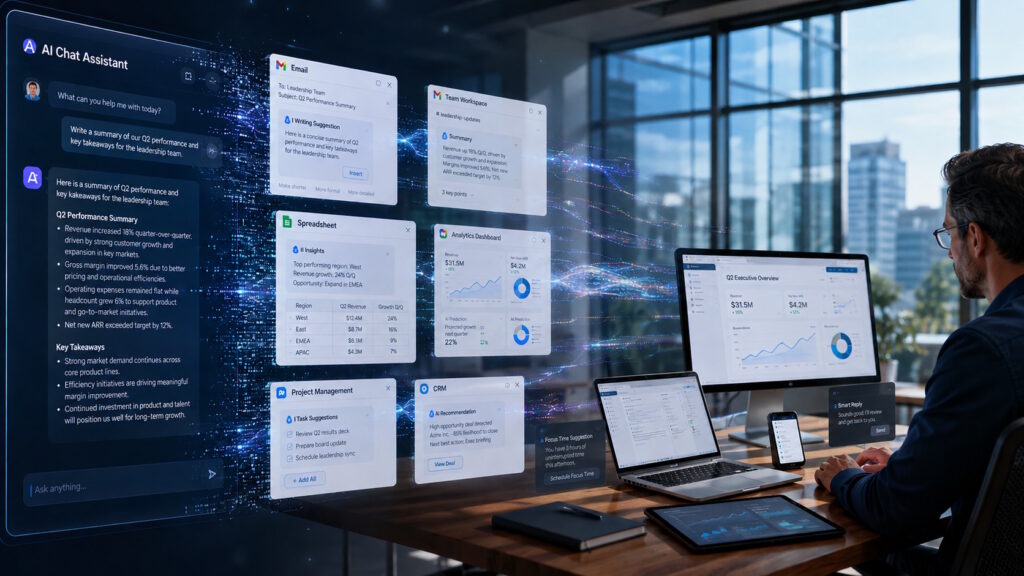
Those steps create friction. They ask people to leave one environment, use another, then return. The next wave looks more natural. Instead of leaving a workflow, users may find AI inside that workflow. A document editor suggests a clearer paragraph. A spreadsheet explains a trend. A meeting platform summarizes a discussion. A customer service system suggests the next response.
The user still makes decisions. The software simply becomes more helpful along the way. This is why AI may feel less like a product over time. It may feel more like a feature that improves many products.
Why Artificial Intelligence Is Becoming Less Obvious
Artificial intelligence often gets the most attention when it feels new. A chatbot writes a clever answer. An image generator creates something surprising. A system predicts a problem before a team notices it. Over time, users stop focusing on the novelty. They start caring about the result.
Think about search, GPS, cloud storage, or spell-check. At first, each technology felt special. Now people expect them to work. They do not pause to admire the infrastructure behind the experience.
AI could follow a similar path. It may become most valuable when users stop noticing the technology. A tool may sort an inbox, highlight a risk, or recommend a next step. The user may simply think, “That saved me time.”
This creates an important shift for businesses. The question changes from “Do we have AI?” to “Where can smarter tools improve the experience?” That is a better conversation. It starts with the work, not the hype.
The Invisible Layer Inside Everyday Work
Many people ask, “Will every app have AI?” The answer may be close to yes, but not always in the same way. Some tools will include visible assistants. Others will add smaller features that feel almost invisible. A project management platform may flag missed dependencies. A finance tool may explain changes in cash flow. A design app may suggest layout options. A security platform may detect unusual activity.
These features do not need to announce themselves loudly. The best ones may blend into the task. This does not mean AI disappears. It means the interface changes. Instead of asking users to learn a whole new tool, companies can bring intelligence into familiar places.
That helps adoption. People usually prefer useful improvements over complicated transformations. When AI supports something they already do, the learning curve feels smaller. For business leaders, this is a practical point. AI adoption may grow fastest when it feels ordinary.
From Cloud to Device to Edge
AI also spreads because computing environments are changing. Some AI tasks run in large data centers. Others happen on personal devices. Some take place near machines, sensors, cameras, or industrial systems.
The cloud still matters. It can support large models, heavy workloads, and broad services. Devices also matter. They can provide speed, privacy, and responsiveness for everyday interactions.
The edge adds another layer. It brings intelligence closer to where work happens. In factories, hospitals, retail spaces, vehicles, and energy systems, that local context can make AI more useful. This is not a battle between one location and another. It is more like a network of intelligence. Different tasks may run where they make the most sense.
For the user, the technical details may stay hidden. A business person may only notice faster service. A technician may receive a better alert. A customer may get a smoother experience. That is the larger point. AI becomes part of everything when it stops depending on one screen, one app, or one place.
What Businesses Should Watch
For businesses, this shift creates a simple challenge. It is not enough to add AI labels to products or processes. Customers and employees want useful outcomes. They want tasks to move faster. They want answers with more context. They want tools that reduce repetitive work. They want systems that help people make better decisions.
This creates room for smarter product design. A company does not need to turn every feature into a chatbot. Sometimes the better choice is a quiet recommendation, a cleaner workflow, or a timely alert.
Business teams can also ask more grounded questions. Where do employees lose time today? Which decisions need better context? Which customer interactions feel slow or confusing? Which processes depend on too much manual work?
Those questions keep the focus on value. They also help teams avoid AI for AI’s sake. As more vendors embed AI into everyday software, buyers will need sharper judgment. The real test will be usefulness, not branding.
A More Human Way to Think About AI
The phrase “AI everywhere” can sound cold or overwhelming. It can suggest a world filled with machines making every choice. A better vision is more human. AI can become part of everything in the same way helpful design becomes part of everything. It can remove small annoyances. It can surface information at the right moment. It can help people spend less time searching and more time deciding.
This future still needs care. Businesses must think about trust, accuracy, privacy, and accountability. A helpful system can still make mistakes. A fast answer can still need review.
But a surface-level truth remains clear. The most successful uses of AI may not feel like dramatic replacements. They may feel like better support. When readers ask, “What does embedded AI mean for me?” the answer starts with daily work. It means the tools around you may begin to understand more, suggest more, and handle more routine effort.
Conclusion: When the Technology Fades, the Value Comes Forward
The future of AI may not revolve around opening more AI apps. It may revolve around everyday tools becoming more intelligent. Documents, devices, workflows, machines, and services may all gain new forms of support.
That shift can make artificial intelligence feel less like a separate product category. It can make it feel like part of the digital environment. People may not always notice when intelligence works in the background. They may only notice that tasks feel smoother, answers appear faster, and decisions have more context.
For businesses, the opportunity is not just to adopt the latest tool. It is to understand where intelligence can improve real experiences. As AI becomes more deeply woven into everyday technology, the conversation is likely to shift from the tools themselves to the outcomes they help create.
Interested in how emerging technologies are shaping business, work, and innovation? Join the conversation at Tech Scope Connect, where industry leaders and technology professionals explore the trends transforming the future of the connected world.
Sources: