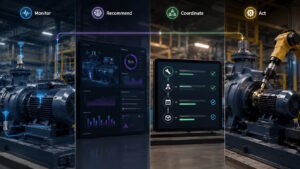

Key Takeaway: Enterprise AI adoption is entering a new phase. While early AI experiments and pilot projects proved what the technology could do, organizations now face the more difficult challenge of integrating AI into everyday operations. Success increasingly depends on measurable business value, effective governance, employee adoption, and the ability to scale AI responsibly across the enterprise rather than simply deploying impressive demonstrations.
AI Has Left the Sandbox
Enterprise AI adoption is moving from the trial phase into the everyday work of business. After years of AI pilots, AI implementation plans, and digital transformation conversations, many companies now face a practical question. Can this technology work reliably inside real operations?
That shift changes the mood around AI. The early excitement came from seeing what tools could do. Teams tested chatbots, generated content, summarized reports, analyzed data, and built small proofs of concept. Some projects impressed leaders. Others showed clear limits. Either way, the experiment phase taught businesses something useful.
Now comes the harder part. Companies need to turn scattered success into repeatable value. They need AI that supports real workflows, protects data, follows governance rules, and helps people do better work.
Why the Demo Was Only the Warm-Up
A good AI demo can feel magical. You ask a question, and the system responds in seconds. You feed it a document, and it gives you a summary. You describe a task, and it produces a draft.
But business does not run on demos. It runs on processes, approvals, customers, deadlines, budgets, and risk. A tool that performs well in a small test may struggle in real business conditions. It may touch messy data, older systems, and habits that teams have built over years.
This is where many companies feel the shift. The question is no longer, “Can AI do something impressive?” The better question is, “Can AI help this team do important work better every week?”
Enterprise AI Adoption Moves Past the Demo
Enterprise AI adoption becomes real when AI stops living in isolated experiments. It starts to support daily operations, customer interactions, decision-making, and team productivity.
That does not mean every company needs AI everywhere. It means leaders need to choose the right places for it. A customer service team may use AI to sort requests faster. A marketing team may use it to speed up research. A finance team may use it to review patterns in reports. A product team may use it to turn feedback into clearer priorities.
The common thread is simple. AI must connect to a business problem people already recognize.
The Hard Part: Making AI Fit Real Work
The biggest challenge is not always the model. Often, the real challenge is the workplace around it. Where does the data come from? Who checks the output? What happens when the system makes a mistake? How will employees know when to trust it? How will managers measure the benefit?
These questions sound basic, but they shape whether AI becomes useful. A pilot can avoid some of them because the scope stays small. Production AI cannot. It has to fit into the way people already work, while also improving that work. That requires clear ownership, clean enough data, practical training, and realistic expectations.
Measuring Value Without Chasing Magic
During the experiment phase, success often meant showing that AI could complete a task. That is not enough anymore. Businesses now need to understand whether AI saves time, reduces friction, improves quality, or helps teams make better decisions. Some benefits may show up quickly. Others may take longer because people need time to change how they work.
A simple question helps: “What should improve if this AI project succeeds?” The answer could be faster response times, fewer manual steps, better content output, stronger forecasting, or smoother customer support. The metric depends on the use case. The point is to define value before the project becomes another shiny tool.
Governance Is the Guardrail, Not the Brake
As AI moves into daily operations, governance becomes harder to ignore. That does not make governance the enemy of progress. It helps companies use AI with more confidence. Governance answers practical questions. Which data can AI systems access? Who approves new tools? What uses are off limits? How should teams handle sensitive information? When does a human need to review the result?
Without these rules, AI can spread in ways leaders cannot see. Employees may use tools that create security, privacy, or accuracy risks. With clear guidance, teams can move faster because they understand the boundaries. Good governance does not need to feel heavy. It should make safe use easier.
Scaling AI Means Changing How Teams Work
Scaling AI is not just a technology rollout. It is a change in how people work together. Leaders may need to align departments that rarely shared data before. Teams may need new training. Managers may need to rethink old workflows. Employees may need space to test AI without feeling judged for learning slowly.
This is why the next phase feels harder. Buying tools is relatively easy. Changing habits takes patience. The companies that make progress will likely treat AI as a team capability. They will not leave it only to IT or innovation groups. They will bring business leaders, operations teams, security teams, and frontline employees into the conversation.
Why Good Pilots Still Get Stuck
A pilot can succeed and still fail to scale. That sounds strange, but it happens often. Sometimes the pilot solves a problem that nobody owns. Sometimes the data works in the test but breaks in real use. Sometimes the team builds around one enthusiastic employee, then loses momentum. Sometimes leaders expect instant savings and miss the smaller gains that build over time.
AI projects also stall when companies try to automate broken processes. If the workflow already confuses employees, adding AI may only make the confusion faster. The better path starts with the work itself. What slows people down? What decisions repeat every week? Where do teams lose time, context, or confidence? AI works best when it supports a clear need.
What Enterprise AI Adoption Asks of the Business
What does this stage ask from leaders? It asks for focus. Not every AI idea deserves a full rollout. Not every pilot needs to become a platform. Companies need to separate useful experiments from projects that can support real business outcomes.
They also need to involve the people who will use the systems. A tool designed far from the actual workflow often misses the small details that make work hard. The best insights may come from employees who know where the friction lives.
Enterprise AI adoption also asks for patience. A strong program grows through learning, feedback, adjustment, and trust. It rarely arrives fully formed.
AI Becomes Part of the Operating Rhythm
The most important change may be the quietest one. AI is becoming part of normal business activity. It may help write first drafts, summarize meetings, review customer messages, support coding, flag unusual patterns, or speed up research. None of these uses needs to sound futuristic. In many companies, the value will come from smaller improvements repeated many times.
That is why the end of the experiment phase does not feel like a dramatic finish. It feels more like a handoff. The novelty is fading, and the operational work is beginning. For leaders, that creates a useful opportunity. They can stop asking whether AI is impressive and start asking where it belongs.
Conclusion: The Work Begins After the Experiment
The AI experiment is not really over. Businesses will keep testing new tools, new models, and new ways of working. What is changing is the standard for success. A clever pilot no longer feels like enough.
The next stage will favor organizations that connect AI to real work. They will define value clearly, guide employees responsibly, and build the habits needed to improve over time.
That is the hard part. It is also where AI can become more than a promising technology. It can become a practical part of how businesses operate.
Want to stay informed as AI continues to reshape business and technology? Tech Scope Connect explores emerging AI trends, business strategy, and real-world technology adoption through expert insights, live discussions, and conversations with industry leaders. Join the conversation and stay connected to the ideas shaping the future of enterprise AI.