Key Takeaway: Artificial intelligence helps businesses spot equipment problems earlier and plan maintenance more effectively. By analyzing signals such as vibration, temperature, and energy use, AI can reduce downtime, control costs, and support safer operations. Skilled technicians still play a central role by interpreting alerts and deciding what action to take.
When Machines Start Speaking Up
Artificial intelligence is changing how businesses detect equipment problems before those problems disrupt operations. AI tools and machine learning models help teams uncover warning signs hidden in everyday equipment data. Instead of relying only on fixed schedules, companies can respond to an asset’s actual condition. This shift matters across factories, fleets, utilities, buildings, and data centers.
Unexpected failures rarely happen at a convenient moment. A motor may stop during production, or a cooling system may struggle during peak demand. Those disruptions create repair costs, missed deadlines, safety concerns, and frustrated customers. Predictive maintenance offers a practical way to act before a small issue becomes a costly breakdown.
What Does Predictive Maintenance Actually Mean?
So, what is predictive maintenance? It is a strategy that monitors equipment condition and looks for early signs of decline. Teams use those signals to decide when an asset needs attention.
Reactive maintenance begins after equipment fails, when repairs often feel urgent and expensive. Preventive maintenance follows a calendar, even when a machine still works well. Predictive maintenance adds current operating data to the decision.
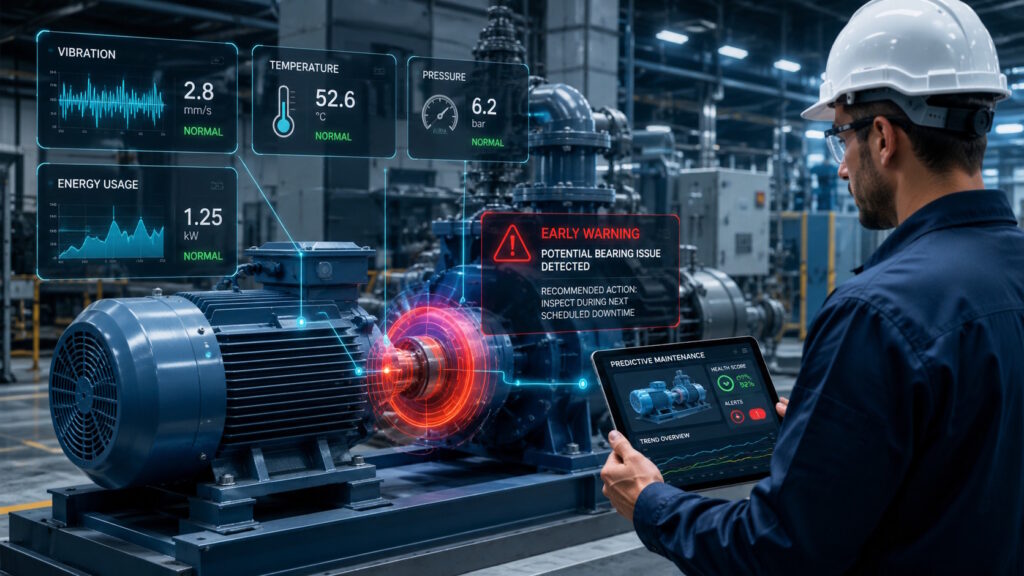
Sensors may track vibration, temperature, pressure, sound, or energy use. Software compares current behavior with normal patterns and highlights meaningful changes. Technicians can then inspect the asset before production or service suffers.
You may wonder, “Can a machine really predict its own failure?” Not exactly; equipment produces signals, software estimates risk, and people choose the response. The goal is not perfect foresight, but earlier notice and better preparation.
How Artificial Intelligence Finds Trouble Before Failure
Modern equipment can produce more information than a maintenance team could review manually. Artificial intelligence examines that data quickly and looks for patterns that deserve attention.
Imagine a pump that vibrates slightly more each week. One reading may look harmless, but several readings could reveal a trend. An AI model can compare that trend with earlier performance. It may also consider temperature, flow, and power use before raising an alert.
This process often relies on anomaly detection, which identifies behavior outside the equipment’s normal range. An alert does not prove that a part will fail. It gives technicians a reason to investigate sooner.
The system can also learn from maintenance outcomes. When a technician confirms worn bearings, the team records what happened. That feedback may help the model recognize similar conditions more accurately later.
How Artificial Intelligence Strengthens the Business Case
The clearest benefit is reduced unplanned downtime. Earlier warnings give teams more freedom to schedule repairs during quieter periods. They can also arrange parts, tools, and staff before work begins.
Predictive maintenance may lower costs by reducing unnecessary service. Companies can focus their budgets on equipment that shows genuine signs of wear. Early action may also extend an asset’s useful life.
Safety creates another strong reason to pay attention. Changes in heat, pressure, movement, or electrical behavior may reveal a developing hazard. A timely inspection helps teams address the concern before conditions worsen.
Better information also supports planning. Operations leaders gain a clearer picture of asset health across a facility or fleet. Maintenance decisions become easier to prioritize and coordinate with production schedules.
Where Predictive Maintenance Shows Its Value
Manufacturers use this approach to monitor motors, pumps, conveyors, robots, and production lines. Utilities may watch turbines, transformers, and other critical infrastructure.
Transportation companies can monitor engines, brakes, batteries, and vehicle systems. Building operators can track elevators, heating units, and cooling equipment. Data centers may watch fans, power systems, and temperature changes that threaten service reliability.
The equipment differs, but the basic process remains consistent. Assets produce signals, software identifies unusual behavior, and experienced people decide what happens next. This combination turns raw data into practical maintenance insight.
What Can Stand in the Way?
The idea sounds straightforward, but a successful program needs a solid foundation. Poor data can create weak warnings, missed problems, or unnecessary alerts. Missing sensors may leave important conditions invisible.
Older machines can complicate the effort because many cannot share operating data. Companies may need extra sensors, gateways, or software connections before analysis becomes possible.
Cost also deserves attention. Sensors, integration, software, training, and process changes require investment. A focused pilot often makes more sense than a companywide rollout. Teams can begin with equipment where downtime creates a clear business impact.
Trust presents another challenge. Technicians may ignore alerts when the system offers little context or produces frequent false alarms. Leaders should involve maintenance teams early and compare recommendations with inspection results.
The better question is not simply, “Can we install this technology?” Companies should also ask, “Can our people use its insight well?”
Why Experienced People Still Matter
AI does not remove the need for skilled technicians. It gives them another source of timely information. A model may identify an unusual signal, but a technician understands the machine and operating environment.
Human judgment matters when several assets need attention at once. Teams must weigh safety, production demands, customer needs, and available resources. Software can inform that decision, but people still manage the trade-offs.
The strongest programs combine digital insight with practical knowledge. Technicians validate alerts, explain unusual conditions, and improve the process. Their feedback helps the system become more useful over time.
Conclusion: From Surprise Failures to Planned Action
Predictive maintenance gives businesses a better chance to act early and plan with confidence. It cannot eliminate every failure or guarantee a perfect forecast. However, it can help teams recognize meaningful changes before a problem becomes an emergency.
Clear goals, reliable data, and close collaboration will shape the strongest results. Organizations can begin with critical equipment and expand as they learn what works.
Artificial intelligence is turning maintenance from a fixed routine into a more responsive business capability. Tech Scope Connect explores how AI is reshaping industrial operations and other areas of technology. Join the conversation through our expert discussions, live newscasts, and global summits.