
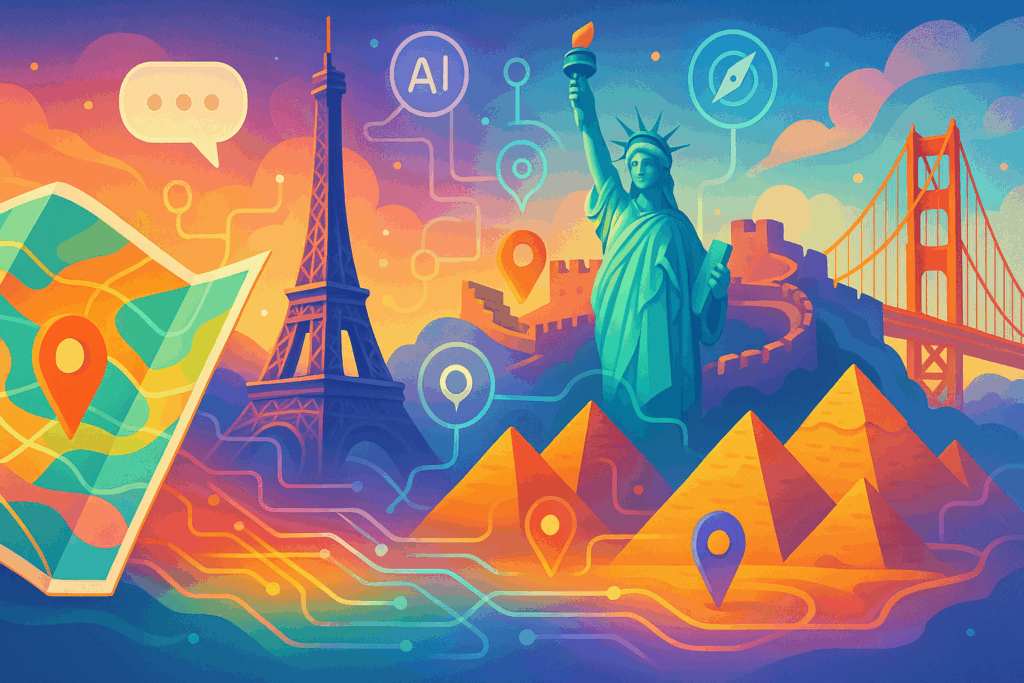
The Big Picture: Google Maps’ new generative-AI features (powered by Gemini) turn the app from a directions tool into a conversational travel companion that plans and personalizes on the fly. Users can ask natural-language questions (e.g., nearby hikes, dinner with outdoor seating, accessible parking, rainy-day activities) and get context-aware suggestions synthesized from reviews, real-time conditions, and preferences—plus smart routing with meaningful stops. For businesses, this shifts local discovery toward rich, helpful content that answers conversational queries, rewarding listings with complete, high-quality details over keyword stuffing. The result: faster planning, more confident exploration, and a new SEO playbook for local visibility.
Have you heard about Google Maps generative AI? If you’ve recently noticed your Google Maps getting a little smarter—almost like it knows exactly what you’re looking for—you’re witnessing generative AI in action. Google’s new AI-powered maps aren’t just helping you get from point A to point B; they’re reshaping how we discover, plan, and experience the world around us.
What Exactly Is Google Maps Generative AI?
In the simplest terms, Google Maps generative AI combines Google’s latest AI technology, including Gemini, with its powerful mapping platform. Imagine having a personalized travel guide built right into your phone, one that understands your conversational questions and gives you suggestions tailored specifically to your interests. Whether you’re searching for a new café to visit or planning a spontaneous weekend getaway, AI-powered maps offer intelligent, conversational assistance.
This innovation matters because maps are no longer just tools to prevent getting lost—they’ve become companions for discovering exciting experiences. It means less guesswork and more confidence when exploring your surroundings.
Real-Life Examples: How Generative AI Enhances Everyday Travel
Ever asked your map, “What’s fun to do nearby?” Thanks to Google Maps generative AI, such conversational queries are now more interactive and helpful. Here are a few scenarios where this makes a significant difference:
- Weekend Planning: You’re looking for outdoor activities this weekend. With a simple question like, “Hey, Google Maps, suggest a hiking trail nearby,” the map generates suggestions based on user reviews, preferences, and even real-time conditions.
- Restaurant Hunting: Imagine driving in an unfamiliar neighborhood and casually saying, “Where can we grab dinner with outdoor seating?” The AI-driven map immediately recommends top-rated restaurants fitting your description.
- Road Trip Adventures: Generative travel suggestions can help craft spontaneous itineraries. Ask your Google Maps generative AI for must-see stops along your route, and it instantly compiles an engaging list of destinations tailored just for you.
- Parking and Accessibility: Finding convenient parking can be challenging, especially in bustling urban areas. Google Maps generative AI can quickly suggest the nearest parking options or identify locations with ample accessibility features, significantly reducing stress and saving time.
- Event Planning: Planning events such as birthdays or anniversaries becomes simpler. By asking something like, “Show me venues ideal for hosting a family celebration nearby,” you receive immediate recommendations tailored specifically to the type of event you’re hosting and your preferred style.
- Weather Adaptation: On days when weather conditions might affect your plans, Google Maps generative AI proactively suggests alternatives or indoor activities. Simply inquire, “What indoor activities can I do today nearby?” to receive tailored suggestions based on your location and weather conditions.
The Bigger Picture: Maps Are Now Your Travel Companion
What sets Google Maps generative AI apart is its conversational nature. Rather than merely following prompts, you can talk naturally with your map app, receiving recommendations like you would from a friend who’s a local expert. This human-like interaction changes the game by making your map not just a navigation tool, but a personalized travel concierge.
This shift isn’t minor—it’s a fundamental transformation. As Google continues to integrate generative AI into maps, we’ll likely see even more powerful and seamless user experiences. AI-powered navigation systems won’t just show routes; they’ll guide journeys, suggest meaningful stops, and enrich every travel moment.
Why Businesses Should Pay Attention
For local businesses, Google Maps generative AI isn’t just about convenience—it’s about visibility. With conversational AI driving map interactions, the way businesses approach local SEO and online presence must adapt. Rather than focusing purely on keywords, businesses should provide rich, relevant information that generative AI can easily incorporate into conversational search results.
Generative AI favors content that’s informative, helpful, and engaging. Businesses that deliver clear answers to common conversational queries will benefit from increased exposure and customer interaction.
Wrapping Up: The Future of Exploration Is Here
Google Maps generative AI is more than just another tech feature—it’s reshaping our relationship with the world. Maps now speak our language, understand our preferences, and guide us more intuitively than ever before. As this technology evolves, it will continue changing how we explore new places, interact with businesses, and experience everyday travel.
Want more topics like this? Join Tech Scope Connect to explore the evolving relationship between humans and technology through our newscasts, summits, and exclusive high-tech content.