
Key Takeaway: Next-gen generative AI is accelerating because of smarter token mechanics—the way models break down, store, and prioritize information. Advances like improved tokenization, longer context windows, token compression, and task routing make outputs faster, cheaper, and more accurate while reducing “lost context” in long workflows; token-aware safety layers add reliability for brand and compliance needs. These gains now span text, voice, image, and video, enabling multi-step, brand-consistent pipelines rather than one-off prompts. Practically, teams win by building token literacy (tight prompts, reusable templates, context checklists), monitoring token spend, and pressing vendors on context limits, compression, routing, and safety. The payoff: higher quality at lower cost and smoother scaling from experiments to production use.
The Token Shift Behind Generative AI’s Next Leap
The recent acceleration in generative AI is no accident—and much of that speed can be traced back to one technical yet foundational element: tokens. Whether the conversation centers on gen AI, AI content creation, or large language models, the underlying fuel remains the same. These tiny data units—called tokens—are the building blocks of how machines read, interpret, and generate language, images, and even video.
This matters because tokens now determine how effectively AI models can perform. They influence quality, cost, memory, and responsiveness. Improved token mechanisms have quietly powered the leap in generative performance over the past year, helping explain why tools feel faster, smarter, and more reliable. Understanding this evolution is key not only to technical teams but also to leaders making strategic decisions about how and where to integrate generative AI into their workflows.
What Are Tokens? Simple, Useful Building Blocks
At a basic level, tokens are fragments of information—usually words, syllables, or characters—that AI models break text into. These fragments are how models read inputs, anticipate user needs, and generate coherent replies. Tokens function as both the alphabet and grammar of AI systems, serving as the primary language in which these models operate.
Although users don’t need to track every token, understanding how they influence results can unlock real benefits. Token volume directly affects processing speed, usage costs, and the clarity of output. For example, prompts that use fewer, more precise tokens often produce faster and cheaper responses. Advanced token handling even allows the model to pack more meaning into less space, a shift that brings major gains in both efficiency and accuracy.
A Quick Mental Image
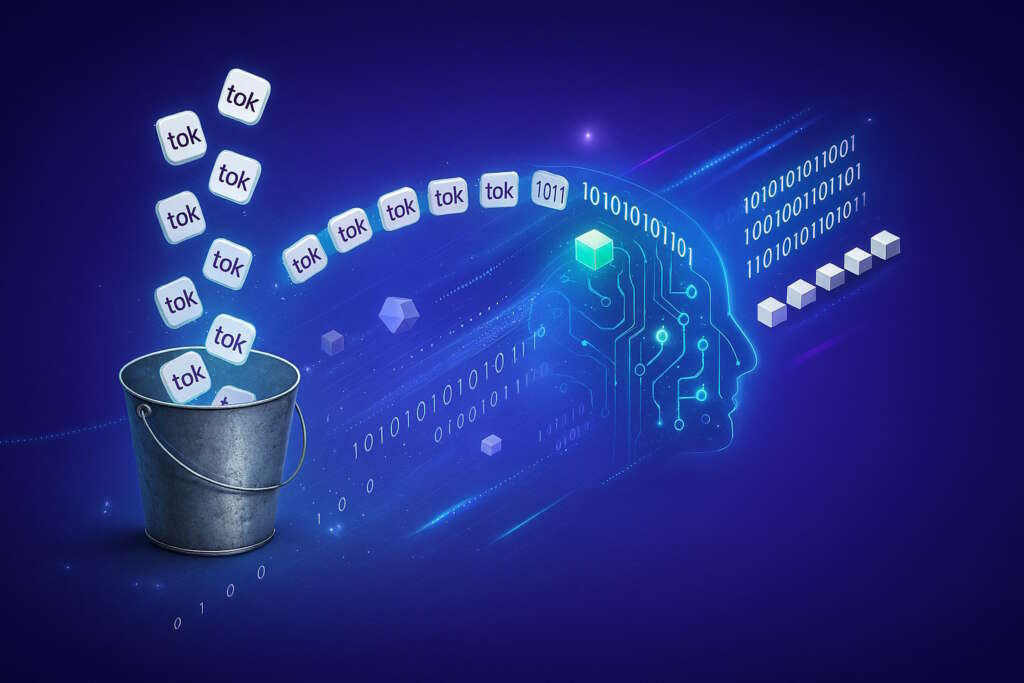
To visualize how tokens shape performance, imagine a metaphorical “context bucket.” Every time you enter a prompt, upload a document, or paste a transcript, you pour tokens into that bucket. The model examines what’s inside to understand the conversation and decide what to say next. A larger bucket holds more information, but a smarter bucket uses space more wisely.
The size and efficiency of that context bucket are critical. If you’ve ever had an AI assistant lose the thread halfway through a task, chances are it ran out of room. When the context is full, older information gets pushed out. However, improvements in token compression and contextual memory allow models to fit more relevant content in the same amount of space, preserving accuracy even in long, complex exchanges.
Everyday Examples You Already Know
Even if you’ve never thought about tokens, you’ve already seen them at work. Consider when you paste in a meeting summary and ask the tool to generate follow-up actions, or when you share a rough draft and request edits for tone. These tasks rely on tokens to interpret your input and produce output that feels tailored and specific.
Each of these exchanges demands token precision. A bloated prompt full of irrelevant information can slow the model down and degrade quality. But a refined prompt—backed by strong token discipline—yields sharper, more relevant results. When your teams learn how to work within these token limits, their creative and operational output improves across the board.
Why Tokens Matter to Teams and Budgets
This isn’t just a technical detail—it’s a strategic one. Teams looking to scale AI usage without ballooning costs will find that token literacy is no longer optional. Tokens shape how quickly a task gets done, how much it costs, and whether the output meets your quality standards. When leaders understand that connection, they can align creative ambition with operational efficiency.
Cost, speed, and confidence. Most generative platforms bill based on the number of tokens used in both prompts and responses. That means every inefficient sentence translates into higher spend. A more disciplined use of tokens speeds up turnaround and lowers overall costs—because less is wasted and more is retained. Teams that understand this tradeoff can extract more value from the same budget.
Memory and context. If your AI assistant “forgets” what you told it, the cause is usually a limited context window. The model simply runs out of room. Enhancements in context window size—and smarter ways of compressing information—let the system remember more, with fewer reminders. That’s critical when the task spans long documents, multiple team members, or multi-step workflows.
The Big Mechanisms, Explained Simply
Understanding the mechanics of token handling doesn’t require deep technical training. What matters is knowing the general direction: vendors are rolling out major upgrades that make models faster, cheaper, and more reliable—all through improvements in how they manage tokens.
Smarter tokenization. Traditional tokenizers often split words in unnatural ways, which can confuse the model and degrade output. Next-gen tokenization methods break inputs into more meaningful chunks, allowing the model to better recognize patterns, sentence structure, and intent. The result feels like the model finally “gets it.”
Longer context windows. Larger working memory means fewer interruptions. When the model can hold more input—such as detailed instructions, examples, or past interactions—it reduces the need for repetition. Teams save time because they no longer need to restate what’s already been shared.
Compression and routing. These two mechanisms are changing the game. Compression allows the system to condense meaning into fewer tokens without losing context. Routing prioritizes where the model spends its effort—sending basic tasks down faster, lighter paths while reserving more intensive routes for complex jobs. This means your simple draft happens faster, while your premium content still gets the attention it deserves.
Safety filters and policy guards. Content moderation is also becoming more token-aware. By reviewing token sequences before responses are generated, safety layers ensure compliance with brand guidelines and legal standards. This gives organizations confidence to scale their use of generative AI without exposing themselves to risk.
Where This Shows Up in Products You Already Use
Even if you haven’t changed your tools, you’ve probably noticed they’ve changed. Leading AI platforms continue to roll out advanced token features quietly, often in the background. The impact shows up in how tools behave and how quickly they respond.
Search, chat, and writing tools. Better token mechanics improve summarization accuracy and query precision. You’ll find your document searches return more relevant insights, your chatbots give fewer off-topic replies, and your writing assistants strike the right tone with fewer prompts.
Voice, image, and video touchpoints. Token improvements extend far beyond text. When you upload voice notes, they’re converted into tokens for transcription and analysis. Image and video data are mapped into tokenized structures so that AI systems can generate captions, summaries, or creative prompts based on visual input. This opens up a wide range of hybrid applications across media types.
Where Generative AI Shows Up in Daily Work
These token enhancements don’t just benefit developers—they’re reshaping day-to-day tasks for teams across industries. Whether you’re creating marketing content, drafting internal communications, or supporting client engagement, stronger token handling delivers more consistent results with less back-and-forth.
Imagine feeding the system a client brief and receiving five creative angles in return. Add personas, goals, and tone guidelines, and the model holds that context as it drafts your content. Or consider summarizing a discovery call and asking the tool to write follow-up questions and a next-step email. When token efficiency is high, context doesn’t slip through the cracks.
How to Think About Adoption
You don’t need a master plan to benefit from smarter token systems. Start small, pick repeatable use cases, and focus on capturing quick wins. That momentum builds over time, leading to higher adoption and lower cost per use.
Low-lift wins this quarter. Try developing prompt templates for your most common tasks. Store examples of brand tone so your team can reuse them. Build a short “context checklist” into your playbook to avoid wasting tokens on irrelevant detail. Use platform dashboards to monitor token usage and identify inefficiencies.
Guardrails that help, not hinder. Define success clearly for each task. Keep examples of “good” outputs easily accessible. Establish short review loops so feedback reaches the team quickly. When outputs feel safe and effective, internal adoption accelerates naturally.
Getting Ready: Simple Steps to Stay Ahead
As the token ecosystem evolves, your vendors and internal teams will need to stay aligned. The goal is not just technical literacy, but operational readiness.
Team skills and literacy. Train your teams on token fundamentals in practical terms. Use visuals like the context bucket to make abstract ideas feel concrete. Explain how tighter prompts lead to better results, and how token efficiency affects budget. The more familiar your people are with these principles, the more creative and confident they’ll become.
Vendor questions that matter. Don’t settle for vague feature updates. Ask vendors about token handling specifics, including context window sizes, tokenization improvements, and routing logic. Request examples of compression gains and memory persistence. Also inquire about safety protocols and audit logs. These conversations ensure that what’s under the hood supports your real-world needs.
Opportunities That Grow as Tokens Get Smarter
Smarter token systems don’t just improve single tasks—they enable more advanced workflows. As models remember more and handle style more consistently, teams can chain tasks together into seamless experiences.
From single drafts to multi-step workflows. With improved memory and compression, you can build systems that handle entire content pipelines—from brief to draft to review—without resetting at every step. The model retains constraints, priorities, and even stylistic nuance across sessions.
From generic outputs to brand-ready content. Better token handling allows tools to apply style rules more faithfully. You’ll see greater consistency across outputs—from emails and landing pages to summaries and scripts. That means less cleanup for editors and quicker time to publish.
Conclusion: Bring Tokens Into Focus, Not the Background
You don’t need deep technical expertise to benefit from token innovation. What matters is knowing how token mechanics affect cost, speed, and output quality. Smarter token systems make AI tools easier to use and more efficient to scale. They support brand integrity while freeing teams to focus on higher-value tasks.
Start small. Build shared language within your team. Ask sharper questions of your vendors. By bringing token conversations into the open, you’ll unlock new capabilities and workflows without adding complexity. And that’s how organizations move from experimenting with AI to integrating it—thoughtfully, strategically, and successfully.
Tech Scope Connect offers a front-row seat to the trends shaping that journey. Join us for real conversations, live broadcasts, and global summits that explore the future of AI, one token at a time.