
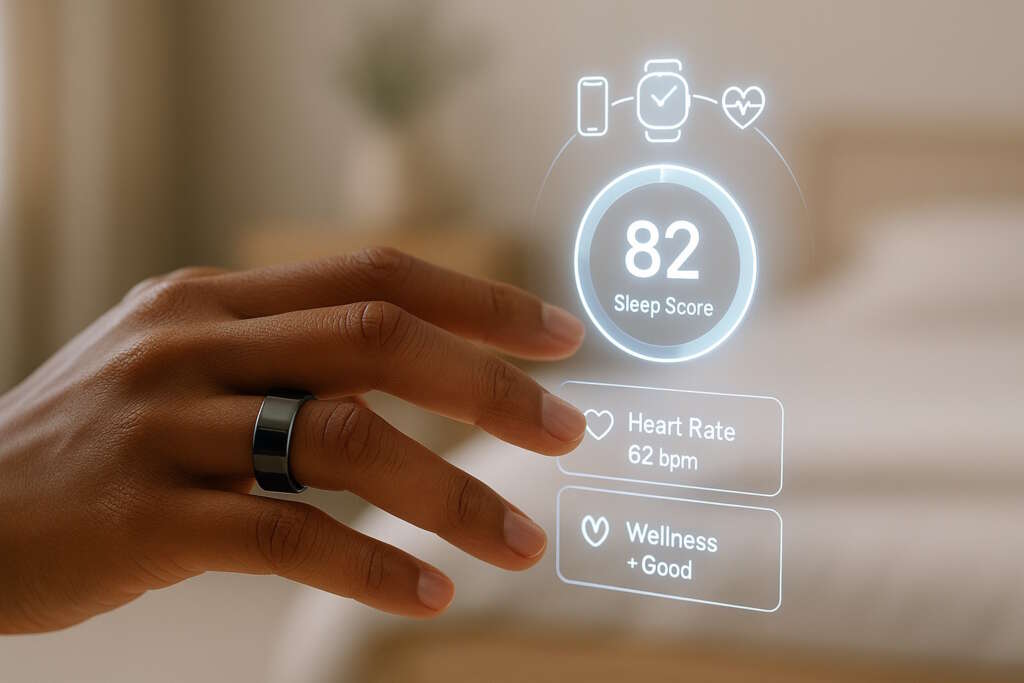
The Big Picture: Smart rings are shifting from stylish wearables to integral nodes in connected health ecosystems. Beyond tracking sleep, HRV, temperature, and activity, they now synthesize insights (e.g., readiness scores), sync with other devices and apps, and are edging toward provider and insurer platforms for proactive, preventive care. With AI-driven analysis, real-time stress sensing, smarter batteries, and privacy-consented data sharing on the horizon, these rings are becoming everyday tools for personalized health management.
Smart rings have quickly moved from tech novelty to wearable must-haves. These sleek, finger-worn devices—once viewed as stylish sidekicks to smartwatches—are now stepping into a much bigger role. Today, they’re becoming powerful tools in connected health ecosystems.
Whether you call them smart rings, wearable tech, or digital health tools, the shift is clear. These devices are no longer just about steps and sleep. They’re starting to influence how we think about health, track our well-being, and even engage with healthcare providers.
So what’s behind this evolution? And why are so many people—and companies—paying attention?
More Than a Fashion Statement
You’ve likely seen smart rings on the hands of fitness influencers or tech enthusiasts. Small, minimal, and stylish, they look like everyday jewelry. But under the surface, they’re packed with sensors that measure sleep quality, heart rate, temperature, and more.
Smart rings gained early traction with users who wanted health insights without wearing bulky devices. And thanks to improvements in miniaturization and battery life, these rings can now track many of the same metrics as larger wearables.
But here’s where it gets interesting: these devices are no longer operating on their own. They’re becoming part of larger wellness ecosystems.
How Smart Rings Fit Into the Bigger Picture
Health tech today isn’t about isolated devices. It’s about connections. Your phone talks to your watch. Your watch talks to your scale. And now, your smart ring can talk to all of them.
The most popular smart rings—like the Oura Ring or the Samsung Galaxy Ring—connect to apps that don’t just store your data; they analyze it and send it back in meaningful ways. For example, you might wake up and get a readiness score, powered by your sleep quality, body temperature, and heart rate variability.
Even more exciting? That data can integrate with your fitness tracker, meditation app, or even your smart home system. Some rings are being designed to eventually link with digital health platforms used by doctors or coaches.
This means your smart ring isn’t just about you. It’s becoming part of a feedback loop between you, your body, your environment—and possibly your healthcare provider.
Wellness Insights at Your Fingertips
Here’s a quick peek into what today’s smart rings can already track:
- Sleep duration and quality
- Resting heart rate
- Blood oxygen saturation (in some models)
- Skin temperature changes
- Activity and step count
- Heart rate variability (HRV)
These insights are then turned into user-friendly feedback. Instead of raw data, you’re given actionable suggestions: “Take it easy today,” or “You’re ready for a tough workout.”
This kind of personalized feedback is what transforms a gadget into a health companion.
From Fitness Gadgets to Preventive Health Tools
We’re seeing a subtle but important shift. Smart rings aren’t just about fitness goals—they’re being positioned as preventive health tools.
Imagine receiving a heads-up that your body temperature is slightly elevated—before you even feel sick. Or getting a nudge to adjust your sleep routine based on subtle signs of stress. That’s the promise of smart rings as part of health ecosystems.
Some startups are even exploring partnerships with insurers and employers to encourage the use of smart rings for early detection and health monitoring. It’s a trend that could lead to smarter, more proactive care—not just for athletes or biohackers, but for everyday users.
Why It Matters Now
The timing couldn’t be better. Consumers are more aware of their health than ever before. Remote work, changing sleep patterns, and post-pandemic wellness habits have sparked interest in personalized health tracking.
At the same time, tech companies are racing to make devices smarter, more integrated, and less intrusive. That’s where smart rings shine: small enough to wear all day, yet capable of providing a steady stream of valuable health data.
And with more products entering the market—from Oura to Ultrahuman to Samsung—the smart ring space is heating up fast.
What’s Next for Smart Rings?
While current smart rings already offer plenty, the next generation is aiming even higher.
We’re talking about real-time stress tracking. Smarter battery performance. Enhanced accuracy through AI-powered insights. And deeper integration with health platforms, fitness ecosystems, and even smart homes.
There’s also a push for more open data sharing—with your consent. Imagine your ring syncing with your telehealth app to offer early alerts, or triggering a dimming of your lights when you’re winding down for bed.
The more smart rings can connect and communicate, the more valuable they become—not just as individual wearables, but as keys to a broader digital health lifestyle.
Conclusion: The Future Is Ringing
Smart rings are no longer just stylish accessories for the tech-savvy. They’re becoming active participants in our health journeys, quietly gathering insights and contributing to more informed decisions about sleep, stress, and recovery.
In the bigger picture, smart rings are helping to build a bridge between everyday users and smarter, more connected health ecosystems. As the technology matures, expect these small devices to play a bigger role in how we understand and care for ourselves.
Looking for more insights on where tech is headed? Join Tech Scope Connect to explore the evolving relationship between humans and technology through our newscasts, summits, and exclusive high-tech content.