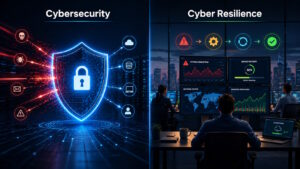
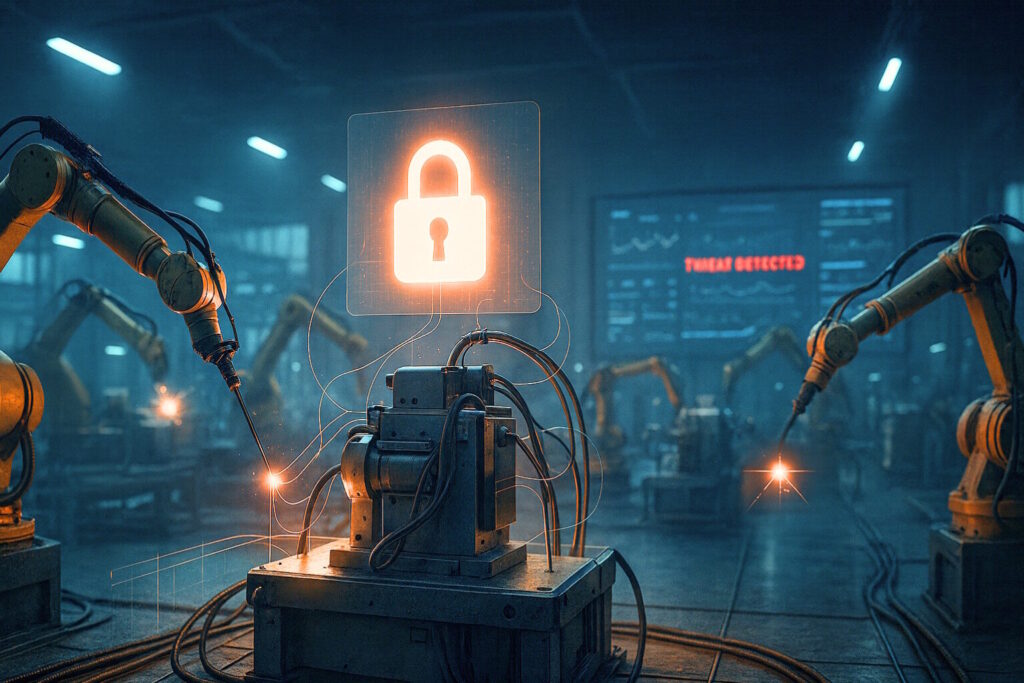
Key Takeaway: Industry 4.0 cybersecurity is essential for protecting the connected systems that power smart manufacturing. As factories adopt more automation, IoT devices, and cloud platforms, they also become more vulnerable to cyber threats like ransomware, phishing, and data breaches. A strong cybersecurity strategy—powered by AI, employee training, and proactive risk management—helps manufacturers safeguard operations, prevent downtime, and build long-term resilience in an increasingly digital industrial landscape.
What Is Industry 4.0 Cybersecurity and Why Should You Care?
Industry 4.0 cybersecurity is the invisible shield protecting smart manufacturing in the age of hyperconnectivity. As more factories adopt automation, IoT devices, and AI-driven systems, the need for robust cybersecurity becomes impossible to ignore.
Many assume smart factories are secure by default—but that’s not always the case. With so many machines, sensors, and software platforms talking to each other, there’s a growing risk that someone else might be listening.
This article offers a beginner-friendly look at the risks, reasons, and rising interest in cybersecurity for connected factories. If you’re just dipping your toes into Industry 4.0 or trying to make sense of factory security, you’re in the right place.
The Rise of Smart Manufacturing—and Its Security Gaps
Smart manufacturing is the future. Think robotics on the floor, cloud software monitoring operations, and sensors keeping track of everything from temperature to supply levels. It’s efficient, it’s fast—and it’s vulnerable.
Why? Because all that digital progress opens doors to cyber threats. Machines once isolated are now online. Systems that ran independently are now connected to networks, the cloud, and even remote offices.
These innovations boost productivity but also widen the attack surface. Hackers, malware, or even internal misuse can bring production to a halt, or worse, compromise customer data and intellectual property.
Common Cyber Threats in Industry 4.0 Environments
Let’s break down a few cyber risks manufacturers face today:
- Ransomware attacks that shut down production lines. These attacks encrypt critical systems and demand payment to restore access. In a smart factory, this could mean halting automated operations across multiple sites in seconds.
- Phishing scams targeting factory workers and admins. Not all attacks are technical—many start with a simple deceptive email. Cybercriminals often impersonate suppliers or executives to trick employees into giving up credentials or transferring funds.
- Malicious code hidden in software updates or third-party systems. Smart factories rely on a web of integrations—ERP systems, analytics platforms, and connected machinery. An unverified update can introduce malware into an otherwise secure environment.
- IoT vulnerabilities from unsecured sensors and devices. Many IIoT devices have limited processing power and lack built-in security features. If left unpatched or misconfigured, they can serve as easy entry points for attackers.
- Data breaches that expose sensitive operational data. Intellectual property, production data, and supply chain information are high-value targets. A breach could not only harm your business but also impact partners across your entire ecosystem.
These aren’t just hypotheticals—they’ve already happened to global manufacturers. When downtime means lost revenue by the minute, cybersecurity becomes a must-have.
Industry 4.0 Cybersecurity Starts with Awareness
So, how can you start thinking about cybersecurity in your smart factory?
It begins with understanding that everything digital can be a target. Machines, control systems, user accounts, even the apps your team uses daily—any of these could be an entry point for attackers.
Awareness is your first defense. Cybersecurity training for your staff, regular system audits, and working with experts can go a long way. Even something as simple as enforcing strong passwords and updating software can reduce risk.
Smart manufacturing requires smart habits. And yes, that includes digital hygiene.
The Role of AI in Industry 4.0 Cybersecurity
Here’s something exciting: AI isn’t just part of the problem—it’s also part of the solution.
Artificial intelligence is now being used to:
- Spot unusual activity in real time. AI-driven security tools can monitor vast amounts of network traffic and flag anomalies faster than any human team. This helps identify attacks as they unfold, not after the damage is done.
- Predict attacks before they happen. Using machine learning, these systems recognize patterns that indicate an impending breach. They can detect slow, stealthy intrusions that traditional systems might miss.
- Automate responses to reduce downtime. AI can trigger automatic containment protocols—like isolating affected devices or shutting down a segment of the network—to stop threats from spreading.
- Learn and adapt from new threats. Just like production AI, security AI improves over time. It can learn from previous attacks and update its models, helping companies stay ahead of evolving cyber threats without manual reprogramming.
In a way, cybersecurity has entered its own evolution. Just as machines learn to optimize production, AI can help learn to stop cyber threats faster than any human team could.
That said, AI is a tool—not a magic fix. It should be part of a larger strategy that includes people, policies, and a proactive mindset.
Don’t Forget the Human Element
Cybersecurity isn’t just about firewalls and software. People still play the biggest role in protecting systems.
Whether it’s an employee accidentally clicking a malicious link or forgetting to lock a terminal, human error remains one of the top causes of breaches.
That’s why cybersecurity training is so important. Teaching your team how to recognize phishing emails or handle login credentials responsibly may be the single most cost-effective defense you implement.
Remember: Smart factories need smart people, too.
Why This Topic Matters More Than Ever
The fourth industrial revolution has made factories smarter, faster, and more connected. But with that connection comes complexity—and with complexity comes risk.
If you’re exploring digital transformation, cybersecurity must be part of the conversation from day one. It’s not something you can bolt on later. A cyberattack can cost more than money. It can shake trust, damage your brand, and cause ripple effects across your supply chain.
Industry 4.0 cybersecurity is no longer just an IT issue—it’s a business survival issue.
Conclusion: The Future of Manufacturing Depends on Cybersecurity
Industry 4.0 cybersecurity is the silent force keeping today’s factories running safely and efficiently. As technology reshapes manufacturing, security must evolve with it. From ransomware to data breaches, the risks are real—but so are the solutions. AI, awareness, and human training all play a part in safeguarding your operations.
Cyber threats may not always be visible, but neither are most of your factory’s most critical processes. That’s why cybersecurity should be part of your foundation—not an afterthought.
This is just one piece of a bigger picture. Join Tech Scope Connect for a front-row seat to how innovation is reshaping the way we work, think, and connect—through live events and high-impact discussions.