
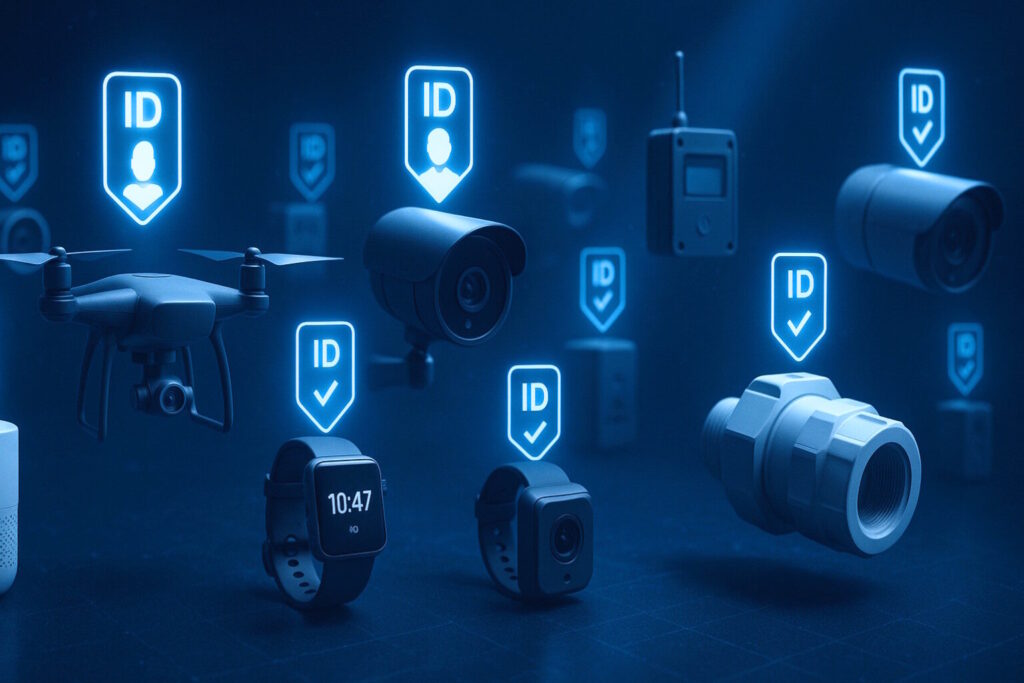
Key Takeaway: Zero-trust security offers a modern approach to protecting IoT devices by eliminating implicit trust and continuously verifying every device, user, and connection. As organizations grow more reliant on connected technologies, this model helps reduce vulnerabilities by enforcing strict access controls, segmenting networks, and monitoring device behavior in real time. It’s a proactive strategy designed to meet the unique security challenges of our hyperconnected world.
As organizations race to secure an expanding world of connected devices, zero-trust security has taken center stage. And if you’re wondering how this applies to IoT devices, you’re asking the right question.
With billions of sensors, cameras, wearables, and machines all talking to each other across networks, the attack surface has expanded. Cybersecurity, identity management, and device protection are no longer just IT concerns—they’re business priorities.
Let’s explore how zero-trust security is helping organizations rethink the way they protect IoT systems, and why it matters to you.
Why Traditional Security Falls Short in a Connected World
You’ve probably heard of the old “castle and moat” approach to security. Build a strong wall, install a firewall, and everything inside is trusted. That model doesn’t work anymore.
Today, data and devices live everywhere. From smart thermostats in office buildings to connected medical equipment and factory robots, there’s no longer a clear “inside” or “outside” of a network.
Even worse? Many of these devices can’t run traditional antivirus software. And they often come with default passwords, outdated firmware, or no security protocols at all.
It’s not that perimeter security is bad—it’s just not enough on its own.
What Makes IoT Security So Challenging?
Let’s break it down in simple terms. IoT (Internet of Things) devices face unique risks for a few big reasons:
- They’re everywhere. From remote farms to operating rooms, these devices are often deployed far from central IT control. Their physical location makes them harder to monitor, maintain, or update regularly.
- They’re small and resource-limited. Most don’t have the memory or power to support advanced encryption or built-in security tools. This makes it difficult to retrofit traditional cybersecurity solutions onto IoT endpoints.
- They’re hard to monitor. With thousands of connected devices, it’s tough to track what’s normal behavior—and what isn’t. Without visibility, detecting anomalies in device communication becomes a major challenge.
- They’re often forgotten. Devices can stay on networks long after they’ve outlived their purpose, becoming invisible backdoors. These “zombie” devices create unmonitored vulnerabilities that attackers can easily exploit.
Sound familiar? These are the exact gaps that zero-trust security aims to close.
Zero-Trust Security: A Smarter Approach to IoT Protection
So what is zero-trust security, really?
In plain terms, it means never assuming trust—even for devices inside your own network. Instead of granting access based on location or network segment, you verify every user, device, and connection continuously.
Here’s how that mindset helps in the IoT space:
- Only verified devices get access. If a device hasn’t been authenticated, it doesn’t get in—period. This limits rogue or counterfeit devices from blending in with legitimate network traffic.
- Access is limited to just what’s needed. Even if a device is approved, it can only talk to the systems it absolutely needs to. This minimizes exposure in the event of a breach or misconfiguration.
- Behavior is monitored all the time. If something changes—like a device starts communicating differently—it can be flagged immediately. Continuous monitoring ensures that access isn’t just a one-time check but an ongoing process.
Zero-trust isn’t about putting up more walls. It’s about smarter, more adaptive security.
Real-World Examples: Where This Matters Most
Zero-trust security in IoT may sound abstract, but it’s already being used in everyday places:
- Smart factories use zero-trust principles to ensure that robotic arms and conveyor systems only interact with specific servers. This prevents attackers from hopping between systems if one endpoint is compromised.
- Hospitals implement it to protect connected monitors and infusion pumps, preventing unauthorized access to sensitive patient data. In environments where lives are on the line, the stakes couldn’t be higher.
- Smart cities use zero-trust strategies to limit access between different systems—like traffic lights, power grids, and public Wi-Fi. This segmentation reduces the risk of one compromised system cascading into others.
Each of these environments has unique needs. But they all benefit from one key idea: Don’t trust anything by default.
What Does Zero-Trust Look Like for IoT?
You might be wondering: How do I actually apply this to my own environment?
Good question. The answer isn’t always the same—but here’s the general idea:
- Start with visibility. Know what’s on your network. That includes forgotten devices or shadow IT. An accurate inventory is the first step toward enforcing any kind of access policy.
- Authenticate every device. Use certificates, trusted device lists, or hardware-based authentication. Treat every IoT device like you would a remote employee logging into sensitive systems.
- Segment the network. Create small “zones” so that devices only connect to what they need. This way, a compromised smart thermostat won’t lead to a breach of customer databases.
- Monitor continuously. Watch for changes in traffic patterns or device behavior. Real-time insights can help stop a security incident before it spreads.
None of this happens overnight. But step by step, organizations can build more resilient systems—especially as the number of IoT devices continues to grow.
Conclusion: Don’t Wait for a Breach to Get Serious About Security
It’s easy to assume your IoT devices are secure because they’re small, simple, or far away from your core systems. But that’s exactly why they’re a target.
Zero-trust security gives you a proactive framework to deal with today’s fast-changing threat landscape. Instead of building bigger walls, it invites you to think differently—starting with the idea that nothing should be trusted by default.
If you’re exploring how to protect connected systems in a world of growing cyber threats, Tech Scope Connect offers real-world insight from industry experts. Join us for conversations that connect security, innovation, and the future of IoT.