Key Takeaway: The Internet of Underwater Things (IoUT) is an emerging technology that connects underwater sensors, robots, and communication systems to monitor and interact with marine environments. It enables real-time data collection for environmental monitoring, infrastructure inspection, disaster detection, and more. By extending connectivity beneath the ocean surface, IoUT is opening up new possibilities in research, industry, and sustainability.
The Internet of Underwater Things (IoUT) might sound like science fiction, but it’s very real—and growing fast. Like the Internet of Things (IoT), it’s all about connected devices. But in this case, those devices are operating deep below the water’s surface. Think of smart sensors, autonomous underwater vehicles, and marine robots all talking to each other in the ocean.
Why does this matter? Because so much of our planet is water, and yet it’s one of the least connected environments. The Internet of Underwater Things is changing that by creating digital links to the deep sea. Whether you’re curious about ocean science, shipping logistics, or underwater security, this is a topic worth understanding.
Let’s dive into the basics.
What Is the Internet of Underwater Things, Exactly?
You’ve probably heard of the Internet of Things—devices like smart thermostats and fitness trackers that collect and share data. The Internet of Underwater Things is the same idea, just under the ocean.
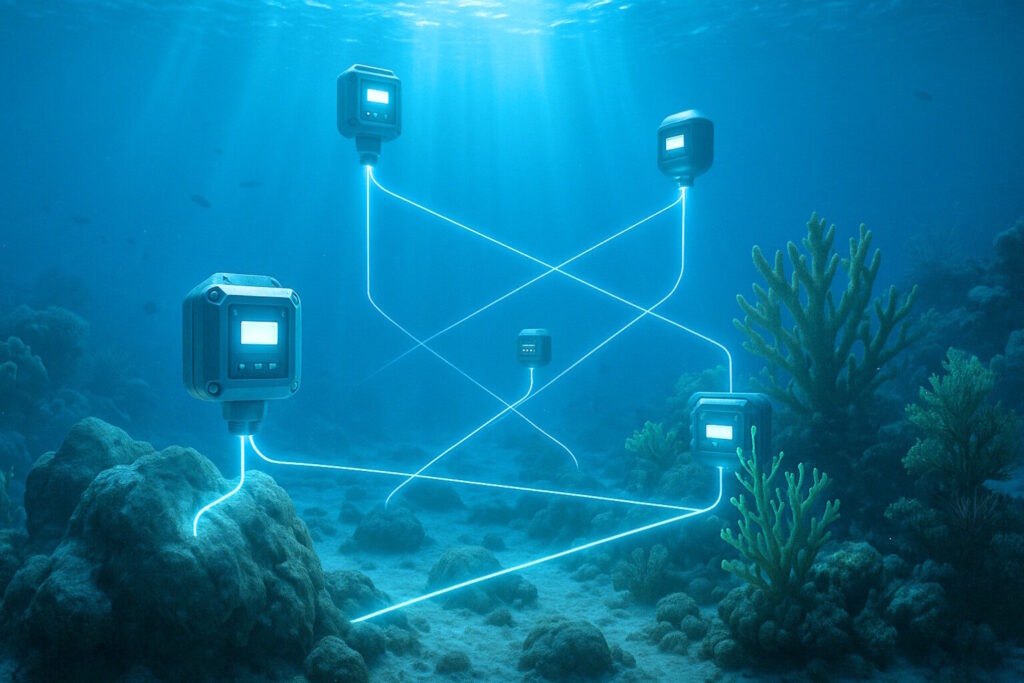
IoUT includes networks of underwater devices that collect data, communicate with each other, and sometimes even send information back to land. These systems are made up of:
- Smart underwater sensors
- Marine robots or drones
- Subsea communication hubs
- Floating gateways that transmit data to satellites or the cloud
Instead of using Wi-Fi or cellular networks, which don’t work underwater, IoUT devices often rely on acoustic waves (sound), light signals, or even magnetic fields to talk to each other. It’s like creating a high-tech underwater walkie-talkie system—except the walkie-talkies are measuring temperature, detecting movement, or scanning for changes in pressure.
You might be wondering, “Why not just use regular IoT gear?” That’s a great question. The ocean is a very different environment. Saltwater corrodes electronics. Light doesn’t travel well. Radio signals fade quickly. So IoUT technology has to be built specifically for harsh, wet, and deep environments.
Why Is This a Big Deal?
The world’s oceans are full of mystery. Despite covering more than 70% of Earth’s surface, we’ve only explored a small fraction. The Internet of Underwater Things opens the door to constant, real-time data collection across vast underwater areas.
So, what does that actually enable?
Here are a few big opportunities:
- Environmental Monitoring: Track pollution, temperature changes, coral reef health, or algal blooms before they become a problem.
- Disaster Warning: Detect early signs of tsunamis or underwater earthquakes.
- Underwater Infrastructure: Monitor pipelines, cables, or offshore wind farms for maintenance or damage.
- Military and Security: Keep an eye on ports, submarines, or unauthorized underwater activity.
- Marine Research: Provide better tools for scientists to understand ocean ecosystems and climate patterns.
Basically, if you’ve ever wondered what’s happening beneath the waves—IoUT is the answer.
Benefits That Go Beyond the Surface
You don’t have to be a marine biologist to get excited about the possibilities. The Internet of Underwater Things can bring real value to industries, governments, and even local communities.
Let’s look at some of the key benefits:
- Better Decision-Making. Having real-time underwater data means quicker, smarter responses. Whether it’s rerouting a ship to avoid a storm or responding to a detected oil leak, access to data helps people act fast.
- Cost and Resource Efficiency. Traditionally, ocean exploration or maintenance requires sending people and ships. With connected underwater devices, much of that work can be done remotely, saving time and money.
- Safer Operations. The ocean can be dangerous. Autonomous systems can take on risky tasks—like inspecting a deep-sea cable or navigating murky waters—without putting human lives at risk.
- Environmental Protection. Continuous monitoring helps spot changes before they become disasters. That can mean stopping illegal fishing, protecting endangered species, or identifying pollution early.
Still in Early Stages—But Moving Fast
IoUT is still a young field. Researchers and engineers are figuring out how to build longer-lasting batteries, stronger communication systems, and smarter underwater software. Many of the devices are in the pilot or prototype stage. But interest is growing—especially as climate change and ocean-based industries gain attention.
Governments, startups, and academic institutions are all exploring the possibilities. With AI integration, more powerful data analytics, and satellite support, the potential for rapid development is enormous.
If you’re in tech, maritime operations, or environmental science, this is a trend worth watching.
Conclusion: Why the Internet of Underwater Things Matters Now
The Internet of Underwater Things is transforming the way we interact with the ocean. It’s bringing smart connectivity to one of the most challenging and underexplored environments on Earth. And it’s doing it in a way that opens new doors for science, safety, and sustainability.
Momentum is building around underwater innovation—and it’s only the beginning. Whether you’re a curious learner, an industry professional, or a policymaker, this is your starting point.
Don’t just watch the future unfold—be part of the conversation. Join Tech Scope Connect to stay in step with the ideas and innovations shaping tomorrow.