Key Takeaway: The Internet of Things is transforming cities by connecting everyday infrastructure—like traffic lights, trash bins, and public transit—to smart sensors and real-time data. This network of connected devices helps cities become more efficient, responsive, and livable. From improving safety and reducing energy waste to making daily commutes smoother, IoT is laying the groundwork for smarter urban living.
The Internet of Things is more than just smartwatches and connected refrigerators — it’s quietly reshaping the cities we live in. Also known as IoT, this network of smart devices and sensors is powering a new wave of connected living. From smarter traffic lights to intelligent trash bins, these innovations are making urban life cleaner, safer, and more convenient.
If you’ve ever wondered how technology is transforming everyday city life, or if phrases like smart city or urban IoT have caught your eye, you’re in the right place. Let’s take a quick tour through how the Internet of Things is laying the groundwork for cities that truly work for people — not just for tech companies.
Smarter Streets and Connected Crosswalks
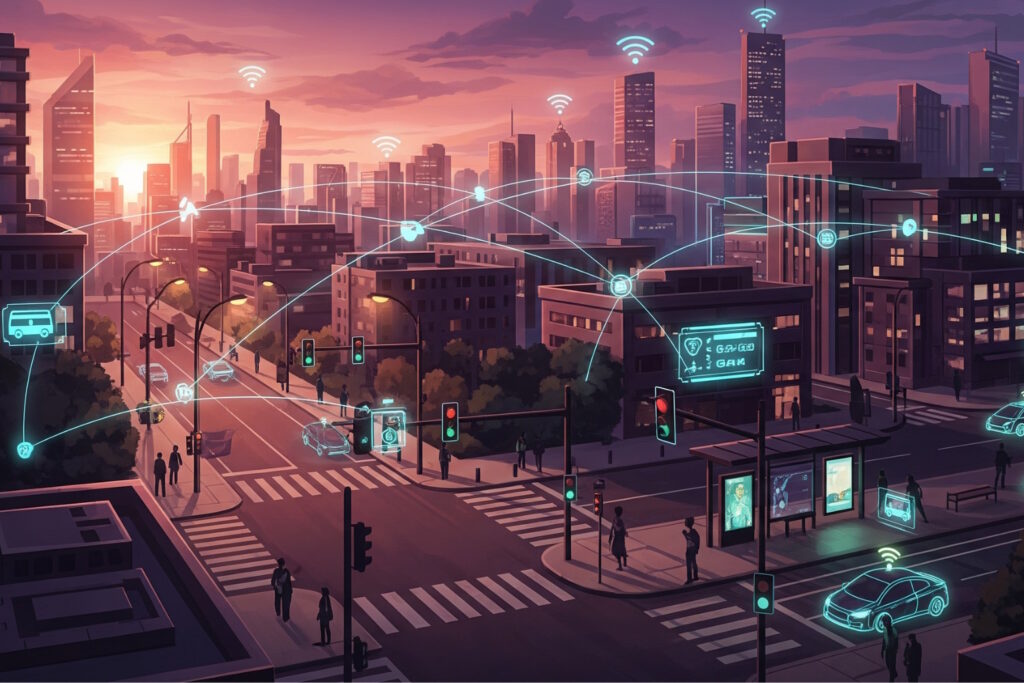
Imagine your city adjusting traffic signals based on real-time car and pedestrian flow. That’s not science fiction — it’s happening right now, thanks to IoT.
Sensors embedded in roads and traffic lights monitor congestion and adapt signal timing. This helps reduce traffic jams, improves emergency vehicle response times, and even cuts carbon emissions. Pedestrian safety gets a boost too, with smart crosswalks that light up when someone is crossing, alerting oncoming cars.
All of this happens automatically, without a human needing to press a button or call in a report. That’s the beauty of connected infrastructure — it works behind the scenes to make your day smoother.
How the Internet of Things Is Making Cities More Livable
A livable city isn’t just about tall buildings and fast Wi-Fi — it’s about quality of life. And IoT is quietly improving that too.
Smart streetlights dim when no one’s around to save energy. Trash bins send alerts when they’re full, keeping streets cleaner. Noise sensors help monitor pollution levels in busy districts. These aren’t flashy upgrades, but they solve real problems.
Cities that use IoT tend to spot issues earlier. Whether it’s a water leak, a broken light, or a rise in air pollution, the right sensors can flag it before it becomes a major problem.
It’s all about making the city more responsive — not just to government data, but to your actual experience as a resident.
Everyday Life Meets Smart Technology
You might not realize how often you interact with IoT. If you’ve parked using an app that shows available spaces, ordered from a food truck that posts real-time location updates, or taken a bus that tracks its route live — that’s IoT in action.
Connected sensors and mobile apps work together to deliver real-time updates and smoother services. This doesn’t just help individuals; it helps city planners too. They can use that data to decide where to add bike lanes, expand Wi-Fi, or install more public seating.
The goal isn’t just efficiency — it’s comfort. When a city responds to the way people actually move and live, it becomes more human-friendly.
Can the Internet of Things Solve Everyday City Problems?
Here’s a question many people ask: Can technology really fix broken cities?
The answer is — not by itself. But the Internet of Things gives cities the tools to respond faster and plan smarter.
For example:
- Flood sensors help cities prepare for storms before they hit.
- Smart meters let you track home energy use in real-time, reducing your bill and your footprint.
- Public transit becomes more reliable when buses, trains, and stops are connected in real-time.
It’s not about replacing city workers or manual systems. It’s about making them work better, with less guesswork.
Rethinking Urban Growth with IoT
Urban populations are growing, and that puts pressure on everything — housing, transport, waste, and energy. The Internet of Things offers a chance to scale smart.
Instead of simply building more roads or adding more trash pickups, cities can turn to data and connectivity. Where are the true bottlenecks? What services are underused? Where do people feel unsafe at night?
With connected sensors and shared data, city leaders can prioritize what really matters — not just what looks good on a budget sheet.
Conclusion
The Internet of Things is doing more than connecting gadgets — it’s quietly improving how cities move, grow, and serve their people. From smarter traffic lights to cleaner streets, the impact is already visible in forward-thinking cities around the world.
But this is just the beginning. As IoT continues to evolve, the cities that embrace it will be the ones that offer their residents more — more livability, more sustainability, and more opportunities to thrive.
Interested in how connected tech is reshaping daily life across industries? At Tech Scope Connect, we explore real-world innovations like IoT in cities through live events, expert insights, and engaging discussions. Join us and be part of the conversation.