Key Takeaway: Cameras are evolving from passive recorders into queryable AIoT systems that let people search video, ask natural-language questions, and get useful summaries. That shift matters because businesses no longer need footage alone. They need fast answers, better context, and clearer operational insight across security, safety, and everyday decision-making.
AIoT systems, smart camera platforms, connected intelligence networks, and edge video tools are changing what cameras can do. Businesses no longer want footage alone. They want answers. They want to know what happened, when it happened, and why it matters. That shift is turning the camera from a passive recorder into a more useful operational system.
You can already see that shift in research and in the market. A recent video analytics paper says older systems stay tied to predefined tasks. It also says newer AI models that connect video and language support more open-ended understanding. At the same time, Axis, Genetec, Milestone, NVIDIA, and Qualcomm now describe natural-language search, summaries, and interactive video workflows as part of modern offerings.
When Video Starts Talking Back
For years, most cameras did one job well. They recorded scenes and flagged certain events. If a team needed more context, someone still had to scrub through footage, test filters, and guess where to look next. Axis says free-text search helps when users need to search large amounts of recorded video with their own words. That alone shows how painful the old workflow could be.
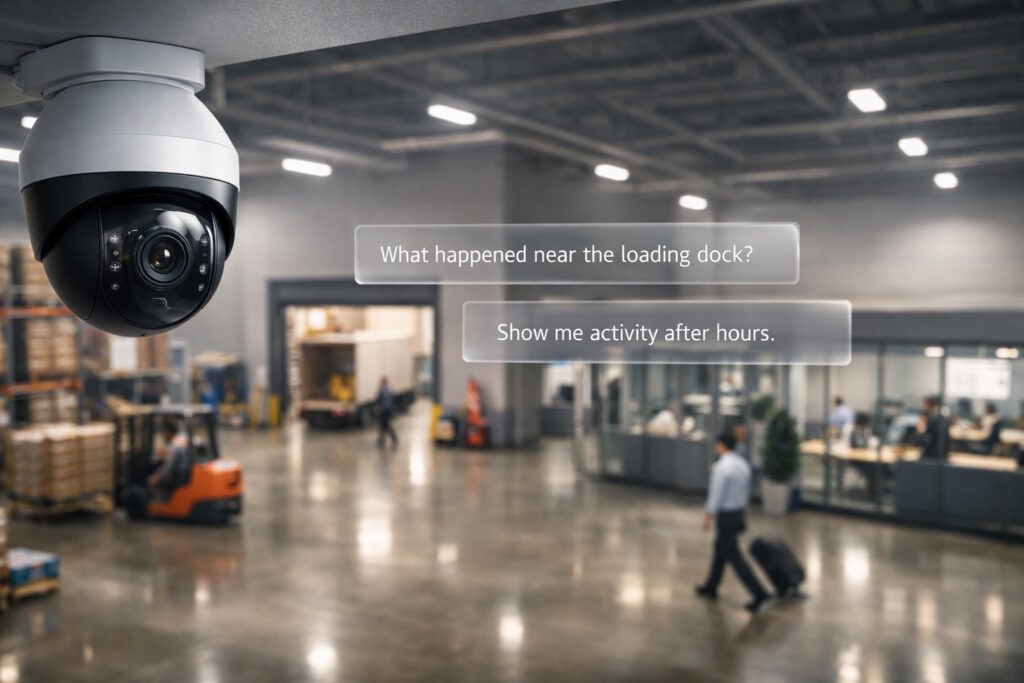
Now the more important question is not, “Did the camera capture it?” It is, “Can the system help me find it fast?” That is a very different promise. It means the video feed starts to act more like searchable memory. A manager can ask, “Who entered after hours?” A security team can ask, “What happened before the alert?” A facility lead can ask, “Show me the forklift that stopped near the exit.” The experience feels less like hunting through clips and more like asking a useful question.
That change is what makes this story so compelling. It moves cameras closer to the way people already think. Most users do not want another dense dashboard. They want a direct path from question to answer. Genetec says its newer investigation tools let teams use everyday descriptions across multiple sites and camera brands. Milestone says operators can describe what they want in natural language and get the right snippets in seconds.
Why AIoT Systems Change the Camera Story
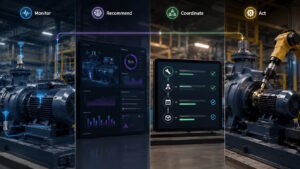
A camera becomes far more valuable when it joins a wider connected environment. Once video links to alerts, access control, analytics, dashboards, and operational workflows, the camera stops acting like a lone sensor. It becomes part of a connected system that can support decisions across security, safety, and operations. Axis now describes intelligent video as a source of business intelligence and operational efficiency. Qualcomm frames modern video as active real-time intelligence rather than passive security.
That is why this is not just a camera story. It is an AIoT story. In an AIoT setting, the camera can connect with other devices, software layers, and business processes. It can trigger alerts, feed dashboards, and support faster action. Axis says cameras are evolving into active contributors to enterprise decision-making. NVIDIA positions video analytics agents as tools that help industries optimize processes, improve safety, and cut costs.
How AIoT systems start to feel queryable
So what does “queryable” look like in plain language? It means you do not start with a maze of menus. You start with a question. “Show me the person wearing a white helmet last week.” “Summarize the activity around this loading area.” “Find the last time this vehicle appeared.” Qualcomm says natural-language video queries can run without sending raw video to the cloud. Axis says users can search recorded video using their own words. NVIDIA describes edge agents that detect events, send alerts, and support interactive Q&A sessions.
Just as important, the system can return more than a clip. It can return context. Genetec highlights before-and-after event analysis, cross-camera follow-through, and faster case building. Milestone is pushing video summarization so operators can document incidents faster and spend less time on manual review. The value, then, is not only better detection. It is quicker understanding.
Beyond the Security Desk
It is easy to hear “smart camera” and think only about surveillance. That view is now too narrow. AI-powered cameras are moving into quality control, workplace safety, logistics, retail operations, and facility management. Axis says businesses now use intelligent cameras to improve business intelligence and operational efficiency. NVIDIA points to smart spaces, warehouse automation, and standard operating procedure validation as practical use cases for video analytics agents.
This broader role changes how leaders should think about camera investments. A camera may still help protect a perimeter. It may also help explain a delay, catch a safety issue, confirm a workflow problem, or improve customer flow. That is a very different value story. The camera becomes a business sensor, not only a security device. Axis now describes intelligent video as a powerful business sensor and a contributor to automation at scale.
Why This Shift Matters Right Now
Why is this becoming visible now? Part of the answer is maturity. NVIDIA now offers a blueprint for video search and summarization. It combines video understanding, language, and retrieval for stored and real-time analysis. Qualcomm is pushing edge-first video intelligence with on-device perception and natural-language queries. Milestone is adding AI search and summarization, including support for on-premises and air-gapped environments. These moves suggest the idea has moved beyond demos and into product strategy.
There is another reason this moment matters. Teams want faster answers without giving up control. Genetec stresses user-in-the-loop design and operator control. NIST continues to focus on evaluation, metrics, and content understanding in video analytics. Researchers behind the AVA paper also note that older systems remain task-bound. They add that newer approaches still face challenges with very long video. In other words, the strongest systems will support human judgment, not replace it.
Conclusion
The biggest change is simple. Cameras no longer only watch. They increasingly help people ask better questions and get faster answers. That shift makes video more useful to more teams. It also makes the camera more relevant to everyday business decisions.
As AIoT systems continue to mature, cameras will feel less like passive hardware and more like connected, searchable teammates. That is why this topic matters now, even at a broad level. It points to a future where video supports faster decisions across security, operations, and customer experience.
To stay connected to the broader conversation around AIoT, Tech Scope Connect offers a thoughtful way to follow where the field is moving. Join now!
Sources:
- Axis Communications Launches Inaugural Axis Perspectives Report on Intelligent Video’s Evolving Role | newsroom.axis.com
- Qualcomm Insight Platform: Edge AI for Security | qualcomm.com
- AVA: Towards Agentic Video Analytics With Vision Language Models | arxiv.org
- AI-Powered Free Text Search Makes Smart Search in AXIS Camera Station Pro Even Smarter | newsroom.axis.com
- Genetec Advances Investigation Speed and Efficiency With Built-For-Enterprise Capabilities in Security Center SaaS | genetec.com
- Milestone Systems Announces AI Built for Security Operations, Powered by Real-World Security Data | milestonesys.com
- Advance Video Analytics AI Agents Using the NVIDIA AI Blueprint for Video Search and Summarization | developer.nvidia.com
- How AI-Powered Cameras Are Redefining Business Intelligence | newsroom.axis.com
- Video Analytics AI Agents: NVIDIA Use Case | nvidia.com
- Intelligent search in Security Center SaaS | genetec.com
- Video Analytics | nist.gov