Key Takeaway: Artificial intelligence enhances air quality monitoring by improving sensor accuracy, forecasting pollution trends, detecting anomalies, and helping cities and organizations make smarter environmental decisions. While AI does not replace traditional monitoring systems, it strengthens them by turning large volumes of air data into clearer, more actionable insights that support public health, sustainability, and smarter infrastructure planning.
When Clean Air Meets Everyday Life
Air quality monitoring now shapes how many people plan commutes, workouts, and even school days. At its core, the goal stays simple: understand what you are breathing and what it may mean for your health. Whether the focus is a city skyline, a factory floor, or an office building, the purpose remains the same—measure conditions accurately and turn those measurements into information people can trust. Artificial intelligence enters the picture because the world now generates far more air data than any team can realistically review by hand.
In the past, air information felt distant, like something only scientists studied. Today, wildfire smoke, traffic congestion, and heat waves make the air feel personal. If you have ever asked, “Is it safe to run outside today?” then you already care about the answers.
A Quick Tour of How Monitoring Works Today
Most communities rely on a mix of measurement tools. Some sit in fixed locations for years, while others travel on vehicles or phones. Together, they create a patchwork picture of what is happening in the air.
Stations, sensors, and satellites
Regulatory-grade stations measure pollutants with high accuracy and strict calibration. They often anchor public reporting and long-term trends. Meanwhile, low-cost sensors show up on lampposts, buses, and building rooftops. Satellites add a wider view, especially over large regions.
You might wonder, “If we already measure the air, why do we need anything new?” The short answer is scale. A city can have a few reference stations, yet air conditions can shift street by street.
Why the numbers still need context
A single reading rarely tells the whole story. Wind, humidity, temperature, and sunlight can change pollutant behavior. Even daily rhythms matter, since rush hour and cooking patterns leave recognizable signatures.
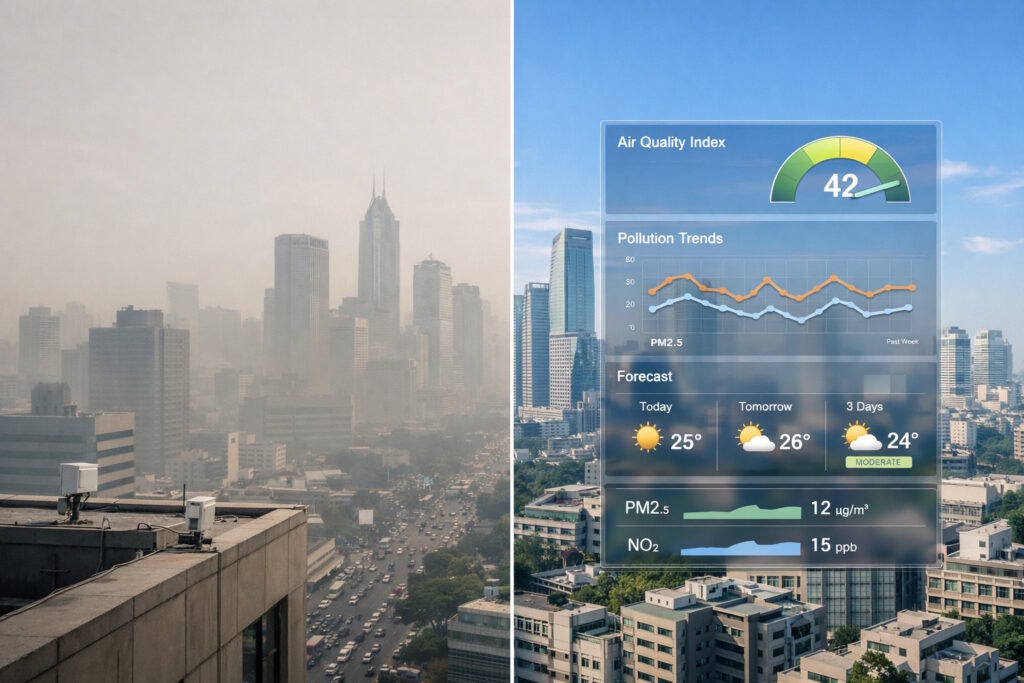
People often ask, “What does an air quality index number actually represent?” It condenses several pollutants into one easier number. That simplification helps communication, but it can also hide nuance.
Why Air Quality Monitoring Feels Hard in the Real World
Air quality monitoring sounds straightforward until you meet the messy details of lived environments. The air moves, sources come and go, and sensors respond to the weather as much as the pollution.
The city-block problem
Two neighborhoods can sit a mile apart and breathe very different air. Traffic corridors, port activity, construction, and tree cover all play a part. Even the shape of buildings can trap pollutants, then release them when the wind shifts.
If you have ever seen “moderate” on an app while smelling smoke outside, you have felt this gap. The monitoring network may miss a micro-area event, or it may report an average that smooths over spikes.
When low-cost sensors drift
Affordable sensors expand coverage, but they face challenges. They can drift over time, react to humidity, or struggle with certain mixtures. That does not make them useless. It means they often need smart correction, especially when people rely on them for decisions.
This is where artificial intelligence starts to feel practical. It can learn patterns that help separate a sensor’s quirks from the air’s true signal.
Where Artificial Intelligence Fits In
Artificial intelligence does not replace measurement. Instead, it helps teams interpret more data, faster, and with fewer blind spots. Think of it as a skilled assistant that looks for patterns, flags surprises, and improves consistency.
Artificial Intelligence and Air Quality Monitoring: A new assistant, not a magic wand
Artificial intelligence models can learn relationships between sensor readings and trusted reference measurements. In simple terms, the model notices when a sensor reads high on humid days, then adjusts accordingly. This approach can raise confidence in dense, low-cost networks.
However, good results still depend on good inputs. A model cannot correct missing maintenance, broken hardware, or poor placement. It can, though, help operators spot those problems sooner.
Forecasts that help you plan the day
Another common question is, “Can AI predict bad air before it arrives?” Often, yes, within limits. Models can combine past pollution patterns with weather forecasts to estimate what tomorrow may bring. That matters for people with asthma, outdoor workers, and event planners.
When predictions work well, cities can coordinate responses. They might change traffic timing, advise vulnerable groups, or plan street cleaning more effectively.
Early warnings when something looks off
Air data also benefits from anomaly detection. If readings jump in an unusual way, a system can flag the change for review. That alert may point to a local fire, an industrial incident, or a sensor fault.
The value lies in speed and focus. Instead of scanning endless charts, staff can investigate a smaller set of meaningful leads.
Sustainability and Green Tech: How Better Air Data Supports Better Choices
Sustainability can feel abstract until you connect it to daily air conditions. Better air information helps communities target actions that cut pollution and protect health. It also helps them measure progress, which keeps climate and clean-air goals honest.
Cleaner transport, smarter timing
Transportation drives major urban emissions. When cities understand where and when pollution peaks, they can adjust bus routes, signal timing, and freight schedules. They can also evaluate whether new bike lanes or low-emission zones reduce exposure, not just traffic.
You might ask, “Does this actually change outcomes?” It can, because small operational shifts add up across thousands of trips.
Better decisions for buildings and campuses
Buildings influence air, indoors and outdoors. Schools and offices can adopt smarter ventilation strategies when outside conditions worsen. Facility teams can also track patterns that suggest infiltration from nearby sources.
In green building programs, data supports verification. It is easier to justify upgrades when you can show a clearer before-and-after picture.
More coverage with less waste
Dense monitoring networks can reduce guesswork, yet they also raise maintenance demands. Artificial intelligence can help prioritize calibration visits and identify sensors that need attention. That kind of triage reduces wasted effort and extends equipment life.
In sustainability terms, longer-lasting devices and fewer unnecessary truck rolls matter. They reduce emissions and costs at the same time.
The Questions Readers Ask Most
People do not only want charts. They want guidance they can trust.
A common concern is, “Is AI replacing scientists or regulators?” No. Skilled experts still set standards, interpret risks, and communicate trade-offs. Artificial intelligence can help them move faster, but it cannot define acceptable exposure on its own.
You might ask: Can AI tell me what to do right now? It can sharpen alerts, yet your health and setting still guide choices. If you feel symptoms, you should treat that experience seriously.
Finally, some readers ask, “Does AI make air sensors cheaper?” Not directly. It can make affordable networks more useful by improving consistency and catching errors.
Conclusion: Clearer Air Starts with Clearer Information
Artificial intelligence will not clean the air by itself. Yet it can make the data behind clean-air decisions more timely, local, and understandable. That clarity helps communities invest in greener infrastructure with stronger evidence, and it helps individuals make daily choices with less guesswork. As conversations around sustainability, smart cities, and intelligent systems continue to evolve, so does the role of air quality monitoring in shaping healthier environments.
If topics like this interest you, Tech Scope Connect brings together experts and innovators exploring how artificial intelligence and emerging technologies are transforming industries and communities. Join the conversation and stay connected to where these discussions are headed next.
Join Green Things Summit 2026 as we take a deeper dive into how AI, IoT, automation, and edge computing help drive efficiency, reduce waste, and advance sustainability goals through thought-leadership panels, industry keynotes, and interactive Q&A sessions. Register here.