Key Takeaway: Private 5G and edge computing are increasingly deployed together because physical systems need local control, predictable connectivity, and fast response, not just higher speeds. Private 5G provides a dedicated, controllable network for devices and machines, while edge computing places processing and decision-making close to where work actually happens. Together, they help organizations reduce latency, improve reliability, and keep critical operations running even when cloud connectivity is limited or disrupted.
When Wireless Has to Work Like Infrastructure
Edge computing is changing how organizations connect physical systems to digital tools. In plain terms, it is local processing, on-site computing, and distributed compute that sits near devices. That matters because the physical world rarely waits for a distant server. A robot pauses, a conveyor stops, or a pump trips, and someone has to respond fast.
That is where private 5G enters the conversation. You may have heard about 5G as “faster wireless.” In operations, the bigger story is control. When a site owns more of the network, it can shape performance and reduce surprises. When a team pairs that network with nearby compute, it can rethink how work gets done on the ground.
Private 5G, in Plain English
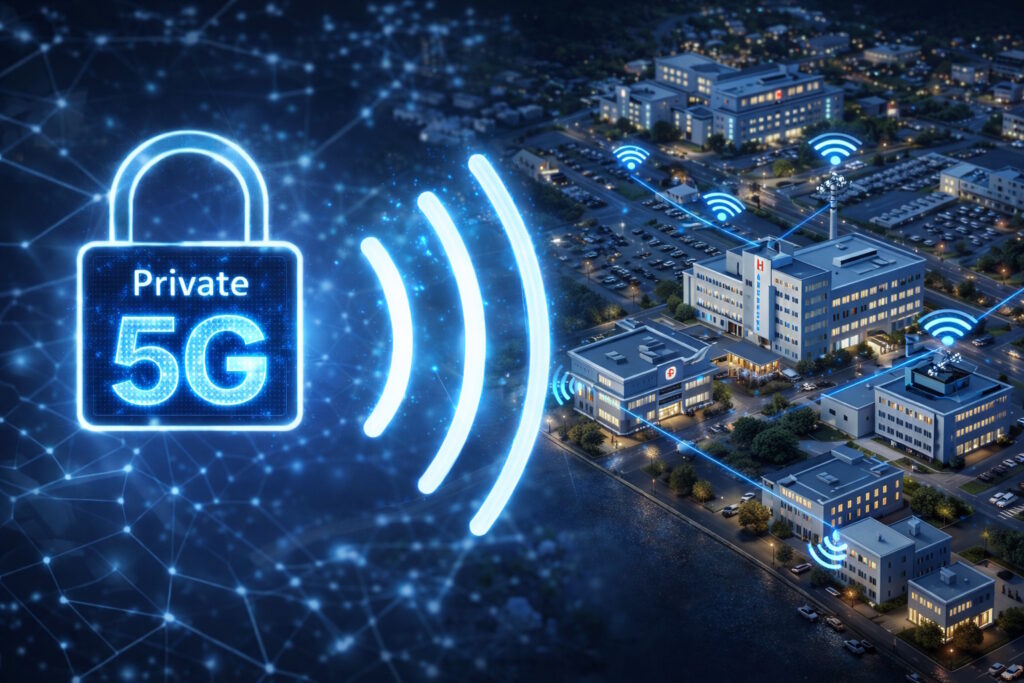
If you are wondering, “What is private 5G, exactly?” you are not alone. Private 5G is a cellular network built for one organization, site, or campus. It may cover a factory, a port, a hospital, or a utility yard. A public mobile network serves everyone who subscribes. A private network serves the environment you operate and the devices you trust.
That difference changes daily reality. A private 5G deployment can give you clearer control over who connects and how devices authenticate. It can also help define how traffic gets prioritized when conditions get busy. It can support mobility in places where devices move all day. Autonomous vehicles, handheld scanners, robots, and rugged tablets show the range. You do not need to become a telecom expert to see the appeal. You just need to care about predictable behavior.
Why Private 5G Pairs Naturally With Edge Computing
Most teams do not adopt private 5G because they want a new acronym. They adopt it because physical work depends on timing and reliability. Safety also matters, especially where systems move fast or carry risk. A network, by itself, moves data. It does not decide what to do when data signals trouble. That is why the pairing with local compute keeps showing up in real projects.
Edge computing turns connectivity into action, not just transport
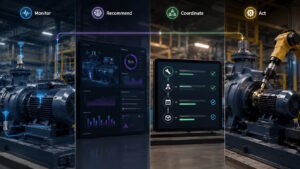
A simple loop explains the idea. Sensors detect what is happening. Software evaluates the situation. A system triggers an alert, a slowdown, or an automatic adjustment. When that evaluation runs close to the equipment, the loop tightens. People see results sooner, and systems behave more consistently.
You might ask, “Isn’t the cloud good enough for this?” Sometimes, yes. But the cloud assumes stable links and acceptable delays. It also assumes enough bandwidth for constant back-and-forth. A plant floor and a jobsite can break those assumptions. If a connection drops, you still need safe defaults and clear decisions. Local compute helps you keep that capability close at hand.
A better mental model: a private lane and a local brain
Private 5G can act like a private lane for critical traffic. It helps devices stay connected as they move and as conditions change. The edge layer acts like a local brain that handles the first response. It filters what matters, keeps sensitive data closer to the site, and sends only what you choose upstream.
This model also supports resilience. When a broader network slows down, local systems can still function. When an application updates, you can control rollout site by site. Those are practical benefits that owners notice quickly.
Where This Combination Shows Up First
You will often see private 5G and local compute appear in environments with three traits. The work is mobile, the process is time-sensitive, and downtime costs real money. That is why manufacturing, logistics, and energy come up so often in conversations.
In a warehouse, vehicles and workers move constantly, and scanning events happen every second. In a port, equipment spans large outdoor areas with noisy radio conditions. In a refinery, safety systems rely on consistent telemetry. In each case, teams want connectivity that behaves like infrastructure. They do not want connectivity that behaves like a best-effort convenience.
You might also see interest in healthcare campuses. Staff mobility and device growth push networks hard. Patient privacy and operational reliability matter every hour. Those pressures make controlled connectivity more attractive.
What You Gain Without Getting Lost in Technical Detail
At a surface level, the value of this pairing is easy to describe. You gain clearer control over connectivity and faster local response. You reduce dependence on constant cloud connectivity. You also create options for governing data in a more deliberate way.
That does not mean everything must run at the edge. Many organizations use a hybrid approach. They keep rapid decisions close to operations. They keep long-term analytics centralized. That balance lets teams improve performance without rebuilding every system.
If you are new to this topic, one question helps: What happens if the outside link degrades? If you can tolerate it, a cloud-first design may fit. If you need local continuity, you are already in edge territory.
Conclusion: Local Control Is Becoming the Default
Private 5G and edge computing point to a broader shift in how organizations design systems for the physical world. When timing, mobility, and safety matter, connectivity must behave like infrastructure, and intelligence must live close to operations. As more teams rethink where control should reside, these architectures move from experimentation to expectation.
If you find yourself paying closer attention to how connectivity is evolving, Tech Scope Connect offers a place to follow that conversation through ongoing discussions, shared insights, and informed perspectives as the landscape continues to take shape. Join today!