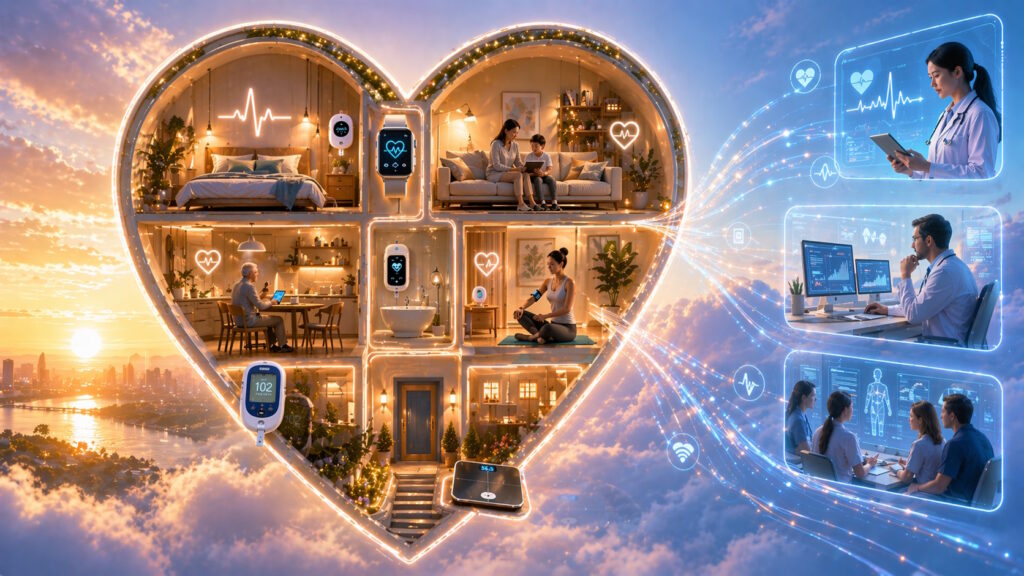
Key Takeaway: The internet of medical things brings connected medical devices into everyday care at home. Tools like blood pressure cuffs, glucose monitors, wearables, smart scales, and home monitoring devices can share health data with care teams. This helps providers see patterns between appointments, support chronic care, and respond sooner when something changes. For patients, it can make healthcare feel more continuous, convenient, and connected to daily life.
Healthcare Is Moving Beyond the Clinic
The Internet of Medical Things is making healthcare feel less tied to a waiting room and more connected to daily life. In practice, IoMT brings medical-grade monitoring into everyday care through connected medical devices, working alongside digital health tools that support care at home. A blood pressure cuff may share readings with a care team. A glucose monitor tracks blood sugar patterns throughout the week. A wearable sensor might spot a change before a patient notices symptoms.
This shift feels natural because many of us already live with connected technology. We check steps, sleep, heart rate, and reminders from small devices. IoMT takes that familiar idea into a more clinical setting. It helps care teams follow patients where they actually live, not only where they schedule appointments.
For readers asking, “What does connected healthcare look like at home?” the answer starts with simple tools. A device collects health information. A platform organizes it. A clinician reviews trends and decides what support the patient needs.
What Is the Internet of Medical Things?
The Internet of Medical Things is a network of medical devices, sensors, software, and healthcare systems that collect and share health data. In plain language, it connects health tools to the people who can act on the information.
This does not mean every device in a home suddenly becomes medical. A fitness tracker may support wellness, while a medical-grade device may support treatment decisions. The difference comes from how the device works, how data moves, and how a care team uses the information.
Readers often ask, “Is IoMT just another name for wearables?” Not quite. Wearables can play a role, but the bigger picture includes home monitors, clinical dashboards, patient apps, and secure connections to healthcare teams.
Everyday connected devices that make the idea feel real
IoMT becomes easier to understand when you picture the devices already entering homes and clinics. A connected blood pressure cuff can help monitor hypertension. A glucose monitor can help people with diabetes see patterns. A smart scale can flag sudden weight changes for someone with heart failure.
Pulse oximeters can track oxygen levels. Wearable ECG patches can record heart rhythm changes. Smart inhalers can show when a patient uses medication. Home health hubs can pull several readings into one place.
None of these tools replaces a doctor or nurse. They give healthcare teams a wider view between visits. That wider view can turn a single appointment into an ongoing conversation.
How Remote Patient Monitoring Turns Home Readings Into Care
Remote patient monitoring, often called RPM, is one of the clearest ways people experience connected care. With RPM, patients take readings at home. The device sends that data to a provider, monitoring center, or care platform.
A doctor might use the data to review a condition. A nurse might spot a concerning pattern. A care coordinator might call the patient and ask about symptoms, medication, or daily habits.
Here is the everyday version: “Can my doctor see what happens between appointments?” In many RPM programs, yes. The goal is not to watch every moment. The goal is to understand health trends before they turn into bigger problems.
A simple internet of medical things scenario
Imagine someone living with high blood pressure. At home, they use a connected cuff several mornings each week. The readings move from the device to a secure platform. Over time, the care team sees that the numbers keep climbing.
Instead of waiting for the next office visit, someone reaches out. The patient may need a medication review, lifestyle guidance, or a follow-up appointment. The device did not deliver care by itself. It gave the care team a better reason to act sooner.
Why Connected Healthcare Is Getting More Attention
Healthcare often works best when clinicians see patterns, not just snapshots. A single clinic reading can help, but it may not tell the full story. Blood pressure can change with stress, sleep, meals, movement, and medication timing.
Many conditions also need steady attention. Diabetes, hypertension, heart disease, respiratory illness, and post-surgery recovery rarely fit neatly into one visit. Patients manage them through daily choices, routines, and symptoms.
Connected tools can make those daily details more visible. They can also make care feel less distant. For someone who lives far from a clinic, home monitoring may reduce unnecessary travel. For an older adult, it may support aging in place. For a busy parent, it may make follow-up feel more manageable.
Hospitals and clinics also face pressure. They need ways to support more people without relying only on in-person visits. Connected monitoring gives care teams another path.
The Home Is Becoming a New Front Door to Care
The home is no longer just the place where patients recover after care. It is becoming part of the care environment itself. That does not mean hospitals will fade away. It means care can stretch beyond the walls of a clinic.
A heart failure patient may use a smart scale to track fluid-related weight changes. A person with diabetes may rely on glucose data to guide daily decisions. An older adult may use fall detection or passive monitoring for added safety. A post-surgery patient may share recovery readings without making another trip.
This kind of home-based care can feel more personal. It fits the places where people sleep, eat, move, and manage symptoms. It also gives clinicians a better look at real life, not only clinic life.
Beyond Gadgets: Data Needs a Human Touch
Connected health can sound like a gadget story, but the real value sits beyond the device. The device collects the signal, but care teams create the value.
A useful system needs several parts working together. The device gathers data. Connectivity moves that data through Bluetooth, Wi-Fi, cellular service, or a home hub. A platform organizes readings and may flag changes. A clinician reviews the information and decides what to do next. The patient uses the device and responds to guidance.
When one part fails, the experience suffers. A confusing device may frustrate patients. A noisy alert system may overwhelm staff. A platform that does not fit clinical workflows may slow care instead of improving it.
Good IoMT programs start with people, not products. They ask how a patient will use the tool, how a care team will respond, and how the data will support better conversations.
Where Connected Health Can Make the Biggest Difference
Connected healthcare can help in many areas, but some use cases stand out. Chronic disease management sits near the top. People with diabetes, hypertension, heart conditions, respiratory disease, or kidney-related concerns often need regular monitoring.
Post-discharge care also offers a strong fit. After a hospital stay, patients may feel better but still need close support. Connected devices can help teams watch recovery signs while the patient rests at home.
Aging in place is another important area. Many older adults want to stay independent for as long as possible. Monitoring tools can add support without turning the home into a hospital room.
Preventive care may also grow through connected data. Trends can help providers notice small changes earlier. Virtual and hybrid care can also improve when clinicians have reliable information from home.
Privacy, Safety, and Trust Cannot Be an Afterthought
Connected medical devices handle sensitive health information. Patients need confidence that their data stays protected. Providers need tools that work reliably and fit safety standards.
A natural question is, “Who can see my health data?” Patients also wonder how data gets protected, what happens if a device stops working, and who responds after an alert. These questions deserve clear answers.
Security also needs attention from the beginning. Devices should not treat privacy as a feature added later. Safe design, careful data handling, and clear patient communication all shape trust.
Trust also depends on accuracy and usability. A patient should understand how to take a reading. A care team should understand what the reading means. When alerts appear, everyone needs a clear next step.
What Could Slow Adoption? The Practical Roadblocks
The promise of connected care is real, but adoption will not happen evenly. Some patients lack reliable internet access. Others may not feel comfortable using connected tools. A device that seems simple in a clinic can feel confusing at home.
Care teams face their own challenges. Too many alerts can create noise. Data that does not fit existing workflows can become another task. Coverage, reimbursement, and program costs can also shape what providers offer.
There is also a human side. Some patients may worry that home monitoring feels intrusive. Others may wonder whether technology will replace personal care. Successful programs need to answer those concerns with empathy, not hype.
The strongest approach keeps the technology quiet and useful. It should help people feel supported, not watched.
Looking Ahead: More Connected Care, Not Just More Screens
The future of IoMT is not just more devices. It is more connected care.
We will likely see better wearable medical devices, easier patient dashboards, and stronger links with digital health records. Care teams may use AI-assisted tools to sort alerts and highlight the most important changes. Older adults may gain more ways to receive support at home.
Still, the best future will not depend on technology alone. It will depend on thoughtful design, clear communication, and clinical judgment. Connected care should make healthcare feel closer, calmer, and more responsive.
Conclusion: Connected Devices Are Bringing Care Closer to Everyday Life
Connected devices are changing how patients and providers stay in touch. Blood pressure cuffs, glucose monitors, wearables, smart scales, and home health hubs can share useful information without waiting for the next appointment.
The best version of connected healthcare will not replace doctors, nurses, clinics, or hospitals. It will help them see more clearly between visits. It will also help patients take part in their care with more confidence.
The Internet of Medical Things is bringing healthcare closer to daily life, one home reading at a time. If you’re curious about how connected technologies are reshaping healthcare, homes, and everyday life, join the conversation at Tech Scope Connect for more insights, live discussions, and expert perspectives on the future of technology.