
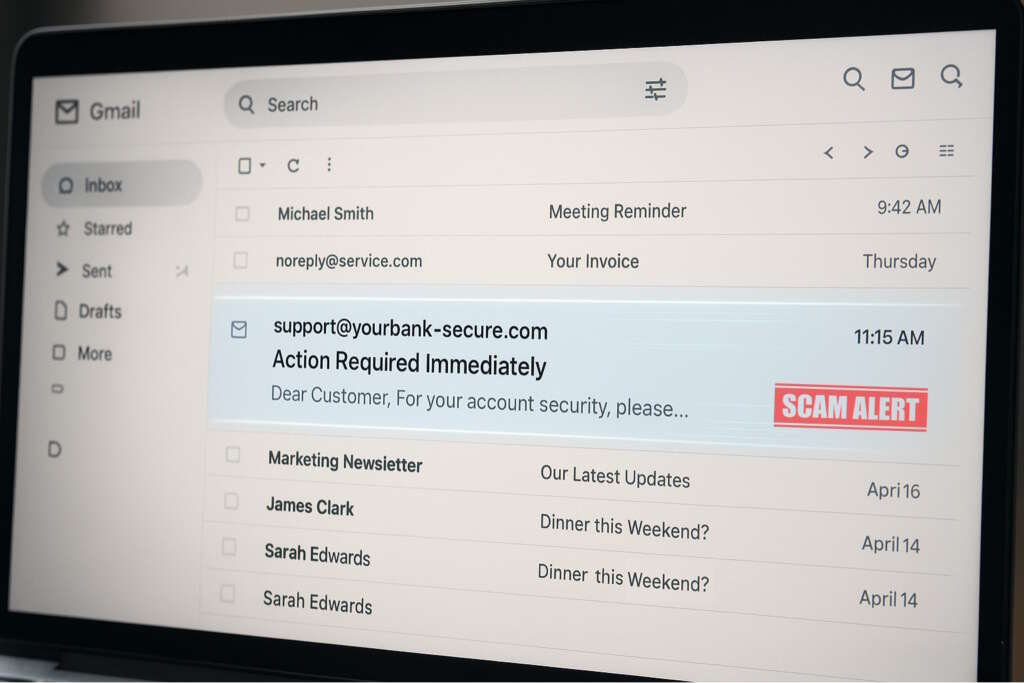
Key Takeaway: AI has made phishing emails more convincing, personalized, and difficult to detect. Using tools like chatbots and generative language models, scammers can now create emails that mimic human tone, mirror company branding, and carry on conversations. These AI-driven phishing attacks mark a shift from crude, obvious scams to sophisticated social engineering tactics—making it more important than ever to stay alert and informed.
Phishing emails have come a long way from poorly worded scams and suspicious links. Today, they’re polished, persuasive, and powered by artificial intelligence. These modern email scams don’t just try to trick you—they talk to you like a human would. And that’s exactly what makes them so dangerous.
You’ve probably seen the old-school scams. Misspellings, strange greetings, or emails from foreign princes promising riches. But email fraud has evolved. With help from chatbots and language models, scammers now craft messages that feel personal and convincing. This article explores how AI is reshaping phishing attacks—and what you should know to stay alert.
How Did Phishing Emails Get So Smart, So Fast?
Phishing used to rely on quantity over quality. Scammers blasted generic messages to thousands, hoping a few would fall for the bait. But AI has flipped that model. Now, attackers can generate custom, believable emails in seconds.
These smarter scams mimic real companies, use your name, and even mirror your writing style. Some can continue a conversation over email or text. Others scan your social media to make their messages more relevant. This isn’t just spam—it’s social engineering, automated.
So how does it work? Tools like ChatGPT or open-source AI models help generate clean, human-like writing. Criminals use these tools to mimic tone, formatting, and even corporate language. Suddenly, a fake email from your “bank” or “IT department” sounds almost perfect.
Smarter Phishing Emails Are Harder to Spot
Here’s a question you might’ve asked recently: How can I tell if an email is a scam? With older phishing attacks, there were clues. Bad grammar. Weird URLs. Now? Not so much.
Modern phishing emails:
- Use correct spelling and grammar.
- Include convincing signatures and branding.
- Address you by name and mention real-life details.
- Often come from email addresses that look legitimate.
Some even go further. AI-generated scam messages can respond to your replies, acting like a real person. They might continue the conversation over days or weeks, building trust before delivering the trap.
Phishing Emails in the Age of Generative AI
Let’s pause and ask: Why are phishing emails evolving so quickly?
It’s because scammers are always adapting to what works. As people got better at spotting traditional scams, fraudsters had to up their game. AI gave them the tools.
These tools aren’t just helping write emails. They’re also used to:
- Create fake landing pages that look real.
- Generate voice messages or videos to reinforce the scam.
- Analyze user data to tailor the attack more precisely.
In short, phishing emails are no longer just a trick. They’re a strategy—carefully planned and executed.
What Smarter Phishing Emails Look Like Today
Wondering what these emails actually say? Here’s what’s new:
- They’re conversational: “Hi Sarah, just wanted to check if you received the invoice from last week.”
- They feel urgent but reasonable: “Please confirm your login within 24 hours to avoid access issues.”
- They sound like your boss or colleague: “Can you send me those budget files? I’m on the road.”
These aren’t the robotic messages of the past. They’re clear, friendly, and sound like they came from someone you know.
That’s what makes them effective—and risky.
What You Can Do Right Now to Stay Safe
Let’s talk solutions. You don’t need to be a cybersecurity expert to protect yourself. Here are a few practical tips:
- Pause before clicking. If something feels off, it probably is.
- Check the sender’s email address carefully. One letter off can make a big difference.
- Verify requests. If your “boss” asks for money or data, confirm by phone or in person.
- Don’t share personal info over email. Especially if it wasn’t requested securely.
Phishing attacks succeed because they rush you. So slow down. Trust your instincts. And remember—no legitimate company will ever pressure you to act right now via email.
Conclusion: AI Has Changed the Game—But Awareness Is Still Your Best Defense
AI-powered phishing emails are already here—and they’re only getting better at sounding human. But the more you understand how these scams work, the better equipped you are to spot and avoid them.
It’s no longer about looking for broken English or weird links. It’s about being alert to tone, context, and timing. When your inbox speaks AI, you have to read between the lines.
If you’re interested in how technology like AI is changing digital trust and communication, Tech Scope Connect offers a front-row seat to the latest trends, challenges, and opportunities. Join us for real conversations and live expert panels.