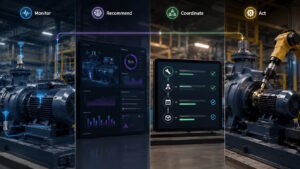

Key Takeaway: AI pilots often reveal more than whether a tool works. They expose how information moves through the business, how decisions get made, how adaptable teams are, and where operational friction exists. As more organizations experiment with artificial intelligence, these pilots are becoming valuable snapshots of organizational readiness, workflow clarity, data quality, and workplace culture.
AI pilots can reveal more about your organization than the technology you are testing. These AI trials, small AI experiments, and proof-of-concept projects often start with a simple goal. A team wants to test a tool, automate a task, or explore a new workflow. But once the pilot begins, it often uncovers something bigger. It shows how work really moves through the business.
That is why this topic has become so relevant. More companies now explore artificial intelligence in sales, marketing, operations, customer service, finance, and product development. Many leaders ask the same practical question: “Should we test AI before rolling it out?” The answer is usually yes. Yet the real value may not come from the tool alone.
An AI pilot may look like a technology test on paper. In practice, it becomes a quiet checkup on people, processes, data, and decision-making. It shows where the business moves smoothly and where it slows down. It also reveals whether teams can turn a promising idea into everyday work.
When AI Pilots Show How Work Really Happens
Every organization has an official version of how work gets done. There are process maps, project plans, handoff documents, and workflow charts. Then there is the real version.
AI pilots often expose the gap between the two.
A team may believe a process is simple until the pilot begins. Then people discover extra approval steps, missing information, duplicate work, or unclear responsibilities. A task that looked easy may depend on five people, three systems, and one spreadsheet nobody wants to touch.
This does not mean the pilot failed. It means the pilot showed the truth.
For example, a customer service team may test an AI assistant to summarize support tickets. The tool may work well during the first demo. But once the team connects it to real workflows, new questions appear. Where does the customer history live? Who updates the case record? Which system has the final answer? Who checks the AI summary before it reaches the next person?
These questions help leaders see the business more clearly. The technology becomes a lens, not just a product.
The Information Trail Is Often Messier Than Expected
One of the first surprises in many AI experiments is information access. People often assume their organization has clean, usable knowledge. The pilot usually tells a more complicated story.
Important information may live in email threads, shared drives, chat tools, old reports, customer notes, spreadsheets, and individual memory. Some teams may document everything. Others may rely on informal habits. Some systems may update daily. Others may hold stale information from months ago.
So when someone asks, “Why did the AI give a weak answer?” the issue may not be the model. The issue may be the information path around it.
This can be a useful discovery. A pilot may reveal that teams need better documentation, clearer ownership, or stronger knowledge management. It may also show where employees already spend too much time searching for answers.
In that sense, the pilot does not just test intelligence. It tests whether the organization can provide the right context at the right moment.
What AI Pilots Say About Decision-Making
AI pilots also reveal how decisions actually happen inside a company. This can be eye-opening.
Many organizations move quickly during brainstorming. They slow down when decisions need ownership. A pilot may produce useful outputs, but then nobody knows who should approve them. Legal may need to review one use case. IT may need to review another. A business unit may want speed, while leadership wants control.
This is where a simple experiment can surface deeper questions. Who owns the AI workflow? Who checks the results? Who decides when the output is good enough? Who carries responsibility when something goes wrong?
These questions are not just governance concerns. They shape whether teams can act with confidence.
A business may find that its decision-making process needs more clarity before AI can help. The pilot becomes a signal. It shows whether people know how to move from insight to action.
Culture Appears Before the Technology Finishes Loading
AI can make workplace culture visible very quickly.
Some teams treat a pilot as a chance to explore. They ask questions, test boundaries, and share feedback. Other teams may feel anxious, skeptical, or excluded. They may worry about job changes, mistakes, surveillance, or unrealistic expectations from leadership.
Both reactions matter.
A pilot can show whether employees see AI as support or pressure. It can also reveal whether leadership has explained the purpose clearly. When people do not know why a pilot exists, they often fill the gap with assumptions.
This is especially important for businesses that want AI to become part of daily work. Adoption does not happen only through access. People need trust, context, and a reason to change familiar habits.
So, what does an AI pilot reveal about culture? It shows how ready people feel to experiment. It also shows whether the organization has created space for honest feedback.
Data Quality Becomes Everyone’s Problem
Many AI conversations eventually return to data. But in a pilot, data stops being an abstract topic. It becomes visible.
A team may discover duplicate records, missing fields, outdated customer profiles, inconsistent product names, or disconnected systems. These issues may have existed for years. AI simply makes them harder to ignore.
This can shift the conversation in a healthy way. Data quality no longer feels like an IT-only issue. It becomes a business issue. Sales, marketing, operations, customer service, and finance all contribute to the information AI may rely on.
A pilot can help leaders see where data habits need attention. It can also show which teams already maintain strong information discipline.
The lesson is simple: AI does not magically fix messy inputs. It often reflects them.
A Small Experiment Can Change Big Expectations
Even a small pilot can change how people think about work.
Once employees see a task completed faster, they may expect other tasks to improve too. Once leaders see better summaries, faster analysis, or more responsive workflows, they may begin asking broader questions. Could this help customers? Could this reduce manual reporting? Could this change staffing needs? Could this improve decision speed?
The pilot may start in one department, but the conversation rarely stays there.
That is why businesses should pay attention to expectation shifts. A successful experiment can create momentum. It can also create pressure. Teams may want faster rollout before the organization understands the risks, limits, and responsibilities.
This does not mean companies should slow innovation. It means they should notice how quickly one small test can reshape the imagination of the business.
The Mirror Effect
The most useful AI pilots do more than prove whether a tool works. They reflect the organization back to itself.
They show where information gets stuck. They reveal who makes decisions. They expose unclear processes, strong teams, weak handoffs, and hidden dependencies. They also highlight where employees feel ready for change and where they need more support.
This makes the pilot valuable even when the technology needs improvement. A business can still learn from the friction. In fact, the friction may offer the most important lesson.
When leaders view a pilot only as a pass-or-fail technology test, they may miss these signals. But when they treat it as an organizational mirror, they gain a richer view of what needs to improve.
Conclusion
AI experiments can begin with a narrow question: “Will this tool work for us?” Yet the better question may be, “What will this show us about how we work?”
The answer can reveal a lot. It may show how information moves, how decisions get made, how teams react to change, and how prepared the business feels for intelligent systems. It may also uncover practical issues that teams have worked around for years.
That makes AI pilots more than test projects. They are early signals of organizational readiness, clarity, and adaptability. If you enjoy exploring how emerging technologies are reshaping businesses and workplace dynamics, Tech Scope Connect offers ongoing conversations, expert perspectives, and live discussions focused on the future of AI and innovation. Join today!