Key Takeaway: AI at work is changing more than individual tasks. As organizations begin using AI successfully, they often rethink workloads, employee expectations, management structures, and workplace collaboration. The biggest impact of AI may not be automation itself, but how businesses adapt when people and intelligent systems start working together every day.
The Real Test Begins After AI Works
AI at work is no longer just a future-of-work talking point; it is starting to shape everyday decisions, meetings, workflows, and expectations. Workplace AI has moved from novelty to practical business tool in many organizations. It now raises a bigger question than adoption alone.
What happens when AI actually works?
For years, the loudest conversations focused on whether AI could replace jobs. That question still gets attention, but it misses something important. In many companies, AI is not simply replacing people. It is changing the way people spend their time, make decisions, manage information, and collaborate.
That shift deserves a closer look. Once AI becomes useful, the workplace does not stay the same. The tools may get faster, but the human side of work becomes more complicated.
The Conversation Is Finally Moving Past Adoption
Much of the early discussion centered on whether organizations should adopt AI. As the technology becomes more common, attention is shifting toward a different challenge: understanding how successful AI deployment changes the workplace itself.
From demos to daily work
Many organizations started with AI experiments. Teams tested chatbots, writing tools, automation features, analytics assistants, and customer support systems. At first, the goal was simple: see what worked.
That phase made sense. Companies needed to understand where AI could help and where it still struggled. They wanted quick wins, safer pilots, and proof that the technology had real value.
Now the conversation is changing. AI no longer sits only in innovation meetings. It appears in email platforms, CRMs, project tools, search systems, dashboards, and content workflows. Employees may not even think of every feature as “AI.” They just notice that more tasks now move faster.
This creates a new workplace reality. Once a tool becomes useful, people start building routines around it.
Why AI at work creates new questions
The early question was, “Can AI do this task?” The next question is, “What changes when it can?” That second question opens a much wider conversation. If AI helps employees produce more, how should leaders measure productivity? If AI supports decisions, who stays accountable? If AI saves time, does that time become breathing room or more work?
These questions do not belong only to IT teams. They affect managers, employees, executives, HR leaders, and customers. They also affect company culture. AI success does not end the conversation. It starts a more serious one.
AI at Work Is Changing How Work Gets Done
When AI moves beyond experimentation and into everyday operations, it begins to influence how tasks are completed, how teams spend their time, and how productivity is measured. The effects often reach further than simple automation.
Automation removes tasks, not the whole workday
A common assumption says AI will reduce work by handling repetitive tasks. Sometimes it does. AI can draft summaries, sort information, answer basic questions, organize data, and speed up routine processes. Still, removing tasks does not always reduce the workday. It often changes the shape of it.
An employee who spends less time on manual reporting may spend more time interpreting results. A marketer who drafts faster may produce more campaigns. A support team that answers basic questions with AI may handle more complex customer issues.
So the real question becomes less dramatic but more useful: How does AI change the work people actually do? In many cases, AI moves people away from routine execution. Then it pushes them toward review, decision-making, communication, and coordination.
When productivity quietly raises the bar
When a company gets more productive, expectations often rise with it. This can happen quietly. A team that once delivered one report per month may now produce weekly updates. A manager may expect faster turnaround. A client may expect more personalization. A sales team may follow up with more prospects.
That does not mean AI creates a bad outcome. It means leaders need to think carefully about the human side of efficiency. Productivity can feel exciting on a dashboard. It can feel different for the person expected to keep up with the new pace.
Collaboration Becomes the New Workplace Skill
AI is becoming part of the daily workflow, not a separate side experiment. As that happens, employees need to learn when to lean on it, when to question it, and when to bring their own judgment forward.
Working alongside digital teammates
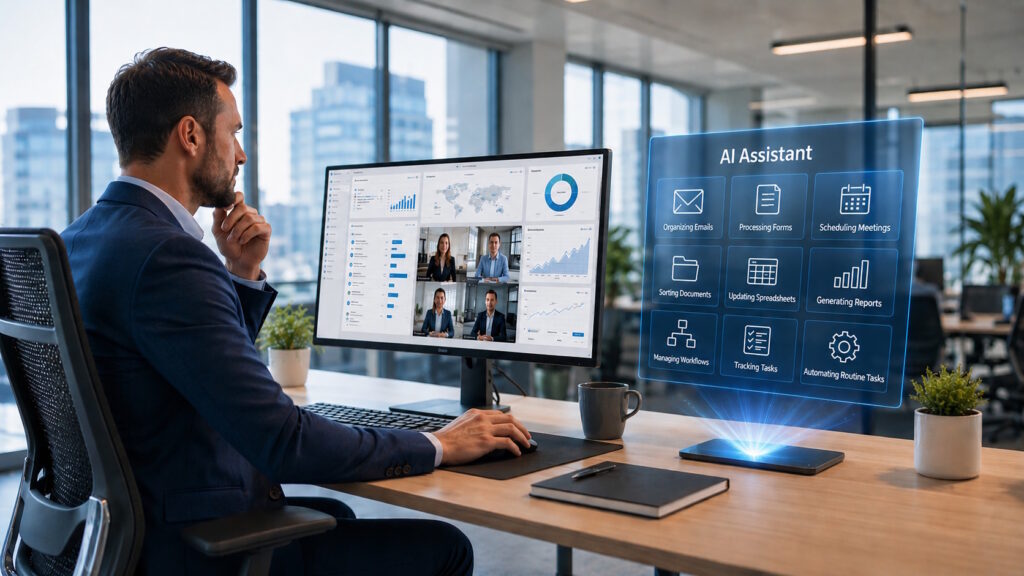
AI is becoming less like a separate tool and more like a working partner. Employees may ask it to draft, summarize, compare, brainstorm, classify, analyze, or prepare a first version. This does not turn AI into a coworker in the human sense. It does change how people approach tasks.
Instead of starting from a blank page, an employee may start from an AI-generated draft. Instead of searching through documents manually, they may ask a system to surface patterns. Instead of waiting for a full analysis, they may review a first pass within minutes.
That creates a new kind of workplace rhythm. People still do the work, but they may begin the work from a different starting point.
Judgment becomes the human advantage
As AI handles more first drafts and early analysis, human judgment becomes more valuable. Someone still needs to decide whether the output makes sense.
Does the answer fit the situation? Did the tool miss context? Does the recommendation create risk? Is the tone right for the customer? Is the information reliable enough to use? These questions require experience, awareness, and critical thinking. AI can support the process, but people still carry responsibility for the outcome.
In a workplace shaped by AI, the strongest employees may not be the ones who use the most tools. They may be the ones who ask better questions and make better calls.
The Hidden Risk: Too Much Intelligence, Too Fast
Greater access to information sounds like an obvious advantage. Yet as AI delivers more insights, recommendations, and analysis, employees may face a new challenge: deciding what deserves their attention and what does not.
More insights can mean more decisions
AI can give teams more information than they had before. That sounds useful, and often it is. Better summaries, faster analysis, and clearer patterns can support smarter decisions.
Yet more information can also create pressure. If every tool produces recommendations, alerts, drafts, and dashboards, employees may face a new kind of overload. They spend less time gathering information and more time judging what deserves attention.
That can create a strange workplace paradox. AI may reduce some busywork while increasing mental load. The challenge is not only getting answers faster. It is knowing which answers matter.
Managing the speed of AI
Business already moves quickly. AI can make that speed feel even faster. A report that took days may take hours. A strategy document may appear in minutes. A customer insight may surface instantly. Leaders may start expecting decisions at the same pace.
But people still need time to think. They need context, discussion, and judgment. They need room to challenge assumptions. Companies that ignore this may confuse speed with clarity. They may move faster without becoming wiser.
Management Enters the Redesign Zone
As AI expands what teams can accomplish, leaders may need to rethink long-standing assumptions about productivity, oversight, and organizational structure. The role of management itself could evolve alongside the technology.
Team dynamics start to shift
When AI expands what individuals can do, teams may change. A smaller team may handle more output. A junior employee may take on tasks that once required more support. A senior employee may spend more time reviewing and guiding work. This can improve performance, but it can also blur roles.
Who owns the final answer? Who checks quality? Who decides when AI output is good enough? Who trains employees to use these systems well? Managers will need clearer expectations, not just better tools.
The manager’s role becomes more human, not less
Some people assume AI will make management less important. The opposite may happen. As work moves faster, managers may need to spend more time on priorities, communication, coaching, and trust. They may need to help teams understand where AI fits and where human judgment should lead.
The best managers may become translators between technology and people. They will not only ask, “Did the team use AI?” They will ask, “Did AI help the team do better work?” That is a very different management question.
The Employee Playbook Gets Rewritten
The skills that helped employees succeed in the past will still matter, but they may not carry the same weight. As AI becomes more capable, organizations may begin placing greater value on a different set of strengths.
What companies may value more
AI can change what organizations value in employees. Routine execution still matters, but it may not define workplace value as much as before. Companies may place more weight on problem framing, communication, creativity, adaptability, and decision quality. Employees who can connect ideas across departments may become even more important.
This shift can feel uncomfortable. People built careers around expertise, speed, and task completion. AI does not erase those strengths, but it may change how they show up. The future employee may need to be part operator, part editor, part strategist, and part quality checker.
Skills that travel well
Some skills remain useful no matter how AI evolves. Clear thinking still matters. So does curiosity. Communication still shapes outcomes. Trust still affects teams. AI literacy will also matter, but not in a narrow technical sense. Many employees do not need to become AI engineers. They need to understand how to work with AI, question it, and use it responsibly.
A simple conversational query captures the issue well: What skills matter when AI becomes part of everyday work? The answer starts with judgment.
The Real Challenge Is Organizational Adaptation
Technology can change quickly, but organizations often move at a different pace. Long-term success may depend less on acquiring AI tools and more on adapting workflows, expectations, and culture around them.
Technology opens the door
Buying AI tools is often easier than changing how a company works. A platform can launch quickly. A new workflow takes longer. Organizations need to decide where AI belongs, who should use it, and what standards should guide it. They also need to avoid treating every task as an automation opportunity.
Some work benefits from speed. Some work benefits from pause, debate, and human nuance. The strongest organizations will likely treat AI as part of a larger workplace redesign, not as a shortcut around it.
Agility carries the advantage
The companies that benefit most may not be the ones with the most AI tools. They may be the ones that adapt with the most clarity. That means they can update workflows without creating chaos. They can train employees without overwhelming them. They can raise expectations without burning people out. They can use AI while still protecting quality, trust, and accountability.
In the end, AI success depends on more than software. It depends on how well the organization learns.
Conclusion: When AI Works, Work Changes
AI has already changed the workplace conversation. The old debate focused heavily on whether machines would replace people. The better question now asks how people, teams, and organizations change when AI becomes useful.
This is where the topic becomes more interesting. AI may reduce repetitive tasks, but it can also raise expectations. It may support better decisions, but it can also increase information overload. It may help managers see more, but it can also require more human leadership.
The future of work will not come from AI alone. It will come from the choices companies make around it.
When AI works, work itself starts to change. If you’re interested in how emerging technologies are reshaping organizations, careers, and the future of work, Tech Scope Connect explores these conversations through expert insights, live newscasts, and global technology summits designed to keep professionals informed and engaged. Join now!