Key Takeaway: Disconnected AI systems can create hidden organizational friction even when individual tools work well. As different departments adopt separate AI solutions, businesses may face conflicting recommendations, duplicated verification work, slower decision-making, and declining trust in AI outputs. The greatest challenge is often not the technology itself but the lack of shared context between systems, which can make organizations less efficient despite increased automation.
When Smart Tools Stop Working Together
AI systems now sit inside everyday business work. Intelligent tools, digital assistants, and automated workflows help teams draft messages, summarize meetings, support customers, and analyze information faster. For many organizations, this feels like clear progress. Work moves quicker. Teams get more help. Leaders see new ways to reduce routine effort.
Yet a quieter problem can appear as these tools spread across the business. Each department may choose a system that fits its own needs. Sales may rely on one assistant. Marketing may use another. Customer support may follow a separate workflow. Operations may build its own automation path.
At first, that setup can seem practical. Each team solves a local problem. Over time, though, the business may feel less coordinated. People do not only use AI. They also manage the gaps between disconnected tools.
That is the hidden cost. It is not just another software fee. It is the extra checking, confusion, and lost confidence that appear when smart tools do not share enough context.
The First Warning Sign: Everyone Has a Different Answer
Disconnected tools often create small problems before they create big ones. A team may ask for a customer summary and receive one version from sales data. Support may see a different version from ticket history. Marketing may have another view based on campaign activity. None of those answers may be completely wrong. Still, they may not match.
That creates a practical question: “Which answer should we trust?” Once that question appears, AI stops feeling simple. Employees must compare outputs, look for gaps, and decide which version reflects reality.
This can happen in many areas. A manager may see different project summaries from different platforms. A customer-facing team may receive mixed recommendations. A leadership team may review reports that interpret the same trend in different ways.
The issue is not always accuracy. Sometimes each tool works well within its own narrow view. The problem comes from separation. Each system sees part of the picture, while employees must assemble the full story.
When People Become the Bridge Between AI Systems
Disconnected AI systems often shift hidden work onto employees. The tools may handle individual tasks, but people still connect the pieces by hand.
A worker may copy information from one platform to another. A manager may rewrite a summary so it matches internal language. A team lead may compare two recommendations before moving forward. These actions may feel minor in the moment. Across a week or month, they become real work.
You may hear someone ask, “Why does AI make my day feel busier?” That question often points to a coordination problem. The tools may save time on tasks, yet they may also create more review work around those tasks.
This produces a strange result. The organization adds automation, but employees carry more mental load. They need to remember which tool handles which task. They need to know which answer carries more weight. They need to notice when two systems quietly disagree. That is not the smooth future many teams expected.
The Verification Tax No One Budgeted For
Most businesses understand that AI output needs review. No responsible team wants to accept every suggestion without judgment. A quick check makes sense. The hidden cost appears when review turns into constant reconciliation.
A marketing team may compare three drafts from different tools. A customer service lead may check whether a suggested response matches company policy. A sales manager may review an AI-generated account summary against CRM notes. A project owner may pause to ask why two platforms recommend different next steps.
This extra effort becomes a verification tax. It does not always show up in software budgets. It shows up in slower meetings, longer approvals, more revisions, and cautious decisions.
At that point, AI may still save time in one place. But the organization may spend that saved time somewhere else. The gain becomes harder to measure because the cost hides inside daily routines.
Trust Wears Down in Small Moments
Trust rarely disappears all at once. It fades through repeated moments of uncertainty. An employee sees one answer on Monday and another answer on Wednesday. A manager catches a mismatch before it reaches a customer. A team member uses one assistant, then learns another department would have handled the same task differently.
None of these moments may create a crisis. Together, they make people more careful. Some caution is healthy. People should use judgment when working with AI. But too much uncertainty changes behavior. Employees may stop using tools that once seemed helpful. Teams may return to manual habits because those habits feel more predictable.
Leaders may see this as resistance. In many cases, it is not. It is a confidence problem. When people cannot tell which output deserves trust, they slow down. They check more. They ask more questions. They avoid relying on the system too heavily. That can weaken the value of the entire AI effort.
Faster Tools Can Still Slow Decisions
AI often promises speed. Faster drafts. Faster summaries. Faster research. Faster responses. Those gains can help a business move. But speed at the task level does not always create speed at the decision level.
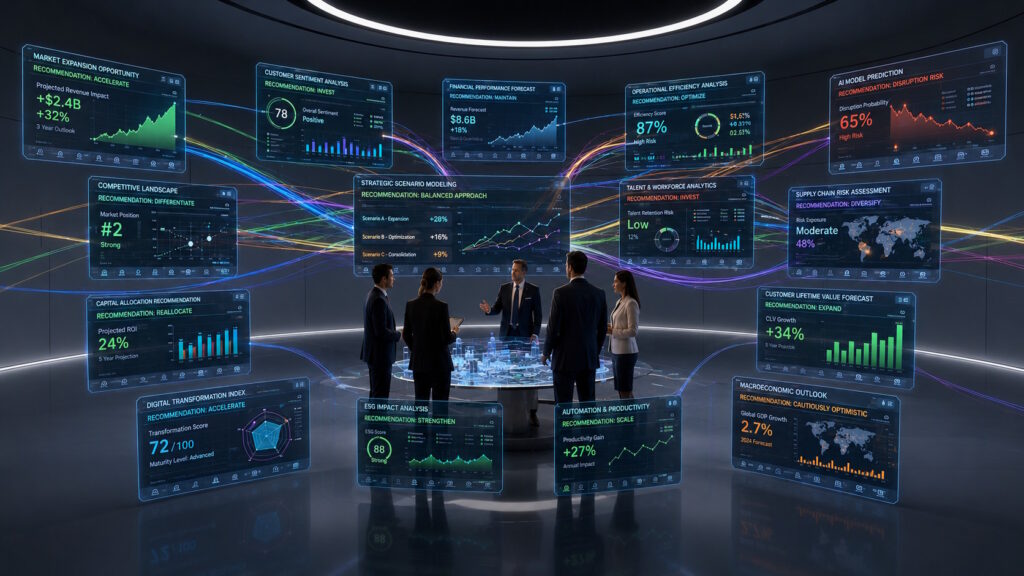
Disconnected tools can produce too many signals. One assistant may suggest urgency. Another may recommend caution. One platform may focus on cost. Another may focus on customer sentiment. A third may highlight operational risk. Now the decision-maker has more information, but not always more clarity.
A simple question like “What should we do next?” becomes more complicated. The team must first decide which AI-generated view should shape the answer. That can slow progress, especially when ownership feels unclear. More intelligence does not always lead to better decisions. The business also needs alignment, context, and confidence.
The New Silos Look Smarter
Many companies spent years trying to break down information silos. They wanted teams to share knowledge, align around customers, and work from a clearer view of the business. Disconnected tools can bring those silos back in a new form.
Instead of separate spreadsheets, teams may now have separate assistants. Instead of isolated folders, departments may build separate prompt habits. Instead of one shared view of a customer, different groups may rely on different AI-generated interpretations. These silos look modern. They may even look productive. But they still create separation.
People may believe they share the same context while their tools quietly shape different conclusions. That can affect customer experience, internal planning, and everyday collaboration. The risk grows slowly. Once separate habits settle into daily work, they become harder to unwind.
Connected AI Systems Need Shared Context
The answer is not to chase more tools. It is also not to reject useful technology. A healthier path starts with shared context. Teams need a clearer sense of which information sources matter. They need consistent language for customers, products, policies, and priorities. They also need practical guidance on where AI fits into work and where human judgment should lead.
This does not require every employee to understand technical architecture. Most people need plain answers to everyday questions. Where did this output come from? Does it reflect current information? Who checks it before action? What should I do when two tools disagree? When those answers become easier to find, the friction drops. People can spend more time using insight and less time untangling it.
Conclusion: Don’t Let Smart Tools Create Quiet Drag
The hidden cost of disconnected technology does not always look dramatic. It often appears as extra checking, slower decisions, mixed messages, and fading trust. Those costs can grow quietly while everyone focuses on the promise of faster work.
AI can still help organizations work smarter. But smarter work depends on more than powerful tools. It also depends on shared context, clear signals, and confidence in the information people use every day.
As more businesses add AI systems to daily operations, the real advantage may come from making those systems work together in ways people can understand. If you are interested in how organizations are navigating the opportunities and challenges of AI adoption, Tech Scope Connect explores these conversations through expert insights, live discussions, and ongoing coverage of emerging technology trends. Join the conversation and stay connected to what comes next. Join now!