Key Takeaway: AIoT security is no longer just about protecting connected devices from cyberattacks. As AI-enabled IoT systems gain the ability to make decisions and take actions on their own, organizations also need to define what those trusted devices are allowed to do. Clear permissions, machine identity, action limits, decision trails, recovery planning, and human oversight all play an important role in ensuring autonomous systems operate safely, predictably, and responsibly.
When Connected Devices Start Making Choices
AIoT security is entering a new phase as connected devices gain the power to decide and act without direct instructions. When you hear IoT cybersecurity, you may picture hackers, stolen data, or insecure networks. Security for intelligent connected systems now has another job: controlling what trusted devices may do.
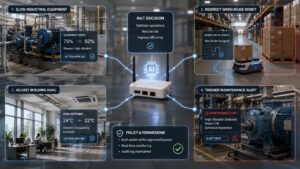
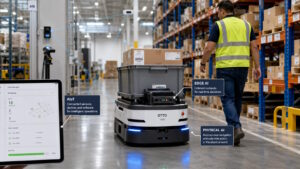
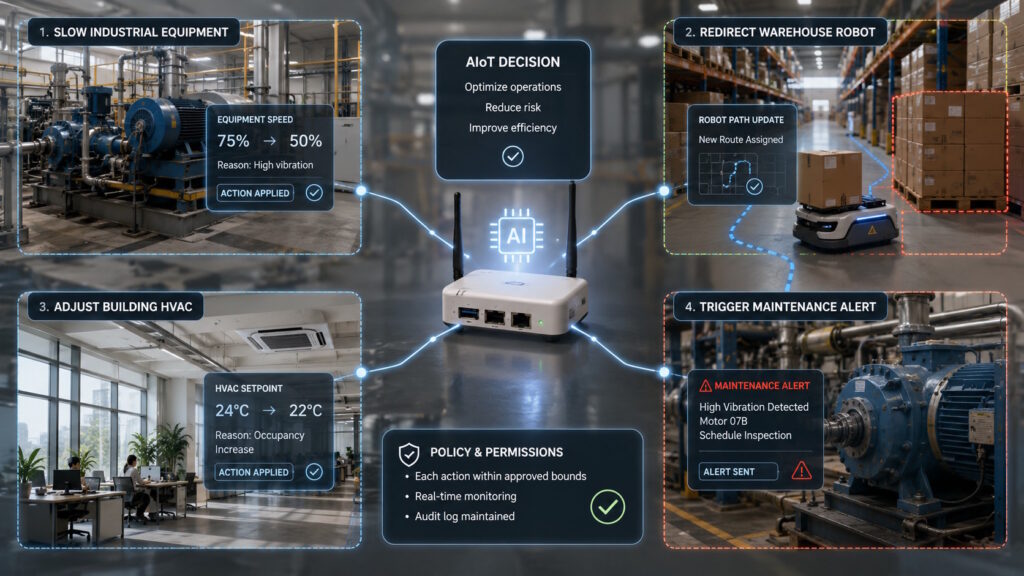
That shift is easy to picture in everyday operations. A temperature sensor once reported that a machine was overheating. An AI-enabled system can now slow the machine, reroute production, or trigger a maintenance request. A warehouse robot may choose a new route when an aisle becomes crowded. A building system may adjust energy use throughout the day.
These actions can improve speed, safety, and efficiency, yet they also create a less obvious security problem. A device can cause harm without a hacker ever entering the system. It may use valid access, follow approved instructions, and still make the wrong choice.
Why AIoT Security Changes When Devices Can Act
Traditional connected devices mostly observed conditions and reported results. A person or central application usually decided what happened next. Autonomous devices shorten that chain by interpreting conditions and responding on their own.
What changes when an IoT device can act independently? Security must cover behavior as well as access. Organizations still need encryption, software updates, and network protection. However, those controls cannot define every acceptable action.
Consider a smart camera that detects an obstruction on a factory line. Reporting the problem creates limited risk. Stopping the line can affect production, safety, and revenue. The camera may have permission to act, yet its decision can still be wrong.
This is the hidden issue at the heart of AIoT security. The system may behave as designed while producing an outcome nobody expected.
Can a Trusted Device Still Cause Harm?
A trusted device can still cause harm because trust does not guarantee good judgment. Autonomous behavior depends on sensor data, settings, models, and the surrounding environment. Any of those inputs can mislead the system.
A dirty camera lens may hide an object, while a faulty sensor may provide an incomplete picture. A software update may also change how the device interprets a familiar situation.
Conflicting goals create another risk. A building system may cut energy use while making a workspace uncomfortable. A delivery robot may choose the fastest route while creating congestion elsewhere.
No attacker caused those outcomes. The systems pursued narrow goals without understanding the wider context. This risk sits between cybersecurity and operations, where technology meets authority, judgment, and accountability.
Permission Is More Than a Login
Most people think of permissions as access to data, applications, or networks. Autonomous systems need a broader definition that covers their actions in the physical world.
A device may read a sensor without changing equipment settings. Another may adjust a process within a narrow range. A high-impact action could still require approval from an operator.
The guiding idea remains simple: each system should receive only the authority it needs. A maintenance tool might recommend a shutdown without executing one. A warehouse robot might reroute itself without unlocking a restricted door.
Clear permissions prevent successful performance from becoming a blank check. They also help teams understand who controls each part of an automated process.
Identity Follows Every Decision
When several devices work together, identity means more than a name on a network. Organizations need to know which device acted, which software ran, and which model guided the decision.
Imagine a factory system receiving a command to stop production. It should verify the sender’s identity and confirm its authority before accepting the command.
The same principle applies when robots, cameras, sensors, and business platforms exchange information. Every action should connect to a recognized source and an approved role.
Strong identity supports accountability and helps teams investigate mistakes without guessing which system made the call.
Safe Boundaries Keep Small Errors Small
Autonomy works best inside clear limits, which give devices room to act without granting unlimited control. A building system might adjust temperature within an approved range. It should never disable fire protection simply to save energy.
A purchasing system might reorder routine supplies below a spending limit. Larger orders could move to a manager for review. Similar boundaries can cover speed, location, timing, cost, or frequency.
These controls can stop repeated actions before a small error becomes a major incident. Here, AIoT security looks less like a locked door and more like a well-designed workspace. The system can move freely, but only within safe and visible boundaries.
Logs Should Explain More Than Activity
Traditional logs often show what happened and when. Autonomous systems add another question: Why did the device choose that action? A useful decision trail can capture the information available at the time. It can also record the model version, relevant rules, and any human approval.
Teams do not need a perfect transcript of every calculation. They need enough context to reconstruct the choice and understand its surrounding conditions. That context supports incident reviews, compliance, maintenance, and future improvements. Without it, an organization may know that a robot stopped but not why. The missing explanation could allow the same problem to return tomorrow.
Recovery Gets Harder in the Physical World
Software teams can often roll back a bad update. Physical actions do not reverse so neatly. A robot may have moved inventory to the wrong place. A machine may already have stopped, or an automated order may have reached a supplier. Restoring an earlier setting cannot undo every consequence.
Recovery therefore involves more than changing software. Organizations need safe states, practical stop controls, and clear procedures for returning operations to normal.
They should also make high-impact actions reversible whenever possible. No system will make flawless decisions forever, so resilience depends on limiting damage and restoring stability quickly.
The Human Still Needs a Hand on the Wheel
Autonomy does not remove the need for human judgment. Instead, it changes where that judgment enters the process. Routine actions can happen automatically when risk remains low. Higher-impact choices may need approval, review, or escalation. People also need a simple way to pause the system when conditions become unclear.
What AIoT Security Needs From Human Oversight
A useful override must work during a real incident, not only during a demonstration. Employees need clear alerts, enough context, and the authority to respond. An emergency button alone cannot solve every problem. A person must understand what the system did and what may happen next. Training and clear responsibility make intervention practical.
Human oversight should match the level of risk. A minor temperature adjustment does not need the same review as a production shutdown. The aim is not constant supervision, but timely judgment when decisions carry serious consequences.
Trust Grows in Stages
Organizations do not need to grant full autonomy on day one. They can expand it as the system proves reliable. A device may begin by observing conditions and later move to recommending actions. The next stage may allow action after human approval. Eventually, the system can act independently within defined limits.
Each step gives teams time to test behavior, refine permissions, and improve recovery plans. Unusual conditions deserve special attention during this process. A system that performs well in normal operations may still struggle with rare events.
Trust grows through evidence rather than enthusiasm. Monitoring, identity controls, and recovery options should strengthen as autonomy expands.
Conclusion: Security Has to Cover the Action, Too
Connected devices once created data for people to review. AIoT systems increasingly turn that data into decisions and physical actions. This evolution brings real benefits, but it also broadens the security conversation.
Organizations still need to defend devices, networks, and information. They must also govern what trusted systems may do after gaining access. Permissions, machine identity, action limits, decision trails, recovery, and human oversight all support that goal.
The central question is no longer only, “Can someone break into this device?” It is also, “What can this device do once we trust it?” As autonomous technologies continue to evolve, understanding these questions will become increasingly important.
Want to stay informed on the latest developments in AIoT, AI, and connected technologies? Join the conversation at Tech Scope Connect through our live newscasts, expert discussions, and global technology summits.