
deepfake audio
From Proof to Pretext: How the Human Voice Became an Attack Surface
Quick Answer: The human voice is no longer a reliable stand in for identity because attackers can now record, clone, and spoof it to bypass

Quick Answer: The human voice is no longer a reliable stand in for identity because attackers can now record, clone, and spoof it to bypass

Key Takeaway: AI robotics is transforming the workforce beyond traditional manufacturing roles by introducing intelligent machines into industries like healthcare, retail, logistics, and hospitality. Rather

Quick Answer: Trust has replaced the traditional network perimeter as the foundation of cybersecurity. In a world where every connection expands both capability and risk,

Key Takeaway: Blob URL phishing scams use temporary, browser-generated links to deliver malicious content directly within the user’s session—bypassing traditional security filters and link scanners.

Quick Answer: Answer Engine Optimization (AEO) structures content for AI and search engines to extract direct, concise responses. It enhances visibility in featured snippets and

Key Takeaway: Modern cyber threats to electronic control units (ECUs) stem from their deep integration into nearly every vehicle function—from braking to infotainment—making them a

Essential Insight: AEO 1.0 can make your pages “cite-able,” but today’s AI answers still hide impact because observability is missing—consistent source attribution, proof of citation,
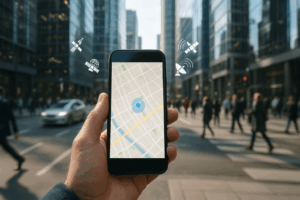
Key Takeaway: GPS still matters—but today’s location services are faster, steadier, and more precise because devices use GNSS (multiple satellite constellations like Galileo and GLONASS)

The Big Picture: Smart rings are shifting from stylish wearables to integral nodes in connected health ecosystems. Beyond tracking sleep, HRV, temperature, and activity, they

What It Means: People are quietly shifting from Google to AI answers because conversational tools deliver faster, more tailored results with less friction. The trade-off:

Key Takeaway: No—cybersecurity doesn’t always require coding. Many roles (e.g., Tier-1 SOC analyst, GRC/risk, audit, compliance, policy) emphasize security principles, tooling, process, and communication over

Key Takeaway: AI is making it faster and easier for cybercriminals to create phishing websites that mimic trusted brands. These automated fake sites are convincing,
Please confirm you want to block this member.
You will no longer be able to:
Please note: This action will also remove this member from your connections and send a report to the site admin. Please allow a few minutes for this process to complete.
This video cannot play here.
Download it instead