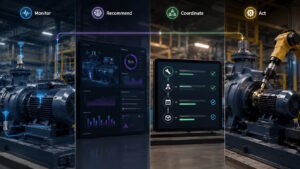

Key Takeaway: AI infrastructure is changing how businesses think about artificial intelligence. Instead of treating AI as a standalone productivity tool, companies are increasingly integrating it into workflows, operations, customer experiences, connected devices, and decision-making systems. This shift moves AI closer to core business infrastructure, similar to cloud platforms, cybersecurity, and data management, making strategy, governance, and system integration more important than ever.
AI Is Moving Into the Machinery of Business
AI infrastructure is quickly becoming a serious business conversation, not just a technical term. For many companies, the discussion now reaches beyond chatbots and writing tools into enterprise AI platforms, intelligent automation layers, connected systems, and business workflows that rely on data, software, and decisions working together.
For a while, most people experienced AI as a helpful app. You could ask it to draft an email, summarize a meeting, create an outline, or answer a quick question. That version of AI still has value. It helps employees move faster and reduces some routine work.
But the conversation has started to change. Businesses are beginning to ask a bigger question: What happens when AI becomes part of how the company actually runs? That question moves AI out of the “nice-to-have tool” category. It places AI closer to cloud platforms, cybersecurity systems, data management, and connected devices. In other words, AI is becoming part of the business foundation.
This shift does not mean every company needs a complex AI strategy overnight. It does mean leaders should understand where AI is heading. The next phase of AI will not only help people complete tasks. It will support workflows, guide decisions, connect systems, and shape daily operations.
AI Infrastructure Is Becoming the Business Backbone
A tool helps someone complete a task. Infrastructure supports the way a business operates every day. That difference sounds simple, but it changes how companies should think about AI.
- A writing assistant is a tool. An AI-powered content workflow connected to brand guidelines, approvals, customer data, and publishing systems starts to look like infrastructure.
- A chatbot is a tool. A customer support system that uses AI to read ticket history, suggest responses, route requests, and alert managers starts to become part of operations.
- A predictive maintenance model is a tool. A connected system that analyzes sensor data, triggers alerts, schedules service, and supports field teams becomes something much larger.
This is the shift companies need to watch. AI is no longer only something employees open when they need help. It is becoming something that runs quietly inside business processes. You might ask, “What is AI infrastructure in simple terms?” Think of it as the layer that lets AI work across systems, data, teams, and workflows. It helps AI move from one-off use to repeatable business value.
Not Just Another App on the Menu
Many businesses started their AI journey by adding apps. Marketing teams tested content tools. Sales teams tried email assistants. Customer support teams explored chatbots. Operations teams looked at automation. That approach made sense at first. Teams needed room to experiment.
Over time, though, too many disconnected tools can create confusion. One department may use one AI system. Another may use a different one. Outputs may vary. Data may sit in separate places. No one may know which tool owns which task. At that point, AI adoption can feel busy without feeling strategic.
This is where companies start to think differently. They begin to ask how AI fits into the bigger business environment. They look at data access, security, governance, workflow design, and user training. They also consider how AI connects with existing systems.
The goal is not to chase every new AI tool. The goal is to understand which AI capabilities can support the business in a reliable way.
Why This Shift Is Happening Now
AI has moved quickly from experiment to expectation. Employees now expect smarter software. Customers expect faster service. Business leaders expect better insights. Technology teams face pressure to make AI useful, secure, and scalable.
At the same time, AI agents are changing the conversation. These systems can do more than answer questions. They can help complete multistep tasks, interact with software, and support workflows. That creates new possibilities. It also creates new responsibilities.
If an AI system can access customer records, update information, suggest actions, or trigger workflows, the business needs guardrails. It needs visibility. It needs clear ownership. It needs a way to monitor what AI does and where it does it.
This is why the shift from tools to infrastructure matters. AI becomes more powerful when it connects to real business systems. It also becomes more important to manage.
A simple question captures the trend: Is AI helping with isolated tasks, or is it becoming part of how work moves through the company? For more companies, the answer is starting to lean toward the second option.
What AI infrastructure looks like in everyday work
AI infrastructure does not need to sound abstract. You can see it in everyday business settings.
- In customer service, AI may help summarize support tickets, recommend next steps, and route urgent requests. When it connects to customer history and service workflows, it becomes part of the support operation.
- In manufacturing, AI may analyze machine data, detect unusual patterns, and help teams prevent downtime. When it links with sensors, maintenance schedules, and alerts, it supports operational performance.
- In sales, AI may help review CRM data, identify promising leads, summarize calls, and prepare follow-ups. When it connects to pipelines and reporting, it becomes part of revenue operations.
- In cybersecurity, AI may help teams sort alerts, spot suspicious activity, and respond faster. When it connects with monitoring tools and response processes, it supports risk management.
In each case, AI does more than sit inside a single app. It becomes part of a connected system.
The Edge, the Cloud, and the Connected Business
AI also affects how companies think about where work happens. Some AI activity happens in the cloud. That can make sense for large-scale processing, shared platforms, and broad access. Other AI activity may happen closer to devices, machines, or locations. This is especially important for businesses using IoT systems, sensors, smart equipment, or connected operations.
For example, a factory may need fast decisions near the production line. A logistics company may need intelligence close to vehicles or warehouses. A smart building may need local monitoring for energy use, access control, or safety systems. This is where edge AI enters the picture. It brings intelligence closer to where data gets created. That can reduce delays, lower bandwidth needs, and support faster responses.
The bigger point is simple: AI is becoming part of the connected business. It touches cloud platforms, edge devices, software systems, and operational workflows. Companies that understand this connection can make smarter choices as AI expands.
Watch the Sprawl Before It Starts
AI adoption can become messy when every team moves in a different direction. One team may automate reporting. Another may use AI for customer emails. Another may connect AI to internal documents. Another may test agents for operations. Each effort may seem useful on its own. Together, they can create tool sprawl.
Tool sprawl happens when too many disconnected systems enter the business without a clear plan. It can create duplicate work, inconsistent outputs, security gaps, and unclear accountability.
This does not mean companies should slow innovation to a crawl. Experimentation still plays a valuable role. But as AI moves closer to core business systems, companies need a more thoughtful approach.
A few practical questions can help. Who owns AI decisions? Which systems can AI access? How should teams review AI outputs? What happens when AI makes a mistake? Which use cases need human approval? These questions help turn AI from a scattered experiment into a managed capability.
What Companies Should Be Asking Now
Companies do not need to solve every AI challenge at once. They do need to ask better questions.
- Start with visibility. Where do teams already use AI? Which tools support real work? Which ones only create noise?
- Then look at value. Which AI use cases save time, improve service, reduce risk, or support better decisions?
- Next, consider connection. Which systems does AI need to reach? Does it need customer data, device data, documents, workflows, or reporting tools?
- Finally, think about trust. How will people know when to rely on AI? When should a human step in? How will the company monitor quality, security, and cost?
These questions keep the conversation grounded. They also help leaders avoid treating AI as a collection of shiny tools. The companies that benefit most from AI will likely take a wider view. They will look at how AI fits into business systems, not only how it helps with individual tasks.
Conclusion: The Next AI Conversation Starts Here
The shift from AI tools to infrastructure marks an important moment for business technology. AI is moving from the edge of daily work into the systems that support decisions, operations, customer experiences, and connected environments.
This does not mean every company needs a massive transformation project. It does mean companies should pay attention to how AI enters their workflows. The earlier leaders understand the shift, the easier it becomes to make smart choices.
AI will keep showing up in more places. It will appear in business software, connected devices, customer service systems, cybersecurity platforms, analytics tools, and operational workflows. Some uses will feel small. Others will become essential.
The key is to see the larger pattern. AI is no longer only about picking the best app. It is about understanding how intelligence becomes part of the business foundation. As companies plan for the next stage of digital transformation, AI infrastructure will play a growing role in how they work, compete, and adapt.
Want more perspectives on where AI, connected systems, and business technology are headed? Tech Scope Connect explores these shifts through expert discussions, live broadcasts, and conversations around the technologies shaping the future of business. Join now!