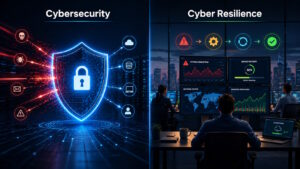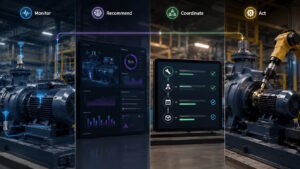

Key Takeaway: Industrial IoT security is not just about preventing cyberattacks. The real risk lies in operational lock-in, where early security and connectivity choices become embedded in daily operations and are difficult to change without disrupting production. When systems cannot be updated, replaced, or reconfigured safely, organizations lose flexibility and long-term control. Effective industrial IoT security should protect today’s operations while preserving the ability to adapt tomorrow.
When Connectivity Meets the Real World
Industrial IoT security is no longer a niche concern for engineers. It now touches uptime, safety, and reputation. In everyday terms, this is industrial cybersecurity for connected operations. Many teams also call it OT security or connected factory protection. Whatever name you prefer, the idea is the same. You have more devices talking to more systems than ever before.
That shift brings clear benefits. You can monitor equipment health, reduce waste, and respond faster to problems. Yet it also changes what “risk” looks like. The headline risk is not always a dramatic breach. The quieter risk can matter more. It is the moment you realize you cannot change a fragile setup. You also cannot replace it without disrupting production.
If you have ever asked, “Why can’t we just swap this out later?” you are already close to the issue. In industrial settings, “later” often arrives with a shutdown window. It also arrives with a contract renewal. That is where operational lock-in starts to feel real.
Industrial IoT Security: A Quick, Human Definition
When people hear “security,” they often picture passwords and firewalls. Those elements still matter. Industrial environments add a different layer of reality. Connected assets influence physical outcomes. A sensor affects a control decision. A remote connection affects who can change settings. A software update can affect a line’s stability.
So what does industrial IoT security mean at a surface level? It means you can connect equipment and data without losing control. It also means you can keep improving systems over time. That last part gets overlooked. Many organizations protect today’s configuration. Fewer protect tomorrow’s ability to change.
You can think of it this way. A connected plant becomes a living system. It evolves through upgrades, expansions, vendor changes, and staffing shifts. Security should support that evolution, not fight it.
Industrial IoT Security and the “Can We Keep Running?” Question
A conversational way to frame the topic is simple: “Will this help us keep running?” That question sits under most security discussions, even when nobody says it.
You may hear it during a maintenance meeting. You may hear it during a network refresh. Sometimes it shows up as a budget question. “Why are we spending money on this?” Often, the honest answer is that security is not just about stopping bad actors. It is about keeping the plant resilient when conditions change.
That is where operational lock-in becomes a security topic. If a design choice blocks future upgrades, security becomes part of the constraint. The organization then inherits risk for years, not weeks.
The Security Problem That Looks Like a Maintenance Problem
Industrial systems rarely follow the same lifecycle as office technology. Laptops turn over quickly. Industrial assets can last decades. That reality changes the entire conversation.
A connected sensor might live in a harsh environment. A gateway might sit in a cabinet nobody opens. A controller might require special procedures for updates. Over time, small compromises become normal. “We will address it later” becomes “It still works, so leave it.”
This is not negligence. It is operations. A plant’s job is to produce reliably. When production pressures rise, friction wins. Even well-run facilities make tradeoffs. That is why security planning needs to match operational reality.
The most common early assumption sounds harmless. “We will tighten things up once the pilot proves value.” Pilots, however, tend to become permanent. A workaround becomes a dependency. Then your team discovers that reversing the choice costs more than living with it.
Operational lock-in often begins here. It starts as a maintenance choice. It ends as a strategic limitation.
What “Operational Lock-In” Looks Like on a Tuesday Morning
Operational lock-in is not an abstract concept. It shows up in ordinary moments.
Imagine a line supervisor reports intermittent downtime. The root cause points to a connected device that needs a firmware change. The vendor offers a fix, but the update requires a service window. The service window requires a schedule change. The schedule change affects commitments. Suddenly, a security-related update becomes a business disruption.
Or consider a different scenario. Your team wants to standardize on a new platform. They learn that a set of devices only integrates cleanly with the old stack. Replacing those devices means touching the physical process. It also means recertifying procedures. The organization hesitates, and the old stack stays.
In both cases, the risk is not just exposure to threats. The risk is limited freedom of action. You have fewer safe options. That is why lock-in belongs in the security discussion.
If you are asking, “Isn’t that just vendor lock-in?” the answer is that it can include vendors. Yet the deeper issue is operational. Processes and people adapt to the system. Over time, the system becomes the process.
How Lock-In Sneaks In During “Simple” IoT Projects
Most lock-in is unplanned. It does not arrive through a single big decision. It arrives through a chain of reasonable choices.
A team selects a platform because it works out of the box. They accept default remote access because it speeds deployment. They connect devices through a convenient bridge because it avoids downtime. Each decision feels practical at the time.
Then scale arrives. More sites adopt the same pattern. A partner depends on that connection. A dashboard becomes part of daily reporting. The original “temporary” setup now supports critical operations.
At that point, industrial IoT security becomes harder. Not because the team forgot best practices. It becomes harder because the organization created dependencies. Dependencies create friction. Friction delays change. Delayed change extends exposure.
A useful test is simple. Ask, “If we had to change this vendor next year, what would it take?” If the answer includes extended downtime, rare expertise, or major rewiring, the system carries lock-in risk.
Keeping Your Options Open Without Slowing the Plant
Operational lock-in is not inevitable. Many organizations reduce it by treating early choices as long-term commitments.
This mindset usually starts with visibility. Teams do better when they can describe what is connected and why it exists. They also do better when responsibilities are clear. In industrial environments, accountability can blur. OT may own uptime. IT may own networks. Vendors may own platforms. Security can fall between them.
Procurement also matters. Contracts can shape what updates you receive. They can also shape how quickly you respond to issues. A thoughtful agreement protects flexibility. It makes upgrades and transitions less painful.
Finally, communication matters. If security teams speak only in technical terms, operators tune out. If operators speak only in uptime terms, security sounds optional. The best outcomes come from shared language. “How does this choice affect safe change later?” That question aligns both sides.
Conclusion: Staying Secure Means Staying Flexible
Industrial environments reward systems that endure, yet they also demand the ability to adapt. That tension is why industrial IoT security deserves a broader lens. The greatest exposure often comes not from dramatic breaches, but from security decisions that quietly harden into everyday operations. When change becomes risky or expensive, flexibility erodes, and control follows. Framing security as a long-term operational concern helps organizations protect uptime today while preserving choice tomorrow.
Want more topics like this? Tech Scope Connect offers ongoing conversations and insights that explore how leaders approach complexity, risk, and long-term decision-making in an evolving technology landscape. Join us!