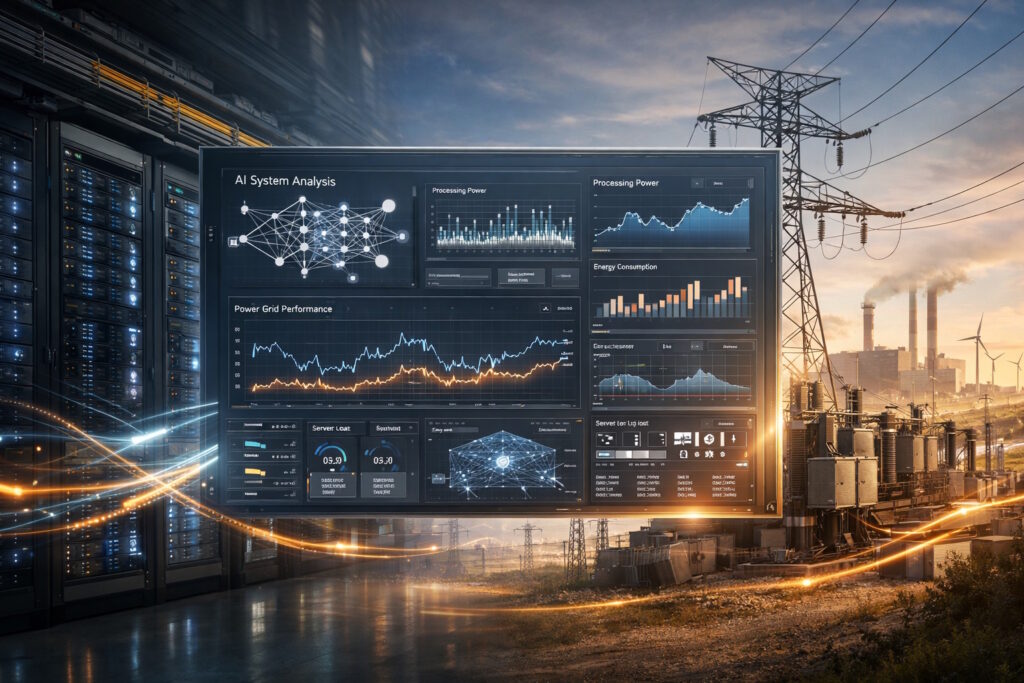
Quick Answer: Yes—data centers can keep up with rising AI power demand, but only with major upgrades to energy infrastructure. AI workloads require far more electricity than traditional computing because they rely on dense clusters of specialized processors that run continuously. As businesses adopt AI tools at scale, data centers must expand power capacity, improve cooling systems, and secure reliable grid connections. Utilities and operators are now racing to build new generation, transmission, and efficiency solutions so digital growth does not outpace the electricity needed to support it.
AI power demand is rising so quickly that it now shapes conversations about data centers, utilities, and economic growth. As more companies adopt AI tools, electricity use, energy needs, power consumption, and data-center load all move higher. That shift matters because AI may feel weightless online. In reality, it runs on physical systems that need land, wires, cooling, and steady power. The International Energy Agency says data centers used about 415 terawatt-hours of electricity in 2024. That equaled about 1.5 percent of global electricity consumption.
If you have asked, “Why is AI suddenly an energy story?” the answer is scale. AI models run on large clusters of accelerated servers, and those systems draw far more power than traditional computing. The IEA projects that global electricity use from data centers could double to about 945 terawatt-hours by 2030. It also says AI-optimized data centers will be the main force behind that growth. Even then, the IEA says data centers would represent just under 3 percent of global electricity use in 2030.
Why AI Power Demand Is Climbing So Quickly
The first reason is simple: AI workloads are heavy. Training a model requires intense computing over long periods. Inference also adds demand, because people now expect AI answers in real time. As usage grows, operators add more accelerated servers, more networking gear, and more support equipment. The IEA projects 30 percent yearly growth in electricity use from accelerated servers in its base case. Those servers account for almost half of the net increase in global data-center electricity use.
The second reason is density. AI racks pack more computing into the same footprint, which raises heat as well as power draw. That means a bigger electricity bill does not stop at the server. It also reaches the cooling system, backup equipment, and the rest of the facility. The IEA says cooling can represent about 7 percent of electricity use in efficient hyperscale sites. In less-efficient enterprise facilities, that share can exceed 30 percent.
The Cloud Still Runs on Real-World Electricity
This is where the story becomes more than a technology trend. Data centers connect to real grids, and grids expand slowly. The IEA notes that a data center can become operational in two to three years. New energy infrastructure often needs much longer planning and construction timelines. In advanced economies, new transmission lines can take four to eight years to build.
That timing gap helps explain why AI power demand now matters to utilities, regulators, and local communities. In the United States, DOE says data centers consumed about 4.4 percent of total electricity in 2023. DOE expects that share to rise to about 6.7 to 12 percent by 2028. The same report says U.S. data-center electricity use climbed from 58 terawatt-hours in 2014 to 176 terawatt-hours in 2023.
What AI power demand means for data centers
For data-center operators, this surge changes the basic checklist. It is no longer enough to find a good building site and order more servers. Operators also need access to reliable electricity, strong grid connections, and cooling systems that can handle denser hardware. DOE says data centers need continuous, dependable power and dependable cooling to prevent servers from overheating.
Location now matters even more than before. A site may look ideal on paper and still face delays. That can happen when transformers, cables, or transmission upgrades are not available. The IEA estimates that around 20 percent of planned data-center projects could face delays if grid risks are not addressed. It also says wait times for transformers and cables have doubled in the past three years.
The Race Between Digital Growth and Physical Infrastructure
So, can data centers keep up? In some markets, yes. In others, not without major changes. New power supply will have to arrive alongside new computing demand. The IEA projects that electricity generation serving data centers will grow from 460 terawatt-hours in 2024 to more than 1,000 terawatt-hours in 2030. It says renewables will meet nearly half of that additional demand over the next five years. Natural gas, coal, and later nuclear will also play important roles.
That mix tells an important story. The world is not choosing between digital growth and energy planning anymore. It has to do both at once. DOE says rising electricity demand now reflects data-center expansion, AI applications, manufacturing growth, and wider electrification. In other words, AI enters an already crowded power system. That makes speed, coordination, and smarter planning more important than ever.
Can Data Centers Keep Up?
Yes, but not automatically. Progress will depend on better hardware efficiency, smarter cooling, stronger transmission, and more flexible operations. Even so, none of those fixes arrives overnight. Each one requires investment, coordination, and careful planning. The IEA says bottlenecks in the energy sector remain a major uncertainty in the outlook for AI and data centers.
For readers trying to make sense of the moment, that is the key takeaway. AI is not only a software story. It is also an infrastructure story. The next phase of AI growth will depend on the physical backbone of the digital economy. That backbone must expand fast enough to support new demand. This issue now reaches beyond engineers and data-center operators. It touches business strategy, energy policy, local development, and the future pace of AI adoption.
Conclusion
AI power demand is rising fast because AI itself is moving from novelty to everyday tool. As that shift continues, data centers will need more electricity, more cooling, and stronger ties to the grid. The broad direction is clear, even if the exact path will vary by market. AI growth will continue, but the facilities behind it will need power systems that can grow with them.
To understand where AI power demand goes next, watch the intersection of computing and energy. That is where the next major decisions will happen. If you enjoy exploring how emerging technologies shape industries and infrastructure, Tech Scope Connect offers ongoing conversations around trends like AI, data centers, and the future of digital systems. Join the discussion through our articles, broadcasts, and events as these developments continue to unfold.
Join Green Things Summit 2026 as we take a deeper dive into how AI, IoT, automation, and edge computing help drive efficiency, reduce waste, and advance sustainability goals through thought-leadership panels, industry keynotes, and interactive Q&A sessions. Register here.
Sources: