
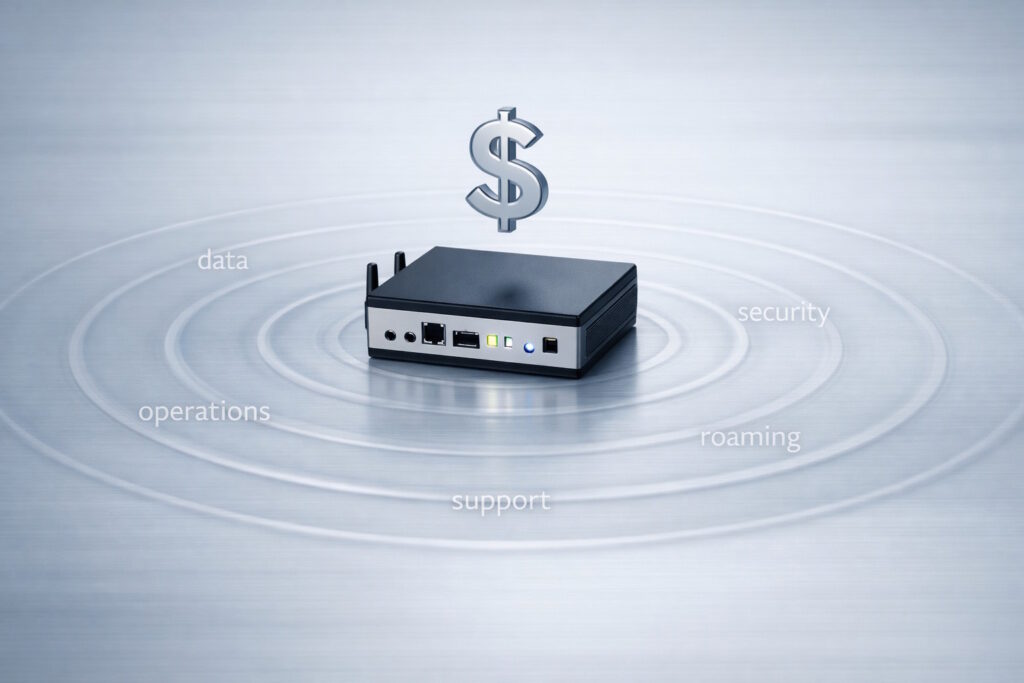
Key Takeaway: The hidden costs of IoT connectivity go far beyond a monthly data plan. Businesses often overlook activation fees, overage charges, roaming expenses, security upkeep, monitoring tools, and the operational labor required to keep devices online. These factors shape total cost of ownership and can quietly erode margins as deployments scale.
The Surprise Line Item in Connected Products
IoT connectivity sounds simple, yet its real cost often surprises teams after the pilot. In the early planning, many people picture a basic network connection, steady wireless links, and a predictable cellular bill. That picture feels tidy, and it also feels comforting.
Then reality arrives. Devices move, signals fade, data usage drifts, and support tickets pile up. If you have ever wondered why a “small” connected project suddenly feels expensive, you are not alone. This topic matters because connectivity sits at the center of your product experience, your operations, and your margins.
The Pilot Looked Cheap. The Rollout Did Not.
A pilot often lives in friendly conditions. The devices sit in a controlled location, near good coverage, with a small group watching closely. Costs look stable, and a spreadsheet can make the math feel settled.
Rollouts behave differently. You ship devices into warehouses with concrete walls. You deploy in rural areas with weaker signals. You place sensors in machines that vibrate, heat up, and reboot at inconvenient times. None of that sounds like “connectivity,” yet it all affects what you pay.
You might ask, “Why did the bill jump when our data plan stayed the same?” The answer usually involves all the work around the connection. Connectivity rarely fails in one dramatic moment. It erodes in small ways that create real spending.
IoT Connectivity Is More Than a Monthly Data Plan
When people talk about IoT connectivity, they often mean a rate card and a SIM. That view misses the broader system that keeps devices online, secure, and supportable. Connectivity includes the commercial terms, the management tools, and the operational habits that develop after launch.
Think of it as a chain. The network gives you access. The device firmware produces traffic. Your platform stores and routes messages. Your team monitors health and responds to issues. If one link weakens, the others compensate, and costs tend to rise.
If you are trying to build a simple business case, this may feel frustrating. Still, a surface-level map of the cost drivers can help you set expectations early. It also helps you ask sharper questions in procurement meetings.
Fees you never see in the slide deck
Some expenses show up before the first byte of data moves. Activation fees, provisioning steps, and account minimums can shift your unit economics. You may also run into charges tied to suspending lines, reactivating them, or replacing SIMs.
Commercial terms can add subtle pressure. A plan may look inexpensive until you exceed a pool limit. Another plan may punish low usage through minimum commitments. A third may offer discounts that disappear once you expand into new regions.
If this sounds familiar, you might be thinking, “Are we paying for devices that we barely use?” Sometimes, yes. Many teams learn this only after they scale.
IoT connectivity costs that hide in day-to-day operations
Operations create some of the least obvious costs. Someone needs to track which device has which subscription. Someone needs to notice when devices stop checking in. Someone needs to investigate whether the problem lives in coverage, hardware, firmware, or configuration.
That work may fall on engineering at first. Over time, it often shifts toward support, operations, or a managed service. Either way, the business pays for the labor, the tooling, and the time spent diagnosing issues.
Field work can raise costs quickly. A single truck roll can outweigh months of data charges. Even when you avoid travel, remote troubleshooting still consumes paid hours. Connectivity becomes expensive when it steals attention from higher-value work.
When Data Behaves Badly: The Cost of Surprise Traffic
Data usage rarely stays fixed. A device may send more messages after a firmware update. A bug may trigger repeated retries, which creates extra traffic. A sensor may start reporting more frequently because of an edge condition.
These spikes often arrive quietly. Your dashboard might show a few devices “chatting” more than usual. Then the pattern spreads, and your pooled plan tips into overage. If you sell a connected product with thin margins, that swing can hurt.
People often ask, “Can’t we just cap the data?” Sometimes you can, but caps can also break the service. If a device cannot report an alarm because it hit a limit, your customer experience suffers. Most teams need a balanced approach that protects the bill and preserves service.
Security and Compliance: The Connection Needs Care
Connectivity is not only about getting a signal. It is also about maintaining trust. Customers expect devices to protect data in transit. Regulators may expect auditable controls, especially in critical industries.
This creates ongoing responsibilities. You need to patch vulnerabilities, rotate credentials, and monitor unusual behavior. You may also need documentation for internal audits or customer reviews. None of this requires deep technical detail to understand. It requires planning for time, process, and accountability.
A common question sounds like this: “Why does security raise our connectivity costs?” The simplest answer is that secure systems demand continuous care. That care translates into tools, training, and routine work.
Coverage, Roaming, and the Reality of Geography
Geography can turn a simple pricing model into a moving target. A device that crosses borders may trigger roaming charges. A device that sits indoors may struggle to maintain a stable link. A fleet that operates nationally may still face pockets of weak coverage.
These issues can also produce second-order costs. Devices that lose signal may retry messages, which can increase traffic. Customers may notice missing data and open support tickets. Your team may respond with higher data plans, even when the root cause is coverage.
You might ask, “Should we pick one carrier and move on?” Sometimes that works in a narrow footprint. Broader deployments often require more flexibility, which can add complexity and cost. The key point is simple: coverage decisions shape spending, even when the rate looks attractive.
Questions to Ask Before You Scale
You do not need a technical deep dive to get value from better questions. A few practical questions can reveal where hidden costs tend to live.
- “What fees apply when we activate, pause, or replace a line?”
- “How do we detect unusual data usage before it becomes expensive?”
- “Who owns device monitoring and incident response after launch?”
- “What happens to pricing when devices move across regions or borders?”
These questions also help align teams. Finance cares about predictability. Operations cares about workload. Product cares about the customer experience. Connectivity touches all three, so the conversation works best when it includes all three.
Conclusion: Build a Budget That Matches Reality
Hidden costs rarely come from a single bad decision. They usually grow from assumptions that go unchallenged after the pilot phase. When you treat connectivity as a simple utility, you miss the operational effort that keeps devices reliable and customers satisfied.
A smarter approach starts with awareness. You identify where spending can drift, assign ownership for monitoring, and revisit your assumptions as you scale. You do not need perfect forecasts to improve outcomes. You need visibility into how IoT connectivity affects your margins, operations, and long-term strategy.
If you want to keep exploring how connected systems shape business performance, Tech Scope Connect brings these conversations into focus through expert panels, live newscasts, and global summits. Join us to stay ahead of the trends influencing IoT connectivity and the future of connected technology.