Key Takeaway: Edge AI makes IoT devices smarter by letting them process data where it is created, rather than sending everything to the cloud. That local intelligence helps connected devices respond faster, keep working with limited connectivity, reduce bandwidth use, protect sensitive data, and deliver more useful real-time insights. In practical terms, edge AI turns IoT devices from passive data collectors into more responsive and capable tools.
Edge AI is changing what people expect from connected devices. You may also hear it called AI at the edge, on-device intelligence, or local AI processing. Whatever the label, the idea is simple. A smart device can analyze data where that data appears, instead of sending every detail to a distant cloud. That matters now because connected cameras, sensors, wearables, appliances, and machines all need faster answers and steadier performance.
You may be asking, “What is edge AI?” The answer starts with speed, reliability, and practicality. Edge computing works by processing data near the device and sending only the most useful information to central systems. In everyday terms, the device stops acting like a messenger and starts making small, timely judgments on its own. That shift makes the Internet of Things feel far more useful in daily life.
Why Edge AI Belongs Close to the Action
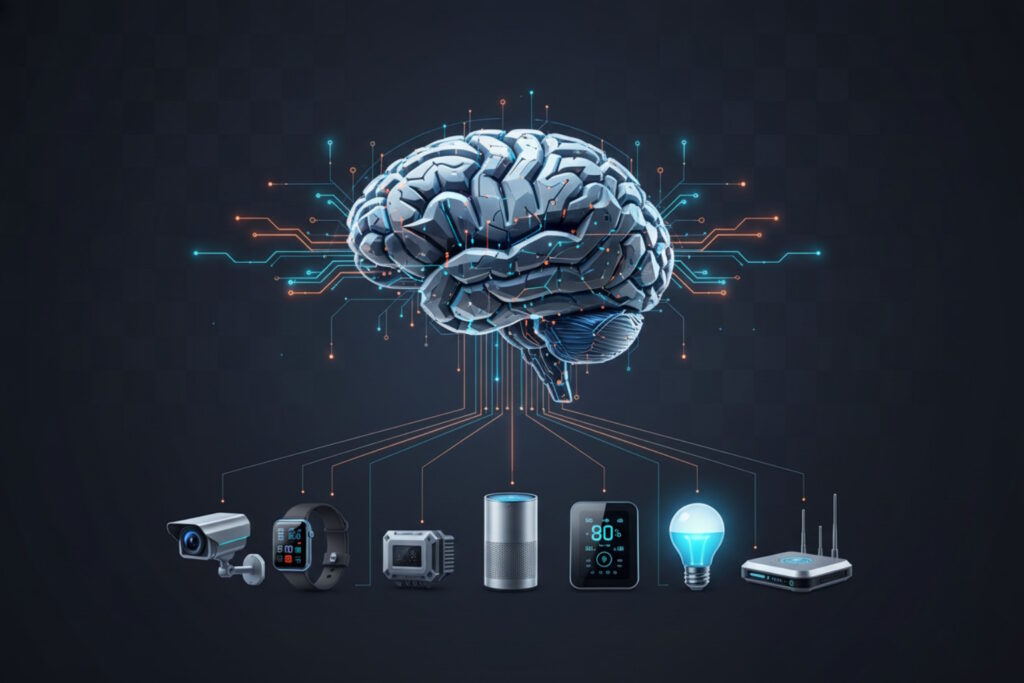
At a surface level, edge AI makes IoT devices smarter by moving intelligence closer to the moment of action. The device, or a nearby hub, can read patterns, flag issues, and trigger responses without waiting on a long network trip. Across major industry guidance, the same themes appear: less lag, lighter network load, more resilience, and better support for real-time decisions. That is why the topic has become so relevant across industries.
How edge AI shows up in everyday life
So what does that look like outside a diagram? It means a camera can spot motion quickly, a wearable can notice an unusual reading, and a machine sensor can flag trouble early. The value is not that the device becomes human. The value is that it becomes more aware, more responsive, and more useful in the place where it already works.
1. It answers faster when timing matters
Some devices do not have the luxury of waiting. A factory sensor, a traffic camera, or a smart doorbell has to react in the moment. When processing happens near the device, response times improve because the data does not travel far before action begins. That speed can turn a connected device from a passive collector into something that feels genuinely helpful.
2. It keeps working when the signal drops
A connected device looks much smarter when it can still function during weak or interrupted connectivity. Edge platforms often highlight offline decision-making for this reason. If a device can process key data locally, it keeps doing useful work even when networks are slow, unstable, or expensive. That matters in remote farms, moving vehicles, industrial sites, and other hard-to-wire locations.
3. It sends less clutter to the cloud
Not every piece of raw data deserves a trip across the network. Edge systems can clean up, filter, and summarize data before sharing it. That means organizations do not have to move every video stream, sensor reading, or machine signal to a central platform. The result feels smarter because the device sends what matters, not everything it sees.
4. It protects more of the data people care about
Privacy is one reason edge AI gets so much attention. When more analysis happens locally, devices do not need to send continuous streams of sensitive data elsewhere. That approach can reduce exposure while still delivering useful results. In everyday terms, a smart device can do more with what it sees without constantly sharing the full picture.
5. It turns raw signals into useful alerts
Many IoT devices already collect huge amounts of information. On their own, those streams can feel noisy or overwhelming. Local AI helps by spotting patterns inside that noise. Instead of sending endless raw readings, the device can raise a meaningful alert, highlight an unusual pattern, or point to a trend worth attention. That makes the output more relevant for real people.
6. It helps cameras, sensors, and wearables notice more
This is where the topic becomes easy to picture. Smart cameras can detect motion or recognize unusual activity. Wearables can watch heart rate or oxygen levels and flag irregular patterns. Home devices can respond to voice commands or adjust settings with less delay. In each case, the device does more than observe. It interprets what it is seeing in real time.
7. It spots trouble before a machine breaks
Industrial IoT shows this clearly. Equipment produces signals all day through vibration, temperature, pressure, and other measurements. When local AI watches those signals closely, it can detect patterns that suggest wear, strain, or drift. That makes predictive maintenance more practical because teams can address problems earlier, before a failure becomes expensive or disruptive.
8. It adapts to the place where it lives
A smart device in a hospital does not face the same conditions as one in a grocery store. A traffic system does not behave like a thermostat. Edge intelligence helps because it works close to the local environment. That allows devices to respond to nearby context, whether that means changing lighting, adjusting traffic flow, or reacting to a sudden shift in conditions.
9. It makes everyday experiences feel smoother
Often, people notice the result before they notice the technology. A checkout system feels quicker. A home assistant responds with less lag. A connected appliance seems more in tune with daily patterns. That smoother experience is part of what makes IoT devices feel smarter. The technology fades into the background, and the response feels more natural.
10. It gives the cloud a smarter partner
Edge AI does not replace the cloud. It gives the cloud better material to work with. The device handles fast, local decisions, while central systems manage large-scale storage, coordination, and deeper analysis. That balance matters because smarter IoT is rarely about one location doing everything. It is about putting the right work in the right place.
Conclusion
The big idea is simple. IoT devices become smarter when they stop sending every decision somewhere else. By processing data nearer to where it is created, they can react faster, stay useful during weak connectivity, protect more sensitive information, and deliver clearer signals to people and systems. That is why this shift keeps showing up across homes, hospitals, stores, roads, and factories.
Edge AI is not magic, and it is not about making every device autonomous. It is about making connected tools more responsive, more practical, and more aware of what is happening around them. As organizations look for better ways to handle growing streams of device data, edge AI will keep shaping the next wave of IoT.
If you want to keep following how edge AI and connected devices are changing the technology landscape, Tech Scope Connect offers a thoughtful way to stay engaged through live conversations, expert perspectives, and ongoing coverage of emerging trends. Join now!