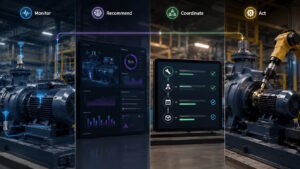

Key Takeaway: Artificial intelligence is reshaping business decision making by helping companies spot patterns faster, reduce guesswork, and act on data with more confidence. For decision makers, that means quicker insights, better forecasting, and clearer priorities in a fast-moving market. The real value of artificial intelligence is not replacing human judgment, but strengthening it with smarter support.
Why This Matters in a Louder, Faster Business World
Artificial intelligence is reshaping business decision making faster than many leaders expected. AI and machine learning systems can spot patterns fast. That helps companies turn messy information into clearer choices. That matters because executives face more data, more risk, and less time to think.
The shift is already visible at scale. McKinsey reports that 88% of organizations now use AI in at least one business function. Deloitte says 60% of executives already use it to support decisions.
That is why this topic feels urgent now. Decision makers no longer see AI as a side experiment. They see it as part of strategy. IBM found that 79% of executives expect AI to contribute significantly to revenue by 2030. Yet only 24% say they have a clear view of where that revenue will come from.
Why Artificial Intelligence Is Moving From Side Tool to Strategic Partner
A few years ago, many companies used AI in narrow ways. They might automate a support reply, sort tickets, or clean up data. Today, the role is much bigger. Leaders now ask AI to summarize reports, compare scenarios, surface risks, and flag opportunities hidden in a crowded dashboard.
That shift changes the mood in the room. Instead of spending the first half of a meeting gathering facts, teams can start closer to the real question. What matters most here? What changed? What looks urgent, and what only looks noisy? In simple terms, AI gives decision makers a cleaner starting point.
It also changes how companies think about value. McKinsey says 64% of respondents report that AI is enabling innovation, not just efficiency. That matters because leaders are no longer asking only how AI can save time. They are also asking how it can help them grow.
So, What Does This Look Like on a Normal Workday?
In many companies, the first win is not dramatic. It is quieter than that. Teams spend less time hunting for information and more time discussing what the information means. Sales leaders can spot changes in buying behavior earlier. Finance teams can compare scenarios faster. Operations managers can catch supply issues sooner. Marketing teams can test ideas with stronger signals from customer data.
People often ask a fair question here. Can AI really help leaders make better decisions, or does it only make decisions faster? In practice, it can do both. Speed matters because delayed choices have a cost. Quality matters because fast decisions still fail when the input is weak. AI helps most when it reduces the grunt work around a decision and leaves more room for judgment.
Where artificial intelligence helps leaders see around corners
One of the freshest shifts in this space is the rise of AI agents. These systems can handle multistep tasks instead of answering one prompt at a time. For decision makers, that means AI can do more of the setup work around a choice. It can gather updates, organize inputs, route questions, and prepare options for review.
This trend is moving quickly. McKinsey found that 23% of respondents are already scaling an agentic AI system somewhere in the business. Another 39% are experimenting with AI agents. PwC also found that 79% of surveyed executives say AI agents are already being adopted in their companies.
That does not mean leaders should hand over the steering wheel. It means the support layer is getting smarter. The newest value is not only prediction. It is preparation. Artificial intelligence can tee up the next best question, not just the next best answer. That small shift can change meetings, planning cycles, and the pace of execution.
Faster Is Nice, But Better Decisions Are the Real Goal
Good decision making has never been about collecting the most data. It has always been about seeing what matters, weighing tradeoffs, and moving with confidence. Artificial intelligence helps by reducing noise. It can highlight patterns that deserve attention and filter out distractions that slow leaders down.
This becomes even more useful when markets shift fast. A pricing move can affect demand, margins, and customer behavior at the same time. A hiring choice can shape service quality, productivity, and growth plans. AI helps leaders connect those moving parts faster, which gives human judgment a stronger starting point.
Still, the payoff is not automatic. PwC’s 2026 CEO survey found that 30% of CEOs say AI helped increase revenues in the past year. Another 26% say it reduced costs. But only 12% say they saw both higher revenues and lower costs.
That is an important reality check for any company leader. AI can be powerful, but it is not magic. Companies tend to get more value when they connect it to a real business problem and redesign work around it. In other words, the tool matters, but the workflow matters more.
The Catch No One Can Ignore: Trust, Oversight, and Human Judgment
Every new advantage creates a new responsibility. Leaders who use AI to support decisions need to ask where the information came from. They also need to ask how reliable it is and who checks the output. That is not a side issue. It sits at the center of trust.
The warning signs are already there. McKinsey found that 51% of respondents from organizations using AI say they have seen at least one negative consequence. Nearly one-third report issues linked to AI inaccuracy. Deloitte reports that 31% of respondents say AI is still not on the board agenda. It also says 66% of boards have limited or no knowledge or experience with AI. PwC says nearly 60% of executives see responsible AI as a driver of return on investment and efficiency.
That mix tells a clear story. Leaders want speed, but they also need accountability. They want better answers, but they also need confidence in the process behind those answers. The companies that get this right will not just move faster. They will make better calls with fewer blind spots.
So, Where Should Decision Makers Start Without Overcomplicating It?
The smartest starting point is usually not a giant transformation plan. It is one meaningful business question. Where are we losing time? Which decisions arrive too late? Which calls depend on scattered data? When leaders start there, AI becomes easier to evaluate because it serves a visible need.
That focus matters more than ever. IBM says half of surveyed CEOs believe rapid investment has left their organizations with disconnected, piecemeal technology. That is a strong warning against chasing tools without a clear purpose.
From there, strong teams usually keep the approach simple. They improve data quality, set clear ownership, and build in human review. They treat AI as a support system, not an oracle. That mindset matters because the best decisions still depend on context, ethics, timing, and leadership.
Conclusion: Better Decisions Still Need a Human in the Room
Artificial intelligence is changing the way companies think, plan, and act. It helps leaders see patterns sooner, compare options faster, and make decisions with more context than before. The biggest shift is not that machines are taking over the boardroom. It is that good leaders now have a new kind of support system beside them.
For companies, that is the real opportunity. Better decision making rarely comes from speed alone. It comes from clearer signals, sharper questions, and stronger follow-through. Artificial intelligence can help with all three.
If you want to keep exploring how AI is influencing business, leadership, and the future of work, Tech Scope Connect is a thoughtful place to stay part of the conversation. Join now!
Sources:
- Governance of AI: A Critical Imperative for Today’s Boards, 2nd Edition | deloitte.com
- Responsible AI Survey | pwc.com
- The State of AI: Global Survey 2025 | mckinsey.com
- Decision-Making With AI | deloitte.com
- IBM Study: AI Poised to Drive Smarter Business Growth Through 2030 | newsroom.ibm.com
- AI Agent Survey | pwc.com
- 29th Global CEO Survey | pwc.com