
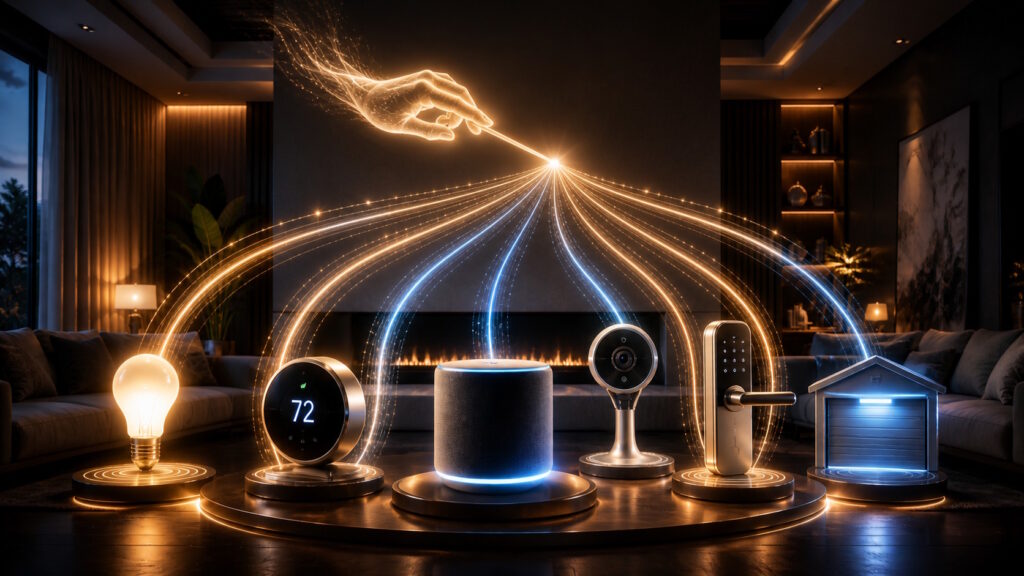
Key Takeaway: Matter is making smart homes easier to connect by giving compatible devices a shared way to work across brands, apps, and platforms. Instead of guessing whether a light, lock, camera, thermostat, or sensor will fit your setup, Matter helps reduce compatibility headaches and gives shoppers a clearer path forward. It does not fix every smart-home issue overnight, but it moves connected living closer to what people actually want: devices that cooperate without turning setup into a tech project.
The Plug-In Puzzle Is Getting Easier
Smart homes are getting easier because Matter helps connected homes, home automation, and everyday smart devices work together.
That may sound small, but it solves a very familiar headache. You buy a smart bulb, plug, lock, camera, or thermostat. Then you learn it only works with one app. Or it needs a hub you do not own. Or it pairs with one voice assistant, but not the one your family uses.
For years, the connected home felt more like a tech hobby than a simple upgrade. People wanted lights that dimmed, doors that locked, and cameras that showed clear video. Instead, they got setup screens, brand limits, and confusing compatibility labels.
Matter aims to make that experience feel more normal. It gives device makers and platforms a shared standard. The Connectivity Standards Alliance (CSA) describes Matter as a protocol that helps devices work across smart home and voice services, including major ecosystems from Amazon, Apple, Google, and others.
You do not need to memorize the technical details. The simple idea is this: Matter helps your devices speak the same language.
Why Smart Homes Have Felt Like a Compatibility Maze
Smart homes promised comfort, security, and convenience. The reality often felt messier.
One device wanted Wi-Fi. Another needed a bridge. A third worked through Bluetooth. A fourth required a separate brand app before anything else could happen. Even patient users could feel worn down.
Then came platform confusion. A product might say it works with Alexa. Another might favor Apple Home. Another might focus on Google Home. That forced buyers to ask the same question over and over: “Will this work with what I already have?”
This became especially annoying as homes added more devices. A single smart plug rarely caused much stress. But ten devices from six brands could turn a simple routine into a scattered system.
Matter does not remove every complication. Still, it gives the industry a shared path. That path can make shopping, setup, and daily control feel less fragmented.
Meet Matter, the Common Language for Your Home
Matter is not a new gadget. It is not a voice assistant. It is not another app you need to check every morning.
Matter is a smart-home standard. It helps compatible devices connect, authenticate, and communicate in a more consistent way.
Think of it like a shared rulebook. A light bulb, lock, speaker, thermostat, and sensor may come from different companies. With Matter, they can follow the same basic playbook.
Matter also builds on familiar home networking tools. The first Matter specification used Wi-Fi and Thread network layers, with Bluetooth Low Energy helping during setup.
That detail can sound technical, so here is the easier version. Wi-Fi suits devices that need more bandwidth. Thread suits many small, low-power devices, such as sensors. Bluetooth often helps when you first add the device.
For most shoppers, the takeaway is simpler. Matter can reduce the guesswork before you buy.
What matter changes for smart homes
Matter changes the shopping conversation around smart homes.
Instead of asking, “Does this only work with one ecosystem?” you can start asking, “Does this support Matter?” That does not answer everything, but it gives you a better starting point.
A Matter-compatible device can offer more freedom across brands and platforms. Your home may use a smart speaker in the kitchen, a phone app upstairs, and a different hub near the router. Matter helps those pieces cooperate more smoothly when each one supports the right device type.
This also helps households with mixed preferences. One person may like Apple Home. Another may prefer Google Home. Someone else may use Alexa. Matter gives device makers a cleaner way to support more than one camp.
The best part is the ordinary nature of the benefit. Matter does not need to feel exciting every day. It just needs to make your connected home less annoying.
The New Stuff: Cameras, Closures, Gardens, and Energy
Matter 1.5 made the standard more useful for real homes.
The Connectivity Standards Alliance announced Matter 1.5 on November 20, 2025. This update expanded Matter with cameras, closures, soil sensors, and new energy management features.
Cameras may be the most familiar addition. People want doorbells, security cameras, pet cams, and baby monitors to work with their preferred systems. Matter 1.5 adds support for live video, audio, two-way communication, and camera controls such as pan, tilt, and zoom.
That does not mean every camera will instantly work everywhere. Brands and platforms still need to support the features. But the direction feels promising.
Closures also got more attention. This category includes things that open, close, slide, or move. Think shades, drapes, awnings, gates, and garage doors. Matter 1.5 gives makers a more consistent way to represent these products.
That could make common questions easier to answer. “Did I close the garage?” “Are the shades down?” “Is the gate open?” Those are everyday moments, not futuristic fantasies.
Matter 1.5 also adds soil sensors. These can measure moisture and, in some cases, temperature. Paired with water valves or irrigation systems, they can help automate watering for plants, lawns, and gardens.
Energy management may sound less flashy, but it could become very useful. Matter 1.5 adds ways for devices to share information about energy pricing, tariffs, carbon intensity, metering, and EV charging.
That opens the door to homes that react more intelligently. A charger, appliance, solar setup, or energy service could make better decisions with shared data.
Matter 1.5.1 followed on March 31, 2026. It focused on camera and doorbell improvements, including streaming efficiency, media support, chimes, and intercom refinements.
A Real-Life Scene: Fewer Apps, Fewer “Why Won’t This Work?” Moments
Picture a busy weekday evening.
You arrive home with groceries. The garage door opens. The entry light turns on. The thermostat adjusts. A camera shows who rang the doorbell. The shades lower as the sun hits the living room.
In an ideal connected home, those actions should not care about brand politics. You should not need one app for the garage, another for the lights, and another for the camera.
That is the experience Matter tries to support. It brings more of the home under one shared standard. It also gives brands room to build their own special features.
That balance matters for consumers. You can still enjoy a manufacturer’s app when you want advanced controls. You can also expect more basic actions to work across supported platforms.
In plain language, Matter helps the smart home feel less trapped.
What Matter Does Not Fix Overnight
Matter helps, but it does not perform magic.
Older devices may not get Matter support. Some products need hardware that can handle the standard. Others depend on whether the manufacturer chooses to release an update. The CSA notes that existing product support depends on device capabilities and maker decisions.
Platform support can also vary. A standard may support a product category before your favorite ecosystem supports every feature. That gap can create confusion.
Advanced features may still live inside the brand’s own app. A camera may offer basic viewing through one system, while special alerts stay elsewhere. A thermostat may expose core controls, while deeper energy reports remain in the manufacturer’s dashboard.
You may also need the right home hardware. Some Thread devices need a Thread border router. Some Matter setups need a compatible controller. Those details still matter when you shop.
So, should you wait until everything becomes perfect? Probably not. The smarter move is to buy with better questions.
Ask whether the device supports Matter. Check whether your preferred platform supports that device type. Look at the network type. Read the feature list before you assume every button will appear everywhere.
The Shopper’s Shortcut: Look for the Logo, Then Read the Fine Print
The Matter logo can help you narrow your choices.
It tells you the product follows the standard. That gives you more confidence than a vague promise on a box. Still, the logo should start your research, not end it.
A good product page should tell you which platforms it supports. It should also explain whether the device uses Wi-Fi, Ethernet, or Thread. If it needs a hub, bridge, or controller, the page should say so.
This is where a search helps. Try questions like, “Does this Matter light work with Apple Home?” or “Do I need a Thread border router for this sensor?” Those are the questions real buyers ask.
You can also search by room. “Best Matter devices for the kitchen” gives a different answer than “Matter sensors for a garden.” The standard helps connect the dots, but your use case still guides the purchase.
For now, Matter works best when you combine optimism with attention. The future looks simpler, but the label still deserves a quick read.
Conclusion: The Connected Home Finally Feels More Human
Matter gives the smart home a clearer foundation.
It helps brands build products that work across more platforms. It helps shoppers avoid some old compatibility traps. It also gives everyday devices a better chance to cooperate inside one home.
Matter 1.5 makes the story more interesting. Cameras, closures, soil sensors, and energy features bring the standard closer to daily life. These are not niche gadgets. They involve your doors, windows, garden, security, power use, and car charging.
The smart home still has rough edges. Some devices will lag behind. Some features will stay inside brand apps. Some setups will still need extra hardware.
Even so, the direction feels encouraging. Matter makes the connected home less about brand loyalty and more about practical comfort.
Smart homes are finally becoming easier to connect, and that shift can make everyday living feel smoother. Stay connected to the trends shaping tomorrow’s digital world. Tech Scope Connect brings together fresh perspectives, expert conversations, and live discussions on the technologies changing how we live and work. Join the conversation!
Sources:
- Build With Matter: Smart Home Device Solution | csa-iot.org
- Matter 1.5 Introduces Cameras, Closures, and Enhanced Energy Management Capabilities | csa-iot.org
- Matter 1.5.1: Enhancing Camera Performance and Expanding Device Flexibility | csa-iot.org
- Matter FAQs | csa-iot.org