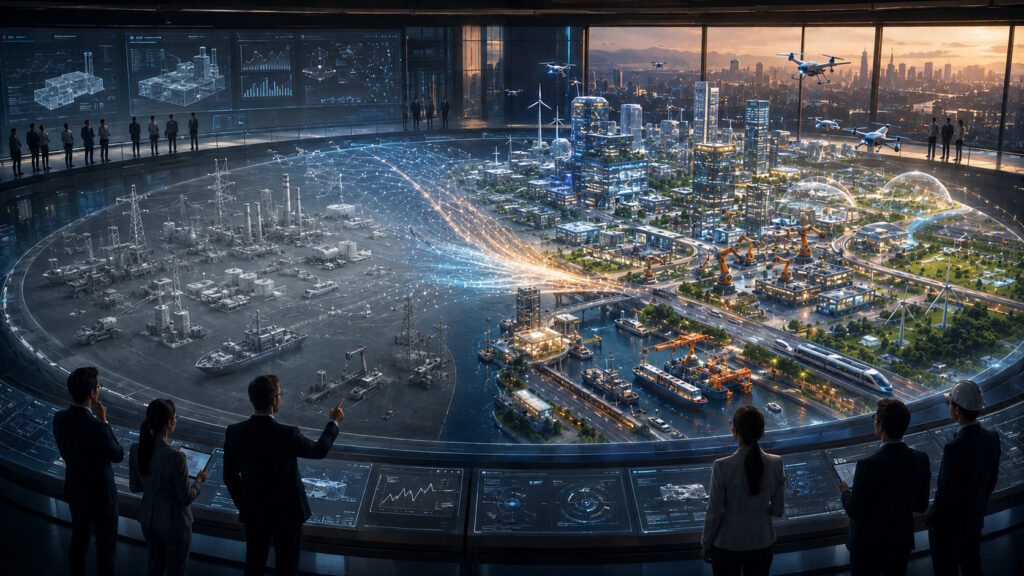
Key Takeaway: Digital twins are making a comeback because AI is creating new demand for realistic virtual environments where systems, processes, and machines can be tested before changes happen in the real world. While digital twins have existed for years, advances in AI, robotics, simulation, and synthetic data are expanding their role beyond monitoring and visualization. Today, organizations are exploring how digital twins can help train AI, evaluate scenarios, and support better decision-making across industries.
Why Digital Twins Are Back in the Conversation
Digital twins are becoming relevant again because AI is giving virtual replicas, simulation models, and connected digital environments a new role. For years, the idea sounded useful but often felt distant from everyday business conversations. A company could create a digital version of a machine, building, product, or system. Then the big question followed: what should it actually do with that model? That question has changed.
Today, AI is creating fresh interest in technologies that help organizations understand the physical world. Businesses do not only want dashboards anymore. They want better ways to test ideas, explore scenarios, reduce uncertainty, and prepare for real-world decisions before they make expensive moves. So, why is every industry talking about this again?
The simple answer is that AI needs places to learn, test, and improve. A virtual model of the real world can give AI a safer place to experiment before anything changes outside the screen.
The Technology Never Really Went Away
Digital modeling did not disappear when the hype cooled. Aerospace teams, infrastructure planners, industrial firms, utilities, and product designers continued using these systems where the value was clear.
The wider business conversation faded for a different reason. Many early projects required specialized talent, heavy infrastructure, and a strong data foundation. That made them difficult for many companies to justify.
For some executives, the promise sounded bigger than the payoff. They heard impressive language about virtual replicas and real-time simulations, but they still needed a practical business reason. Now the conversation feels different.
AI gives these models a new purpose. Instead of serving only as a visual copy, a virtual environment can become a place where AI studies patterns, compares options, and supports planning. That shift makes the topic easier to understand.
A useful question is no longer, “Can we build a model of this asset or system?” A better question is, “What could AI learn if it had a realistic place to test ideas?”
What Changed When AI Entered the Picture?
AI changes the value of simulation because it can work through complexity quickly. A traditional model can show how something works. AI can help explore what may happen under different conditions. It can compare scenarios, look for weak signals, and help people ask better questions.
Imagine a transportation network, a warehouse flow, a hospital process, or an energy system. Each one has moving parts, constraints, and trade-offs. Leaders may want to know what happens when demand spikes, supply drops, equipment changes, or a new policy enters the system.
In the past, those questions often required slow analysis and specialized teams. With AI, the interaction can become more conversational.
Someone might ask, “What happens if we change this route?” Someone else might ask, “Where would a delay likely spread first?” A product team might ask, “How would this design behave under different conditions?” The model provides the environment. AI helps explore the possibilities.
From Seeing the World to Testing the World
The renewed interest is not only about better visualization. The bigger story is experimentation. Companies want to test more ideas before they touch the real world. That mindset fits the AI era perfectly.
AI systems, especially those connected to physical environments, need context. They need to understand space, motion, timing, constraints, and consequences. Text alone cannot teach every real-world lesson.
This is where simulated environments become more valuable. They give teams a way to try scenarios without disrupting operations, risking safety, or waiting for rare events to happen naturally. For a business audience, this is the easiest way to understand the comeback.
Digital models are becoming rehearsal spaces. Before a robot moves through a workspace, it can train in a simulated setting. Before an autonomous system handles a complex situation, developers can expose it to many variations. Before a company redesigns a process, it can explore possible outcomes virtually. That does not make the real world simple. It gives teams a smarter starting point.
How Digital Twins Became AI Test Beds
Digital twins are gaining attention because many AI systems need more than historical data. They need diverse examples, realistic environments, and safe testing grounds. This is especially important for robotics and physical AI. A robot may need to recognize objects, navigate around people, respond to changing spaces, and handle unexpected situations. Real-world training can be slow, expensive, and difficult to scale.
A simulated environment can create many versions of a situation. It can change lighting, angles, object placement, movement, weather, traffic, or layout. Those variations can help AI systems prepare for the messy conditions they may face later.
Synthetic data also plays a role here. When companies lack enough real-world data, simulated worlds can help generate training examples. This approach will not replace real-world testing. It can reduce the gap between idea and deployment.
That is one reason technology companies are leaning back into the topic. For example, AMD’s AI DevDay 2026 program included hands-on workshops on building a digital twin with a robot arm and building a synthetic data generation pipeline in a digital twin world. The signal is clear. This is no longer only an industrial operations conversation. It is becoming part of the AI infrastructure conversation.
Why This Fits the Rise of Physical AI
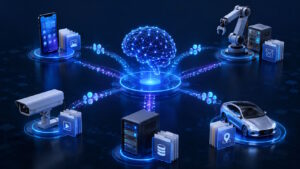
Much of the first AI wave centered on language, content, code, and search. The next wave increasingly reaches into the physical world. That includes robotics, autonomous systems, smart infrastructure, connected devices, mobility, energy, logistics, and advanced product design. These areas need AI that can reason about real-world conditions.
The challenge is obvious. You do not want every lesson to happen through trial and error in live environments. When machines, vehicles, buildings, or infrastructure are involved, mistakes can become expensive fast. Virtual environments help reduce that pressure. They let teams explore conditions before they make physical changes.
This is why the phrase “AI in the real world” keeps coming up. As AI moves from screens into systems, businesses need better ways to prepare, test, and improve it. A model of the physical world can become part of that preparation.
What Business Leaders Should Watch
The comeback will not look the same in every industry. Some companies will build complex virtual environments. Others will use smaller models for specific products, workflows, spaces, or systems. Many will interact with them through software platforms rather than custom engineering projects.
The important shift is practical. Businesses want to ask better “what if” questions.
- What if demand changes?
- What if a new product design enters the market?
- What if a robot must operate in a crowded space?
- What if a city, building, or logistics network faces an unusual event?
AI makes those questions easier to explore. Simulated environments make them safer to test. This is why the topic feels timely again. It connects AI ambition with real-world caution.
Conclusion: The Comeback Has a New Reason
Digital twins are making a comeback because AI needs more realistic ways to understand and test the physical world. The old promise focused on creating a digital copy. The new opportunity focuses on learning, simulation, planning, and safer experimentation. For business leaders, the takeaway is simple. This technology is no longer only about seeing what exists. It is becoming a way to explore what could happen next.
As AI moves into robotics, infrastructure, transportation, products, and connected environments, the need for realistic testing spaces will grow. That gives digital twins a stronger role in the AI era.
Interested in where technologies like digital twins, AI, robotics, and intelligent systems are headed next? Join the conversation at Tech Scope Connect, where industry experts explore emerging trends, real-world applications, and the innovations shaping our future through live newscasts, expert panels, and global technology summits.
Source: