
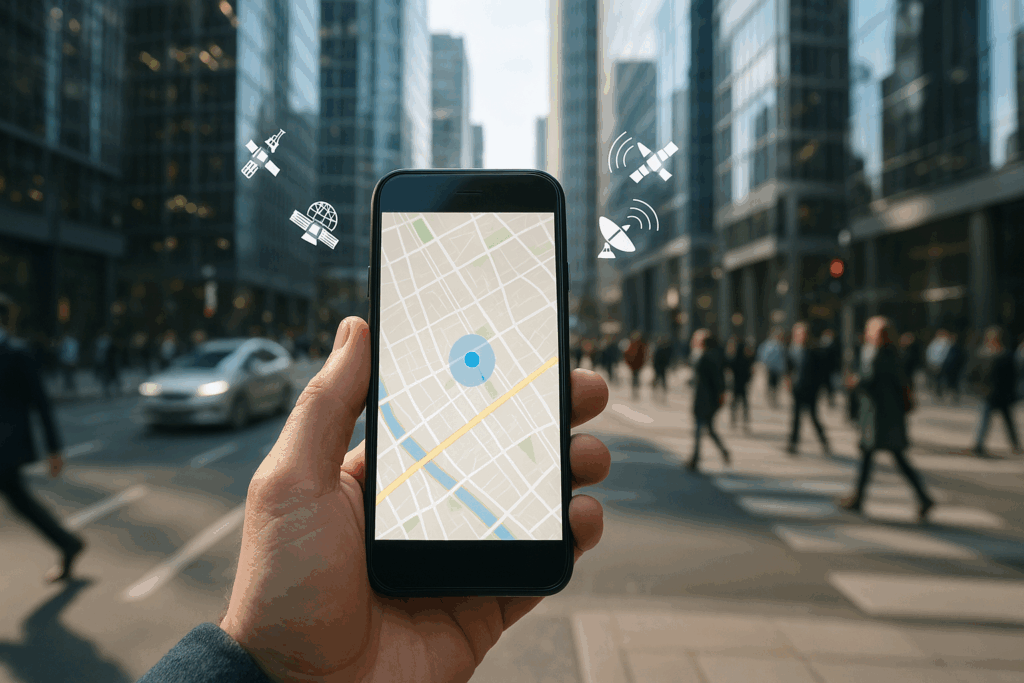
Key Takeaway: GPS still matters—but today’s location services are faster, steadier, and more precise because devices use GNSS (multiple satellite constellations like Galileo and GLONASS) and dual-band signals, then let AI smooth gaps, infer context, and predict movement. The result is better routing and positioning in hard places (urban canyons, forests, tunnels) that improves rideshare pickup accuracy, fitness tracking, deliveries, and pedestrian navigation. Privacy remains in your control—apps, not satellites, request your location—so choose per-app permissions and high-accuracy mode. In short, GNSS + AI is quietly upgrading everyday mobility now, with even smarter, more resilient navigation on the way.
Why GPS Still Matters in a Smarter World
GPS—short for Global Positioning System—is something you probably use without even thinking about it. Whether you’re checking directions, tracking a delivery, or sharing your location, this satellite-based system powers a big part of your digital life. But here’s the thing: GPS is just one part of a much larger and smarter ecosystem now.
Today’s devices don’t rely on GPS alone. They tap into GNSS, or Global Navigation Satellite Systems—a broader group of satellite networks including Europe’s Galileo, Russia’s GLONASS, and others. Add AI (Artificial Intelligence) into the mix, and location tracking becomes more precise, predictive, and personalized than ever. Let’s break that down in simple terms.
What GNSS Means—and Why It’s a Step Up
You’ve probably experienced this: you’re downtown, surrounded by buildings, and your location dot starts jumping around. Or you’re hiking and the trail on your map just… vanishes. That’s where GNSS comes in.
Think of GNSS as a multi-source upgrade to GPS. Instead of listening to just one satellite system, your phone or tracker listens to many. It’s like having multiple weather forecasts and blending them to get the clearest picture. You get faster, more accurate location data—especially in tough environments like cities, forests, or canyons.
And it’s not just about more satellites. Devices today can use dual-band signals—two frequencies instead of one—which helps filter out noise and increase accuracy. The result? A more stable blue dot, fewer glitches, and smoother turn-by-turn directions.
How AI Turns Location Data Into Smarter Movement
Here’s where it gets really interesting. Once your device has better data from GNSS, AI can take over to make that data work smarter for you.
AI studies your movement patterns, predicts where you’re going, and even adjusts in real-time. It learns what your morning commute looks like and suggests faster routes based on live traffic. If you’re walking in a busy city, it can guide you more naturally—knowing when you’re inside a building or heading toward a train station.
And when signals temporarily drop (like in tunnels), AI fills the gap. It estimates your movement based on previous behavior and context, so your location stays steady instead of freezing or jumping.
Real-Life Uses of GPS That Are Getting a Major Boost
GPS is still at the heart of everyday tools, but now it’s supercharged by GNSS and AI. Let’s look at how that shows up in your life:
- Rideshare apps: Drivers and passengers meet up faster, even in crowded zones.
- Fitness trackers: Runners and cyclists get more accurate pace and distance tracking, especially on winding trails.
- Delivery services: Routes are optimized to hit windows, and drop-offs land exactly where they should.
- Navigation apps: Real-time re-routing feels more human, with lane guidance that actually makes sense.
Location Without the Creep Factor: Yes, It’s Possible
Location services often raise privacy questions. But here’s the good news: you have control.
Most phones and apps let you choose when location tracking is allowed—always, only while using the app, or never. Want to be extra cautious? Set permissions to “Ask every time.” And many apps now explain how they use your data, helping you make informed choices.
Keep in mind: satellite systems like GPS or GNSS don’t track you directly. It’s the apps on your device that request and use location data. So being picky about which ones have access is a smart move.
Simple Ways to Try GNSS Today (No Tech Degree Needed)
You don’t have to buy fancy gear to experience better navigation. Start by opening your phone’s location settings and making sure high-accuracy mode is turned on. Most modern smartphones already support GNSS and dual-band positioning—you might be using it without knowing!
Want to take it a step further? Download a GNSS-aware fitness or mapping app. Try it on your usual route. You’ll likely notice smoother tracking and better responsiveness in tight areas or poor signal zones.
If you manage a fleet, plan events, or work in logistics, ask your provider if their tools support multi-constellation or AI-enhanced routing. The shift to smarter mobility is already happening—and you can get ahead of the curve.
Conclusion: Where Navigation Is Headed Next
We’ve come a long way from GPS-only navigation. With GNSS and AI now working together, location services are more accurate, flexible, and responsive than ever. From daily commutes to global shipping routes, the way we move is being redefined in real-time.
You don’t need to understand satellite math or predictive modeling to enjoy the benefits. You just need to be aware that a shift is happening—and that your device is probably already part of it.
If you’re curious about how these technologies will shape future cities, vehicles, and experiences, you’re not alone. Tech Scope Connect offers a front-row seat to the latest trends, challenges, and opportunities in high-tech mobility. Join us for real conversations, live panels, and fresh insights on how location technology and intelligent systems are shaping the way we move.