
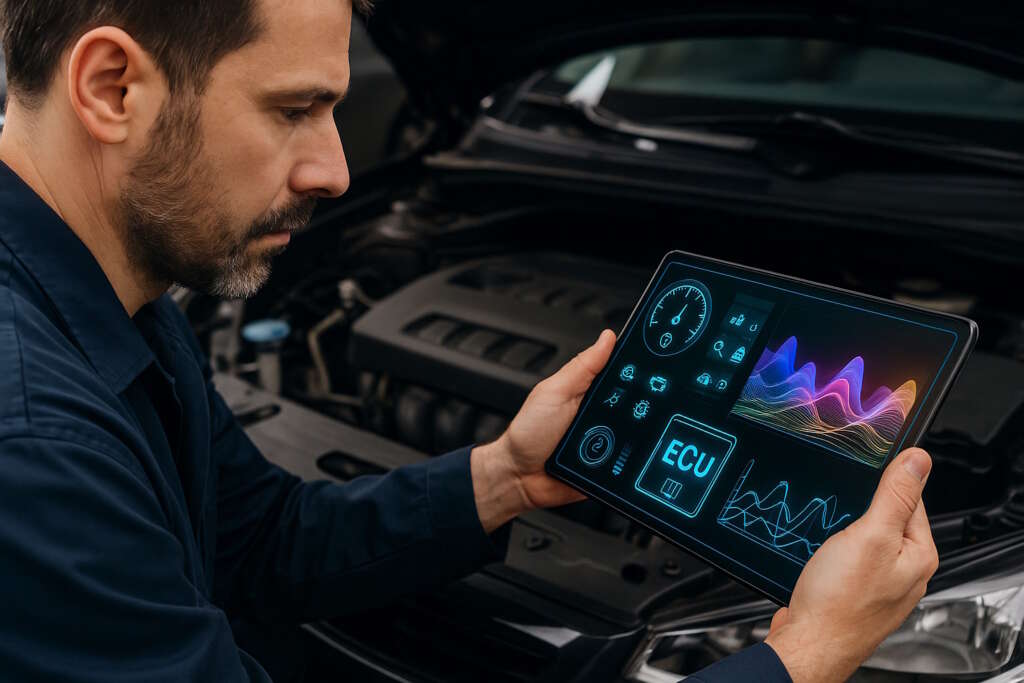
Key Takeaway: Modern cyber threats to electronic control units (ECUs) stem from their deep integration into nearly every vehicle function—from braking to infotainment—making them a prime target for attackers seeking control, data, or profit. Vulnerabilities often arise from overlooked entry points such as diagnostic ports, wireless connectivity, or unsecured firmware updates. Effective defense requires a layered strategy: segmenting networks, enforcing identity verification, signing firmware, monitoring in-vehicle traffic, and securing diagnostic tools. When these measures are applied consistently, they transform ECU cybersecurity from a reactive chore into a proactive shield that keeps vehicles—and their operators—safe and confident.
Electronic control units are the digital foundation of today’s vehicles—and that makes them a prime target for cybercriminals. You may know them as ECUs, control modules, onboard computers, or vehicle control units. Regardless of the name, they serve the same purpose: managing the core functions that make a car run. These small but powerful devices help coordinate everything from engine timing to braking and steering. They act like tiny specialists working together to keep your ride safe, smooth, and responsive. Because they’re embedded in nearly every modern vehicle system, they’re incredibly valuable—and increasingly exposed.
That exposure matters. As more software gets packed into our cars, the line between “vehicle” and “connected device” begins to blur. Features like remote access, infotainment systems, and over-the-air updates add convenience, but they also expand the attack surface. A single overlooked module, an outdated firmware version, or a misconfigured setting can open the door to much larger problems. The upside? These threats aren’t unstoppable. With a few clear and practical defenses, it’s possible to stay ahead of the risks.
Why Attackers Target Electronic Control Units
ECUs hold real control over real systems—and that’s exactly what makes them so attractive to bad actors. Because they sit close to critical operations, like acceleration or braking, compromising just one unit can have ripple effects across the entire vehicle. This proximity means that an attacker doesn’t need to control everything; they just need to reach one point of leverage. For example, accessing a poorly secured module might allow them to send spoofed messages that trigger actions elsewhere. That can sound like science fiction, but most attacks don’t begin with complex code or sophisticated exploits. They often start with common security oversights: default credentials, outdated software, or unsecured diagnostic ports.
There’s also a financial incentive. Stolen vehicle data can be sold or repurposed, and in some cases, the vehicle itself becomes the prize. For instance, coordinated theft rings have learned how to manipulate ECU signals to bypass immobilizers and drive off with cars. Other times, attackers target the backend systems those vehicles connect to, hoping to pivot into larger networks. Think of the car as a mobile endpoint. If it talks to the cloud, it becomes a potential jumping-off point for broader intrusions. The motive isn’t always to create chaos; sometimes, it’s simply profit.
Common Entry Points You Might Not Expect
Because electronic control units (ECUs) interface with so many parts of the vehicle, they also create more potential doors for attackers to try. Not all of these doors are obvious. In fact, many entry points stem from convenience features we’ve come to expect in modern cars—like wireless access, remote diagnostics, or app-based controls. These conveniences are great for drivers and service technicians, but they also create risks if left unsecured. When every added connection opens a line of communication, ECUs must become gatekeepers as much as controllers.
Diagnostic ports, for example, are designed to help technicians troubleshoot problems. But if those ports are left unprotected or accessible by third parties, they may provide direct access to critical vehicle systems. Wireless connectivity, including Bluetooth, Wi-Fi, and even keyless entry systems, may expose ECUs to packet sniffing or signal spoofing. Over-the-air updates, while efficient, can become attack vectors if firmware isn’t properly signed or validated. And third-party add-ons—from mobile apps to plug-in dongles—often introduce vulnerabilities unintentionally. By understanding where these risks originate, automakers and fleet operators can better secure the ecosystem before something slips through.
The Attacker’s Playbook, in Plain English
To defend electronic control units effectively, it helps to understand how attackers think. Most don’t begin with complicated hacks or sophisticated exploits. They start with a few basic assumptions: someone hasn’t patched their software, someone reused a password, or someone left a feature enabled by mistake. In other words, attackers look for low-hanging fruit—opportunities that require minimal effort and carry high payoff. That’s why cybersecurity for ECUs should focus as much on eliminating routine vulnerabilities as it does on complex defense mechanisms.
Known vulnerabilities are often the first targets. Hackers watch for new firmware patches, then reverse-engineer them to understand what was fixed—because that tells them what to exploit in unpatched systems. Message spoofing is another common trick, where attackers replay or inject signals into the car’s communication bus to trigger actions. Weak or default credentials can let intruders authenticate without resistance. In some cases, attackers will even exploit supply chain weaknesses—like unsecured developer tools or test devices. And yes, social engineering still works: a phishing email to a partner or service provider could expose backend systems or grant access credentials. In short, attackers don’t need to break the whole system; they just need a crack in the surface.
Defensive Basics for Electronic Control Units
Protecting ECUs starts with understanding that layered defense is the best defense. Because modern vehicles often contain dozens of ECUs working together, one compromised module can jeopardize the others. That’s why a “flat” network design—where everything connects equally—is increasingly risky. In a layered or segmented model, systems with higher safety or performance impact (like braking or steering) are isolated from infotainment or third-party services. This segmentation makes it harder for attackers to move laterally across systems if they do break in.
Network segmentation is a foundational strategy, helping contain threats by reducing interdependency between unrelated modules. Strong identity management ensures that only verified devices or users can communicate with ECUs—using tools like certificates or embedded hardware keys. Secure firmware updates are a must; they should always be signed, verified, and delivered through a trusted channel. Traffic monitoring across the in-vehicle network can flag abnormal behavior early. And finally, strict control over diagnostic and engineering tools—including rotating credentials and removing unused access modes—can prevent unauthorized access. Each measure on its own reduces some risk. Together, they create meaningful resistance to both external and internal threats.
Practical Steps Your Team Can Start This Quarter
You don’t need to overhaul your entire vehicle architecture overnight. But small, focused steps can make a real difference—especially when applied consistently. For companies working with connected vehicles or smart mobility products, addressing ECU security in quarterly cycles is a smart approach. These 90-day sprints allow for steady progress, clear accountability, and early wins that build momentum over time.
- Create a complete inventory. Document every ECU, its firmware version, and what systems it connects to. This builds situational awareness so that no module is left behind.
- Establish a patch cadence. Set regular intervals for pushing updates and verifying installation. For example, monthly check-ins help close known vulnerabilities faster.
- Harden external touchpoints. Review Wi-Fi, Bluetooth, and telematics systems for open ports, unused features, or weak encryption standards.
- Run simulation drills. Tabletop exercises allow teams to test incident response before a breach occurs, so they can move quickly if something goes wrong.
- Track your progress. Choose three metrics—like average patch time, percentage of hardened ECUs, or time to detect anomalies—and measure improvement every quarter.
These steps may seem basic, but they build a security culture that pays off in speed, trust, and resilience over time.
What Success Looks Like: Safer Vehicles, Calmer Teams
When defensive strategies are working, things get quieter—not louder. Success in securing electronic control units isn’t a splashy product launch or a viral press release. It’s a stable system, a relaxed team, and fewer surprises on your dashboard. That kind of stability becomes possible when risk is managed proactively, rather than reactively. And it begins by making ECU security part of everyday operations, not just an afterthought.
Security success also builds trust. Customers gain confidence in vehicles that perform as expected without glitches or exposed vulnerabilities. Technicians work more efficiently when systems are consistent and secure. And leadership teams find it easier to scale digital features—like over-the-air updates or remote diagnostics—when they know the foundations are solid. The goal isn’t perfection. It’s progress: ECUs that are harder to exploit, alerts that are faster to respond to, and a company that’s known for building smarter, safer systems.
Conclusion
As vehicles become more connected, the cybersecurity risks facing electronic control units will only continue to grow. That doesn’t mean we’re headed toward disaster. It means we need a strategy. Start with the basics—segment your systems, secure your update paths, and train your teams—because even small adjustments can yield big protections. For example, locking down a diagnostic port or patching a single module might be enough to stop an opportunistic attack before it spreads. When teams understand what’s at stake and what actions to take, they can prevent today’s threats from becoming tomorrow’s headlines.
We’ve only scratched the surface here. Join us at Tech Scope Connect to explore the evolving relationship between humans and technology through our newscasts, summits, and exclusive high-tech content.