Quick Answer: A digital battery passport is an electronic record that links a battery’s unique identity to information about its manufacturing, performance, and lifecycle. It helps businesses and consumers make informed decisions about battery repair, resale, reuse, and recycling. The Internet of Things (IoT) plays a supporting role by collecting and sharing operating data through sensors, battery management systems, and connected devices. However, a battery does not need continuous internet connectivity to have a digital passport.
When a Battery Changes Hands
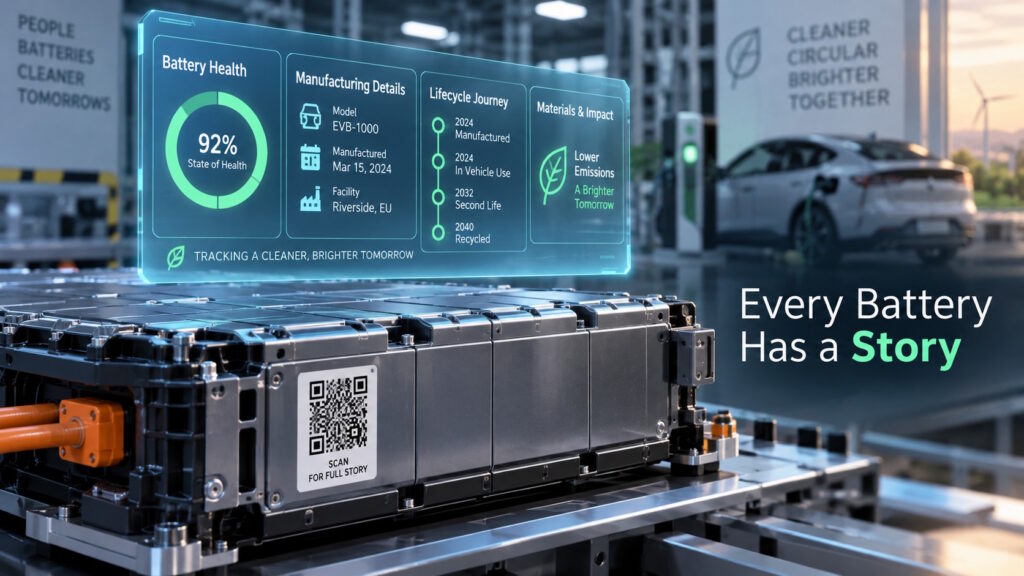
A digital battery passport links a battery’s unique identity with information about its production, performance, and lifecycle. This electronic battery record could help you assess a used battery and explore its repair or recycling options.
If you were buying a used electric van, you might ask, “What condition is the battery in?” The model and original specifications would tell you only part of the story. Its history could help you judge whether it still suits the job you have in mind. IoT can contribute operating information as the battery moves through service, ownership changes, and possible reuse.
What Does a Digital Battery Passport Actually Do?
A model’s specification sheet describes what a type of battery can do under stated conditions. A passport can also connect you with information about the individual battery you are considering.
Under the EU approach, a QR code provides access to the record. The responsible business maintains the underlying information. Some details describe the battery’s origins, while others can reflect its use.
A product identity record combined with a service history offers a useful comparison. That history can extend beyond maintenance to performance, materials, and handling information. You can then understand both what the battery originally offered and what later information reveals.
Why February 2027 Is Drawing Attention
The EU’s digital battery passport requirement starts on February 18, 2027, for covered batteries entering the market or service. It covers electric vehicle batteries and light means of transport batteries, including e-bike and e-scooter batteries. Industrial batteries also fall within scope when their capacity exceeds 2 kWh. The European Commission published updated preparation guidance in August 2026, helping businesses understand which information requirements apply.
The Global Battery Alliance also released operational-trial results in September 2026, covering data collection, exchange, and verification. Those trials used developmental methods and do not establish the sustainability performance of participating companies.
From Factory Details to a Working History
A digital battery passport brings together details such as manufacturer, battery chemistry, material composition, and original capacity. These give later users a starting point for understanding what they have. During use, information about capacity changes, charging cycles, and operating conditions can help describe the battery’s experience. Available fields depend on the battery and applicable requirements.
Repair and handling information can include component numbers, replacement-parts contacts, and dismantling instructions. Sustainability disclosures may cover carbon footprints, recycled content, or sourcing information.
The Commission’s guidance explains which fields apply to each battery category and which requirements take effect later.
Where Connected Systems Enter the Picture
IoT’s role begins with information from the battery in operation. Sensors can measure voltage, current, and temperature, while a battery management system interprets relevant measurements. Its software can estimate state of health, which describes the battery’s condition, including changes in capacity or performance.
State of charge answers a different everyday question: “How full is the battery right now?” A full charge does not, by itself, tell you how the battery’s condition has changed over time.
A digital battery passport can make selected operating information available alongside the battery’s original records. Connected systems can carry relevant information from equipment into the systems maintaining the battery’s record.
Bosch illustrates this approach through its connected battery services, which collect vehicle data for cloud analysis. Its passport solution combines manufacturing information with dynamic information about use and battery health.
Does a Digital Battery Passport Need a Live Connection?
Continuous connectivity is not a universal requirement. The Commission’s FAQ describes updating an offline e-bike battery’s information when it comes in for servicing. A passport can therefore remain useful even when the battery cannot send updates over the internet. The appropriate update approach depends on the battery and the information involved.
After the First Owner, What Comes Next?
Suppose a company removes a battery from a delivery van. A repairer could consult component details and dismantling information when assessing whether repairs make sense. Those details could help the business explore continued use before deciding to replace the battery.
If the company sells it, a buyer may ask, “How much useful capacity does it still have?” Relevant performance information could help the buyer assess the offer, alongside any necessary inspection.
Another organization might consider a different application, such as stationary energy storage. Its specialists would still need to assess suitability for that new job.
Eventually, a recycler could consult composition and dismantling information when planning how to process the battery. The Battery Pass consortium identifies these potential uses while emphasizing reliable data and integration into working procedures.
Who Keeps the Story Straight?
The company maintaining the record may need information from people handling the battery later. Initially, the business placing a battery on the EU market or putting it into service takes responsibility for its passport. It can authorize another operator in writing to perform tasks while retaining that responsibility.
Responsibility can change when another business repurposes or remanufactures the battery. The EU framework requires a new passport linked to the previous record in these situations.
The framework also separates publicly available information from details that require authorized access. Scanning a QR code does not automatically reveal every field.
For you, the practical questions concern the data’s source, age, and relevance to the decision. An old assessment may offer useful history without describing the battery’s current condition. Reliable records can support assessments and may reduce some testing when the relevant procedures accept that information. They do not automatically establish whether a battery suits a new application.
Conclusion: Better Information for the Next Owner
When a battery changes hands, its age and original specifications rarely answer every question. A useful record gives the next person more context for deciding what happens next. IoT can contribute information from real operating conditions, helping connect those decisions with the battery’s experience.
Curious about how IoT is changing the way businesses manage connected products throughout their lifecycles? Join the conversation at Tech Scope Connect, where we explore emerging technologies, industry trends, and real-world applications through expert discussions, live newscasts, and summits.
Sources:
- Batteries – European Commission | single-market-economy.ec.europa.eu
- Digital Battery Passport | bosch-mobility.com
- Guidance to Support Preparations for the Digital Batteries Passport | single-market-economy.ec.europa.eu
- 2026 Battery Passport Pilots | globalbattery.org
- Digital Batteries Passport – Data Point by Category | single-market-economy.ec.europa.eu
- Powering the Present and Future with Battery Management Systems | bosch-softwaretechnologies.com
- Battery in the Cloud | bosch-mobility.com
- EU Digital Product Passport FAQ for Batteries | single-market-economy.ec.europa.eu
- Unlocking the Value of the EU Battery Passport | thebatterypass.eu